Wednesday, January 28, 2015

Argentine born players capped by other national team

Brazil-born Jose Altafini with Antonio Angelillo and Omar Sivori

Please also see my All-Time World Cup Team Index.

Argentinan Greatest All-Time Team
German-Born players capped by other national teams
French-born players capped by other national Teams
Brazilian-Born players capped by other national team 
English-born players capped by other national teams
What if Ronaldo and Messi played for Australia in 2006
Provincia de Córdoba,
Provincia de Santa  Fe, 
Provincia de Buenos Aires 
The City of Buenos Aires


Argentina produced many football talents.   Some of them ended up playing for other national teams. This is my all-time 23 member team for Argentine capped by other national teams.  Some players were born in Argentina and went aboard to play as a foreign player, but others were born in a foreign country of Argentinian background.  In the old days, players were allowed to switch national teams.  Players such as Omar Sivori. Alfredi Di Stefano, etc had played for other countries.  

 Team
GK: Ramón Quiroga (Peru)
Born in Argentina, Ramón Quiroga went to the World Cup Finals in 1978 and 1982, playing for Peru.  He is remembered for conceding 6 goals against his birth country Argentina, and Argentina advanced to the World Cup Final ahead of Brazil due to goal difference. The match was one of the most controversial in the history of the World Cup Finals. He began his career playing for the Argentine club Rosario Central before playing in Peru.
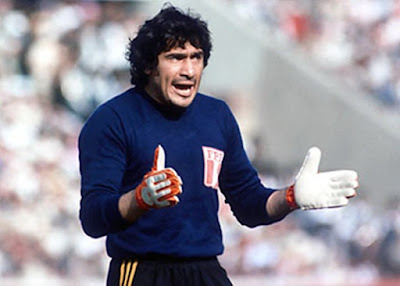
Ramón Quiroga 
GK: Carlos Trucco (Bolivia)
Born in Argentina, Carlos Truce played for a number of clubs in Argentina before moving to play for Destroyers, Oriente Petrolero and Boliva in Bolivia.  He also played in Colombia and Mexico.  He had 51 caps for Bolivia.  He started playing for Bolivian national team in 1989 and was their starting goalkeeper at the 1994 World Cup Finals in the USA, Bolivia's first ever World Cup Finals since 1950.

Born in Argentina, he represented the Peruvian national team and made his debut for the national team on 18 April 1998. Since then he obtained 50 caps, with the last match being on 30 March 2005. He has been one of the four to have played at least 500 games in the Peruvian First Division. He played the most matches with Universitario de Deportes and Cienciano.

RB/RW: Juan Carlos Tourino (Spain)
Touriño was born on 14 July 1944 in the Parque Patricios district of Buenos Aires to immigrant Spanish parents who had fled the Spanish Civil War.  He started his career with Quilmes in Argentina.  He went on to make over 100 appearances for the club. He moved to Real Madrid in 1971.  He won three La Liga titles between 1971 and 1976. He was capped by Spain once in a match against Hungary in 1972.

CB/DM/RB: Luis Cristaldo (Bolivia)

Born in Argentina, Luis Cristaldo  moved to Bolivia at the age of 15.  He played for Oriente Petrolero and Boliva in Bolivia before moving to play in Spain for Sporting de Gijon in 1998.  He also played in Argentina and Paraguay. His longest career were at Bolivar and the Strongest in Bolivia. For the national team, he was capped 93 times.  He went to the 1994 World Cup Finals in the USA.  He is Bolivia's national team record cap holder alongside Marco Sandy with 93 caps.

CB: Fernando Ochoazpur (Bolivia)
Fernando Ochoaizpur was born in Argentina.  In 1990, he began his professional career with Estudiantes de La Plata. In 1993, he moved to play in Bolivia. He had played for various clubs in Bolivia, Argentina, Peru, Mexico and Ecuador.  From 1996 to 1999, he earned 6 caps for Bolivia. He was a member of their Copa America team in 1999.

CB: Gabriel Paletta (Italy)

Paletta helped Argentina to win the U-20 World Cup in 2005 before switching to play for Italy in the senior level.  At the time of writing, he earned 4 caps and went to Brazil 2014. He started his career with Banfield.  He went to Europe to play for Liverpool, Parma, AC Milan and Atalanta.  He also had a stint with Boca Juniors. At the time of writing, he plays for Jiangsu Suning F.C. in China.
Gabriel Paletta 
CB: Gustavo Quinteros (Bolivia)
Gustavo Quinteros spent his career playing for different clubs in Argentina and Bolivia.  His clubs as a player include The Strongest and San José in Bolivia. He also played for San Lorenzo de Almagro, Argentinos Juniors and Talleres de Remedios de Escalada in his native Argentina.He was capped 26 times for Bolivia and went to USA 1994.

LB: Mariano Pernia (Spain)
Pernia played for San Lorenzo and Indpendiente in Argentina before moving to Spain in 2003.  He first played for Recreative de Huelva, but it was in Getafe that he made his name.  In 2006, he moved to Atletico Madrid.  He first called up for Spain right before the World Cup Finals in 2006.  He would start three game in Germany.  He earned 11 caps for Spain in total. 

LB/RB: Ricardo Ismael Rojas (Paraguay)

As a youth product of Argentinos Juniors, Rojas started his club career in Paraguay before moving back to Argentina to play for Estudiantes de La Plata, River Plate and Belgrano.  He also played two seasons with Benfica.  At River Plate, he scored a famous goal against Boca Junior.  He was capped 7 times by Paraguay and went to play in the 1998 World Cup Finals.

DM: Luis Monti (Italy)

Luis Monti led Argentina to the WC Final in 1930 where they lost to Uruguay.  Four years later, he became an Oriundo and won the World Cup with Italy.  He was also remembered for getting injured at the Battle of Highbury in 1934. He started his career in 1921 with Huracán. The following year he signed with Boca Juniors but left without playing a game. He joined San Lorenzo. In 1930, he joined Juventus in Italy, where he played until 1939.
Luis Monti
AM: Miguel Montuori (Italy)
Widely regarded as one of Fiorentina's greatest players.  He started his career in Chile with Universidad Catolica before moving to Italy in 1956. He helped Fiorentina to win the league in 1956. He eared 12 caps for Italy.  Despite his talent and success, he was also regarded as an "unfortunate" player, due to his many runner-up medals, and his injuries, which forced him to retire during the prime of his career.

AM: Matias Fernandez (Chile)
Matias Fernandez started with Colo-Colo.  While there, he was named the South American Footballer of the Year award in 2006. Later, he played for Villarreal, Sporting CP, Fiorentina, AC Milan and Necaxa.  Since 2005, he had played over 70 times for Chile.  He played in the 2010 World Cup Finals, and was a part of the team that won the 2015 Copa America.

RM/RW: Mauro Camoranesi (Italy)
Mauro Camoranesi started his career with a tiny club named Aldosivi before moving to Mexico.  From 1996 to 2000, he played for 4 clubs in three different countries.  At Cruz Azul, he scored 20 goals and earned a move to Verona in Italy.  He stayed there for 2 seasons and moved to Juventus, where he reached stardom.  He earned his first cap for Italy in 2003.  From 2003 and 2010, he earned 55 caps.  He played a major part as Italy won the World Cup in 2006.
Mauro Camoransi

FW/LW: Raimundo Orsi (Italy)
Orsi was considered one of the greatest forwards in Argentina's history.  He started his career with Indpendiente in Argentina before lured away to play for Juventus. he won 5 league titles with Juventus.  Later in his career, he would play in Brazil and Chile.  He was capped by Argentina 12 times winning a silver medal at the 1928 Olympics.  He switched to play for Italy in 1929.  He was a star player as Italy won the WC in 1934.

SS/FW:  Omar Sivori (Italy)
Omar Sivori is remembered one of the greatest ever player from Argentina. He won the Ballon d'Or in 1961. After Argentina won the Copa America in 1957, he joined Juventus where he enjoyed 8 successful years.  He was credited with the resurgence of the club.  With John Charles and Giampiero Boniperti, he formed "the Magical Trio" with the club.  In Argentina, he played for River Plate.  After Juventus, he joined Napoli.
Omar Sivori 
ST: Julio Libonatti (Italy) 
Libonatti started with Newell's Old Boys in 1917.  He was listed the first ever trans-Atlantic transfer when he moved to play for Torino in 1926.  He is still the second highest scorer in the club's history.  Internationally, Libonatti won the 1921 South American Championship with Argentina. He later represented Italy and won the 1927–30 Central European International Cup. He played 15 times for Argentina and another 17 times for Italy.

ST: Atilio García (Uruguay)
García had short spells with Club Atlético Moreno, Club Atlético Platense and Boca Juniors in Argentina before joining Nacional in 1938. He is the top goal scorer in the history of Uruguayan football with 465 goals scored in official tournaments and the second highest goal scorer in the history of the Uruguayan Football Championship. Born as an Argentine, he played for Uruguay. He scored 5 goals in 6 games for Uruguay.

CM/AM/FW: Alfredo Di Stefano (Colombia/Spain)
The best player in the world before the emerge of Pele and Maradona. He was one of the younger member of the great River Plate in the 1940's.  In 1949, he moved to play in Colombia before moving to Europe in 1953.  He won 5 straight European Cups with Real Madrid. He was credited in turning Real Madrid into a legendary club. His international career was limited to the fact that Argentina did not select overseas players.  He played for Argentina, Colombia and Spain.
Alfredo Di Stefano
ST: Humberto Maschio (Italy)
With Omar Sivori and Antonio Angelillo, Maschio earned the nickname "Angels with Dirty faces" collectively as a group. In 1957, he moved to Italy to play for Bologna after Argentina won the 1957 Copa America.  However, it was in Atalanta where he became a star and earned a bigger move to Inter Milan.  For Argentina, he scored 12 goals in 12 games.  Later he played twice for Italy.

ST: Hector Rial (Spain)
Rial was known for his career with Real Madrid between 1954 and 1961. He was part of the team that won five consecutive European Cups, playing alongside Alfredo Di Stefano. He played professional football in Argentina, Colombia, Uruguay, Spain, France and Chile. Born in Argentina, he became a naturalized citizen of Spain.  He was capped 5 times by Spain.

ST: Enrique Guaita (Italy)

Enrique Guaita played for Estudiantes de la Plate before moving to AS Roma .  He was the top-scorer of the League in 1934–35, with 28 goals.  In 1936, he returned to  Argentina to play for Racing Club because he feared that he would be drafted into the army.  He was capped 4 times for Argentina.  While in Italy, he was capped 10 times for Italy.  He won the World Cup in 1934 with them, where he scored a goal in the semi-final.

CF: Antonio Angelillo (Italy)

Antonio Angelillo was a member of the "Angeles With Dirty Faces". He moved in 1957 to Italy after Argentina won the Copa America in 1957.  He scored 31 goals in 31 matches for Inter Milan in the 1958-59 season, the second highest record at the time.  He was considered to be one of Inter Milan's greatest players.  He also had a successful career with Roma an another stint with Genoa, Lecce and AC Milan.  He earned 2 caps for Italy.

Honorable Mention
Attillio Demaria (Italy),  Gabriel Arias (Chile), Rinaldo Martino (Italy), Alejandro Scopelli (Italy),  Roberto Acuna (Paraguay),  Francisco Lojacono (Italy), Emilio Badini (Italy), Eduardo Ricagni (Italy), Bruno Pesaola (Italy), Dani Osvaldo (Italy), Jose Eulogio Garate (Spain),  Rubén Cano (Spain), Óscar Valdez (Spain), Emilio Sagi Liñán (Spain), Juan Carlos Heredia (Spain), Roberto Juan Martínez (Spain), Eduardo Arbide (Spain), Juan Errazquin Tomás (Spain), Juan Antonio Pizzi (Spain),  Franco Vázquez (Italy), Nestor Combin (France), Guillermo Franco (Mexico), Carlos Alberto Raffo (Ecuador), Marcelo Elizaga (Ecuador), Rogelio Funes Mori (Mexico), Pablo Mastroeni (USA), Néstor Ortigoza (Paraguay), Gustavo Matosas (Uruguay), Walter Ardone (Australia), Pablo Cardozo (Australia), Oscar Crino (Australia), Jorge Amado Nunes (Paraguay), Lucas Barrios (Paraguay), Nestor Ortigoza (Paraguay), Jonathan Santana (Paraguay), Rodolfo Gnavi (Australia), Gabriel Mendez (Australia), Adolpho Milman" Russo"(Brazil)* see below for explanation.


Squad Explanation 
-- My original blog team included Argentine footballers born overseas who played for other national teams.  In September, 2019, I changed to a blog team of Argentine-born players only.  
-- Most players I selected moved to their adoptive country for "football reasons".  What do I meant by "football reasons'? The players came to those countries as professional footballers.  They were in that country for football only.  For example, Kevin Kuranyi (Brazil) moved to Germany for reasons other than football.  He would still be living in Germany if he was a baker, a lawyer, a teacher, etc.  He is not in Germany for football reasons.  I tried to select players who went to those countries for "football reasons".
-- I am including players who have played for Argentina and switched to play for another team.  
-- The term oriundo (pronounced [oˈrjundo]; Italian plural oriundi) is an Italian and Spanish noun describing an immigrant of native ancestry.  Italy is known for selecting a large number of oriundo footballers throughout history. On this team, I have Omar Sivori,  Raimundo Orsi, Enrique Guaita, Luis Monti,  Julio Libonatti, Miguel Montuori, Mauro Camoranesi and Antonio Angelillo.
-- It is estimated that up to 25 million Argentines have some degree of Italian ancestry (62.5% of the total population), making a large player pool for Italy. It is not unusual for Argentine to play for Italy.
-- I tried to create an all-time team for Italian oriundo footballers, but I cannot find a single goalkeeper.
-- This blog included four players who won the World Cup for a different country.  Raimundo Orsi, Enrique Guaita and Luis Monti won the World Cup in 1934 with Italy.  Mauro Camoranesi won a World Cup in 2006.  David Trezeguet won his in 1998, but he is not on this team. 
-- Before I created this team, I thought Brazilian footballers capped by other national team would be a better team.  Simply, more modern Brazilians have been naturalised.  However, this team had Alfredo Di Stefano, Luis Monti and Omar Sivori, but the defense was suspected.  My "Brazil" at least had Pepe and Donato.
-- Antonio Angelillo, Omar Sivori and Alfredo Di Stefano could have been the starting attack for Argentina at the WC Finals in 1958.
Goalkeeper
-- Ramón Quiroga (Peru) was unfortunately remembered for the controversial game against Argentina in the 1978 World Cup Finals.  In reality, he was a good goalkeeper, but that game happened to define his career by the collective memories of fans outside of Peru or South America.  Carlos Trucco was capped 51 times during one of Bolivia's best period in football.  He also had played in the bigger tournaments such as the World Cup Finals.
-- In 2019, I added Fernando Muslera to the team.  Oscar Ibanez (Peru) was sent to the honorable mention.  But in 2023, I dropped him again during the review.  Muslera was born in Argentina of Uruguayan parents.  He grew up in Montevideo, Uruguay.  He was an Uruguayan. He was not a naturalised footballer.  I reinstated Oscar Ibanez.  I took him because he appeared many times in Copa America.
-- Marcelo Elizaga was the alternative goalkeeper.  
-- Gabriel Arias qualified for Chile because of the "grandparent" rule.  He did become a Chilean because of football reasons.  So he was eligible.
Defenders
-- Most if not all of the original Argentine-born oriundo capped by Italy were attackers.   This team was very unbalanced.   The attackers consisted of the likes of Alfredo Di Stafano and Omar Sivori while the defenders had Fernando Ochoazpur who only played 6 times for Bolivia.
-- Three of the defenders played for Bolivia roughly around the same time alongside goalkeeper Carlos Trucco.
-- Juan Carlos Tourino was eligible although his parents were from Spain because he went back to Spain for "football reasons".  He started with Quilmes before joining Real Madrid.  Later in life, he became involved in the Argentine Players Union (Futbolistas Argentinos Agremiados) holding a number of different roles within the organisation including secretary general.  He played as a midfielder but was mainly a rightback.  Luis Cristaldo joined the framed Tahuichi Aguilera Academy, which made him very "Bolivian".  However, I did not have any other choices for rightback so I took him.  He was the most capped Bolivian player ever.
Luis Cristaldo 
-- Both Mariano Pernia (Spain) and  Ricardo Ismael Rojas (Paraguay) played in some big international tournaments.
-- I only had two candidates for the central defender position.  Gabriel Paletta at least played in a World Cup match.  The others were unknown to me before this research.  Gustavo Quinteros attended the 1994 World Cup Finals.
-- Ramiro and Rogelio Funes Mori were twin brothers from Argentina who moved to the United States in 2001 at age 9. They were reported to be undocumented immigrants and were ineligible for the United States. Both brothers represented Argentina after playing for River Plate.  Rogelio only capped once during a match in Superclásico de las Américas. He switched to represent Mexico in 2019 after spending a club career with C.F Monterrey.  Ramiro was ineligible to make the switch as he had played in official matches for Argentina, and I also don't know his citizenship status.
Midfielders/Wingers
--  I considered Luis Monti one of the greatest defensive midfielders ever played the game.  He was a star with Argentina before switching to Italy.  He led with Argentina to the 1930 World Cup Final, where he was one of the top players of the tournament.  Four years later, he won the World Cup with Italy.  Monti along with Raimundo Orsi and Enrique Guaita were on the 1934 World Cup Team of the tournament. Despite winning a World Cup with Italy, he was not on my all-time team for Italy I tried not to select "oriundo" for that team.  Instead, I selected him for my Argentina All-Time team.
-- Néstor Ortigoza was born in Argentina of a Paraguayan father.  He was one of the few deep midfielders eligible for this team.  Pablo Mastroeni came to the United States as a 4 years old for non-football reasons.  He played over 60 times for the USA.  He went to the 2002 and 2006 World Cup Finals.  Both was seriously considered.
-- Gustavo Matosas (Uruguay) was born in Argentina while his father Roberto Matosas an Uruguayan footballer was playing in Argentina.  So Gustavo is an Uruguayan capped by Uruguay.  Furthermore, he was a journeyman in club football..
-- Alfredo Di Stefano might need to drop back and help the midfield. He was an all-round player who could easily drop back.
-- There are not many good midfielders.  So I took Matias Fernandez who won the South American Footballer of the Year in 2006.  Injuries had limited his career.   His father was from Chile, but he was born in Argentina.  Claudio Reyna was born in the United States. 
-- Mauro Camoransi and Raimundo Orsi were obvious choices for winger.  Omar Sivori could also play wide.  He won the Ballon d'Or in 1961.  In my opinion, he and José Manuel Moreno were right behind Diego Maradona, Alfredo Di Stefano and Lionel Messi as the 4th or 5th greatest ever Argentine player. 
Raimundo Orsi 
Forwards
-- Some source claimed that Enrique Guaita was born in Brazil, making him the first Brazilian-born player to have won the World Cup. He was one of the first Argentine-born to have won the World Cup in 1934 with Italy alongside Luis Monti and Raimundo Orsi.
-- Omar Sivori, Antonio Angelillo and Humberto Maschio earned the nickname "Angels with Dirty faces".
-- Atilio García (Uruguay) is also the top scorer in the history of the "clasicos" between Nacional and Peñarol, with 35 goals. He played for Club Nacional de Football between 1938 and 1951.  
-- The last spot was very difficult.  I was seriously considering Hector Rial and Jose Eulogio Garate, but there were already many forwards and strikers on the team.  The team needed more midfielders.  Then, I looked at following midfielders: Pablo Mastroeni (USA), Néstor Ortigoza (Paraguay) and Gustavo Matosas (Uruguay).
-- In the end, I decided to select Hector Rial.  I just cannot select a lesser midfielder over a legend of Real Madrid. Because of his association with Alfredo Di Stefano,  he is probably the best known footballers left on the list. Except Garate, the other three did not play as high of a level as Rial.
-- Hector Rial was known for his career with Real Madrid playing alongside Alfredo Di Stefano.  Jose Eulogio Garate (Spain) is one of greatest players ever played for Atletico Madrid.  Jose Eulogio Garate (Spain) is the most famous player not selected.-- And then, there is the strange case of Russo "Adolpho Milman".  He played once for Brazil in 1942. He was a naturalised Brazil of Ukrainian Jewish background via Argentina, but his birthplace is a question mark.  Some source claimed that he was born in Afghanistan, which was then a part of Russia.  He later settled down in Entre Ríos, Argentina. He refused to discuss his birthplace, but his children said that he was born in Argentina. As of 2018, he was one of five foreign born footballers to have represent Brazil.
-- And I also thought deep about David Trezguet.  David Trezguet was born in France, not Argentine. He was born there when his father Jorge Trezguet was playing in the French league.  David also grew up in Argentina.  Both Jorge and David Trezeguet are ethnic French, but they are Argentine through and through.  Does he belong to this team?  Strictly speaking, this blog is about Argentine-born player who had capped for other national team and David Trezeguet is not born in Argentina.  He is not much different from Claudio Reyna (USA) whose father was Argentine.  In the end, I dropped him.

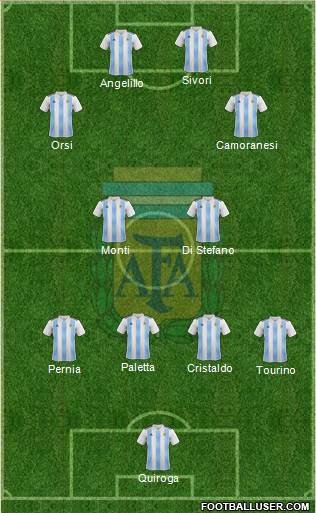
Starting lineup
--  The defense was weak.  Palette got to start because he had established himself in Europe while the other defenders never played successfully at that level.


Tuesday, January 27, 2015

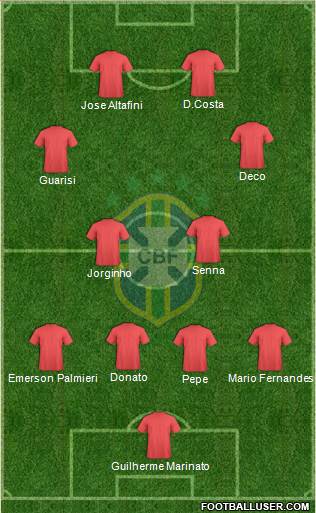
Brazilian players capped by other national teams

This blogger Artur Yanturin of Russia copied many of my blog teams.  This blog was one of them.  It was my Russia All-Time Team here.  His team was written in 2020, but mine was uploaded in 2014.   His Spartak Moscow All-Time team entry of was published in October 2020, but mine was uploaded in 2017.  His entry of the Dutch-German rivalry between Real Madrid and Barcelona was written in 2020, but mine was uploaded in 2014.  He also copied many many of my blog entries.

His Facebook and Instagram


Pepe vs Brazil

Please also see my All-Time World Cup Team Index.

Brazil Greatest All-Time Team
Argentine-born players capped by other national teams
English-born players capped by other national teams
German-Born players capped by other national teams
French-born players capped by other national Teams
If Ronaldo and Messi played for Australia in 2006
Brazil 1982 with Careca, etc
Brazil World Cup 1958 with Zizinho etc
Brazilian footballers who shared names with historical figures


Brazil has one of the richest talent pool in the world.  Many Brazilians have been capped by other national teams. Equatorial Guinea, Togo and Japan are among countries that capped the most Brazilians.  Even Germany and Italy, two countries that won 4 World Cup each, capped Brazilian-born players.  Anfilogino Guarisi became the first Brazil-born player to win the World Cup when Italy won the World Cup in 1934.  Pepe, Deco, Marcos Senna and Diego Costa would have contributed to the Brazilian national team if they chose to represent Brazil.  In fact, Jose Altafini  has won a World Cup with Brazil in 1958.  Marco Senna won the European Championship with Spain and then, Pepe did it with Portugal in 2016.
Diego Costa vs Mario Fernandes 


Team
GK: Guilherme Marinato (Russia)
Guilherme Marinato  made his professional debut for Atlético Paranaense in 2005. In August 2007, Guilherme signed a five-year contract with FC Lokomotiv Moscow, becoming the first Brazilian goalkeeper in Russian football.  In 2015, he became a Russian citizen.  He played his first senior national team game in 2016.  He was also a backup  at the European Championship in 2016.

GK: Mauricio Viana (Chile)
Born in Sao Paulo, he moved ti Chile when he was 5 years old.  He made his professional debut with Santiago Wanderers in 2008.  He had a loan spell in Mexico with Jaguares de Chiapas de México. At the time of writing, Mauricio Viana has only played in friendlies for Chile.  He only sat on the bench.  However, he had represented Chile at the youth level.

GK: Alexander Negri (Cyprus)
Negri signed in 2007 with APOP Kinyras FC from Aris Thessaloniki. For AEK Larnaca , he was an idol of the club and played in the Europa League  After a few years playing in the country, he became a naturalized  and was called up a few times for Euro 2016 qualifying games. Negri previously played for Ponte Preta in the Campeonato Brasileiro,  He had stints in Romania, France, etc.

RB: Mario Fernandes (Russia)
Mario Fernandes made his name with Gremio in Brazil, where he played from 2009 to 2012.  In 2012, he joined CSKA Moscow. In 2014, he played a single game for Brazil against Japan in a friendly match.  After receiving his Russia citizenship in 2016, he opted to play for Russia.  In 2017, he made his debut for Russia. During the World Cup Finals in 2018, he scored an important goal against Croatia in the quarterfinal.
Mario Fernandes
CB/RB: Rafael Tolói (Italy)
Rafael started playing for Goiás Esporte Clube in 2008.  He then played for Sao Paulo between 2012 and 2015 with a brief loan spell with AS Roma.  Since 2015, he plays for Atalanta.  He became their captain in the 2020-2021 season. He had represented Brazil at the youth level.  In 2021, he switched to play for Italy.  He played in Euro 2020 held in 2021.

CB/DM: Donato (Spain)
Donato began his career with America Football Club in his hometown, switching to neighbours CR Vasco da Gama in 1984. From 1988 to 2003, he played in Spain.  He started with Atletico Madrid.  He became a star with Deportivo La Coruna during the most successful period in the club's history.  They won La Liga in the 1999-2000 season. He earned 12 caps for Spain and went to Euro 1996 in England.

CB/DM: Mehmet Aurelio (Turkey)
Mehmet Aurelio played with Flamengo and Olaria in Brazil before moving to Turkey.  He played for Trabzonspor, Fenerbahçe and Beşiktaş with a stint with Real Betis in between.  Born in Brazil, he chose to play forTurkey.  He earned 37 caps, playing at the European Championship in 2008.  He was also Turkish Player of the Year in 2007.

CB: Pepe (Portugal)
Pepe left Brazil to join CS Maritimo in Portugal as a teenage.  In 2004, he joined Porto, where he won two league titles.  Then, 2008, he made a big move to Real Madrid.  At the time of writing, he has played 7 seasons with them, winning the Champions' League in 2014.  In 2008, he became a naturalized Portuguese citizen.  He went to the European Championship in 2008 and 2012, and the WC finals in 2010 and 2014.
Pepe
LB: Jose Clayton (Tunisia)
Although Clayton was born in Brazil, he spent a large part of his club career in Tunisia playing for Espérance Sportive de Tunis, and became a naturalized citizen in time for the 1998 World Cup. He played for Tunisia twice in that tournament, as well as one match in 2002.  He earned 39 caps. He had a brief spell with Sakaryaspor in the Turkish Super Lig. He also spent time with Qatari-based side Al Sadd.

LB: Emerson Palmieri (Italy)
In 2011, Emerson Palmieri began his career with Santos. After a brief loan spell with Palermo in Italy, he joined AS Roma in 2015. In 2017, he joined Chelsea. Emerson helped Brazil Under 17 winning the 2011 U17 World Cup, but in 2018, he switched to play for Italy in the senior level.  He played in Euro 2020 held in 2021, starting in the latter stage of the Finals.

DM: Marcos Senna (Spain)
Before 2002, Marcos Senna played for various clubs in Brazil.  In 2002, he joined Villarreal in La Liga.  He stayed there until 2013.  He helped the club to reach the semifinal of the Champions' League in 2006.  He became a Spanish citizen in 2006.  He went to the 2006 World Cup Finals in Germany.  He also helped Spain to win the European Championship in 2008 as a starting defensive midfielder.
Senna
CM: Thiago Motta (Italy)
Thiago Motta obtained Italian citizenship because of his Italian grandfather.  He had previously represented Brazil twice but for the U-23 team at the 2003 Gold Cup. He cleared to play for Italy in 2010.  He represented Italy at Euro 2012 and Brazil 2014.  For his club career, he played for Barcelona, Atletico Madrid, Genoa, Inter Milan and Paris St. Germain.

CM: Thiago Alcantara (Spain)
Thiago Alcantara is the son of the 1994 World Cup winner Mazinho.  He was born in Italy when his father was playing in Italy. He joined Barcelona in 2005.  He was a star with the Spanish Under-21 team as they won the European Under-21 Championship in 2013.  In 2013, he shocked the Barcelona fans by joining Bayern Munich.  He helped them to win the Champions League in 2020.  For Spain, he played 46 times.

CM: Jorginho (Italy)
Born in Brazil, Jorginho moved to Italy at the age of 15, and began his career with Verona.  From 2014 to 2018, he played for Napoli.  He joined Chelsea in 2018.  He helped the club to win the Europa League in 2019.  And then, he was a part of the team that won the Champions' League in 2021.  Since 2016, he has represented Italy at the senior level.  He is eligible to play for Brazil too. He starred for Italy as they won Euro 2020.

MF: Otávio Fantoni/Nininho (Italy)
He was born in Belo Horizonte, into a family of Italian origin, which supported Cruzeiro, than known as Palestra Itália. In Cruzeiro, he played along with his cousins João Fantoni (Ninão) and Leonízio Fantoni (Niginho). In 1931, they were sold to Lazio, where they would be known by their surnames, like a dynasty. He made an appearance for Italy on one occasion: in the 1934 World Cup qualification match, on 25 March 1934 against Greece, a 4–0 home victory.

AM: Deco (Portugal) 
Deco was signed by Benfica from Brazil as a teenager, but he never played for them.  Instead, from 1999 to 2004, he starred for Porto, where they won the UEFA Cup in 2003 and the Champions' League in 2004.  He would win his second Champions' League in 2006 with Barcelona.  He made Portugal's debut ironically against Brazil in 2003.  He went to Germany 2006 and South 2010, and Euro 2004 and Euro 2008.
Deco
FW: Liedson (Portugal)
Liedson moved to Sporting CP in 2003 after playing for Corinthians and Flamengo without successes. From 2003 to 2011, he scored 173 goals for them, becoming one of the club's greatest players.  He helped them to reach the UEFA Cup Final in 2005.  With Corinthians, he won the Copa Libertadores in 2012. Although he is a Brazilian by birth, he chose to play for Portugal.  He was first capped by Portugal in 2009 and went to play at the World Cup in 2010. He had 15 caps in total.

FW: Anfilogino Guarisi (Italy)
In Brazil, he was known as Filo.  He played for Brazil in 1925, but he missed the 1930 World Cup Finals became only players from Rio de Janeiro went to the Finals in Uruguay. He moved to Lazio in 1931, joining other Brazilian-Italians there.  The club earned the nickname "Brasilazio".  In Italy, he used his real name Guarisi. His mother was Italian.  So in1934, he played for Italy at the WC Finals.

FW: Eduardo da Silva (Croatia)
He played with Bangu's youth team before Dinamo Zagreb discovered him. He joined their youth squad in 1999.  He made his professional debut two seasons later.  He became a star at the club and was crowned Croatia's Player of the Year in 2006.  In 2007, he made a big move to Arsenal, but he suffered a serious injury in 2008. He represented Croatia at full since 2004. He went to Euro 2012 and Brazil 2014.

ST:  Angelo Sormani (Italy)
In Brazil, he was Pele's backup at Santos.  He moved to Italian club Mantova F.C. in 1961.  In 1963, Roma bought him for a world record fee.  He did not play well with Roma and moved to Sampdoria after a single season. He finally found his successes at Milan.  He won the European Cup in 1969, the Cup Winners' Cup in 1968 and the Intercontinental Cup in 1969.  He played 7 times for Italy because of his Italian ancestry. He went to the WC in 1962.
Angelo Sormani 
ST: Jose Altafini "Mazzola" (Italy)
He started his career with Palmeiras before joining AC Milan right after the WC Finals in 1958.  From 1958 to 1976, he scored 216 goals in Serie A making him the joint-fourth highest scorer in Serie A history.  He won the European Cup in 1963, scoring 14 goals, which was finally broken by Cristano Ronaldo in 2014. He made played for Brazil, using the name "Mazzola". In 1962, he played for Italy at the World Cup Finals.  He earned 6 caps for Italy scoring 5 goals. 
  
ST: Luis Oliveira (Belgium)
Luis Oliveira left Brazil to join Anderlecht in 1988.  In 1992, he left Belgium and played in Italy's Serie A.  He played for Cagliari, Fiorentina, Bologna, Como, Catania, Foggia, Venezia and Lucchese from 1992 to 2011.   He was very successful for Cagliari and Fiorentina.  He was naturalised citizen of Belgium.  He was capped 31 times and went to France 1998.

ST: Diego Costa (Spain)
Until the age of 16, he was not playing for club football.  He joined Atletico Madrid in 2006, but did not become a star until the 2013-2014 season.  In March, 2013, he made his national debut for Brazil.  However, by summer of 2013, he decided to switch his commitment to Spain after becoming Spanish citizens, which caused a controversy in Brazil. He is believed to be the first Brazilian to turn his back against his country.  
Diego Costa

Honorable Mention
Danilo Clementino (Equatorial Guinea), Rodrigo Moreno (Spain), Zague (Mexico), Sinha (Mexico), Agenor Muniz (Australia), Amauri (Italy),  Dino da Costa (Italy), Eder (Italy), Paulo Rink (Germany), Kevin Kuranyi (Germany), Thiago Cionek (Poland), Roger Guerreiro (Poland), Phan Van Santos (Vietnam), Francileudo Santos (Tunisia), Francileudo Santos (Tunisia), Cristiano Cordeiro (Hong Kong), Alex (Japan), Ruy Ramos (Japan), Wagner Lopes (Japan), Egmar Goncalves (Singapore), Lucio Wagner (Bulgaria), Marcos Pizzelli (Armenia), Rodrigo (Spain), Catanha (Spain), Heraldo Bezerra (Spain), Rodrigo Tabata (Qatar), Montezine (Qatar), Renan Bressan (Belarus), Igor de Camargo (Belgium), Edivaldo Hermoza (Bolivia), Alexandre Guimarães (Costa Rica), Leandro Augusto (Mexico), Julinho (Peru), Ari (Russia),  Leandro (Hungary) , Eilkson (China), Benny Feilhaber (USA), Edmar (Ukraine), Marlos (Ukraine), Junior Moraes (Ukraine), Ernani Pereira (Azerbaijan), Pavlos Papaioannou (Greece), Adrianinho (Austria), Marcelo Martins (Bolivia), Lúcio Wagner (Bulgaria), Cicinho (Bulgaria).

Squad Explanation
-- I redid the team in August, 2023.
-- Most players I selected moved to their adoptive country for "football reasons".  What do I meant by "football reasons'? The players came to those countries as professional footballers.  They were in that country for football only.  For example, Kevin Kuranyi moved to Germany for reasons other than football.  He would still be living in Germany if he is a baker, a lawyer, a teacher, etc.  He is not in Germany for football reasons.  I tried to select players who went to those countries for "football reasons".
-- Anfilogino Guarisi, Angelo Sormani and Jose Altafini were of Italian ancestry, but they went to Italy for "football reasons".  
-- In 2021, Italy used three Brazilian-born footballers as they won the Euro 2020.  Jorghinho, Emerson Palieri and Raphael Toloi all played a part in the tournament. In 2016, Pepe was named the Man of the Match in the Final as Portugal beat France for the title.  Spain won the Euro 2012 without a Brazilian born players, but Senna was their key player in 2008.
-- Senna, Deco and Pepe would also have contributed to Brazil if they never turned down Brazil. Deco probably would have limited chances playing for Brazil because Brazil had plenty of attacking midfielders during his prime.  Pepe was around the same age as Dante, Thiago Silva and David Luiz.  He would probably make it with Brazil even through those Brazilian defenders were very good.  Of course, Brazil badly needed Diego Costa in 2014.  The other candidates for Brazil's number 9 position were very weak in that period.  Fred was injury prone at that point.  As of 2021 when I edited this team, Jorginho probably would be a standout for the Seleção.  He was voted the UEFA Player of the year in 2021.
-- Andreas Pereira is the first foreign-born player to play for Brazil in a 100 years. I did not know where to put this in a blog.
-- In 2003, Togo naturalised five Brazilians who played in the 2004 Nations Cup qualification games.  None of whom were related to the country.  Soon after, Qatar also tried to naturalise German-based trio of Ailton, Dede and Leandro.  It was reported that Qatar offered Ailton one million dollars to play for them.  FIFA quickly passed a new nationality to stop their progress.  Players must have clear connection to a country for them to play for them.
-- Before I created this team, I thought this team would be better than a team with Argentine-born footballers who played for other national teams because it seemed that many more Brazilian footballers have played for other national teams.  However, the "Argentine" team consisted of players such as Alfredo Di Stefano, Omar Sivori, Luis Monti, etc.  The Italian "Oriundi" policy naturalised many Argentine star players before FIFA banned the switch of national allegiance.   Meanwhile, Argentina did not select overseas players, which made it easier for Italy to naturalise the top Italian Argentine players.
--Anfilogino Guarisi helped Italy to win the World Cup in 1934. He was the first Brazilian to win the trophy.  Jose Altafini "Mazzola" had won a World Cup with Brazil in 1958.  Senna, Pepe and Jorginho won the European Championship for Spain, Portugal and Italy respectively.
Jose Altafini "Mazzola" 
-- This team had too many forwards.  It lacked one more good central defender. 
-- No Brazilian-born player ever capped for England and France.  All other countries who had won the World Cup had capped at least one Brazilian-born player.  
Goalkeepers
-- Guilherme Marinato of Russia was the only Brazilian-born goalkeepers I could find to have played international football regularly for a better football nation.
-- Mauricio Viana is an exceptional case.  He remained an uncapped players at the senior level, but he sat on the bench for Chile.  He also played at the youth level for Chile. But he is not cap-tied to Chile. I selected him because the other option at goalkeeper is Phan Van Santos who played for Vietnam. 
-- In 2023, I discovered Alexander Negri.  He was called up  by Cyprus for a Euro 2016 qualifier against Bosnia and Herzegovina in October 2015.  He was also represented Brazil at the 2003 Gold Cup.  He was a backup to Heurelho Gomes.  The team was actually Brazil's Olympic team playing in a senior tournament as a guest team.  Thiago Motta played on that team. I put him on the team in place of Danilo Clementino (Equatorial Guinea).
-- Danilo was a journeyman in Brazil, mainly in the lower division.  He was one of the players recruited by Brazilian coach Antônio Dumasto to play for Equatorial Guinea in 2006.  He had no ties with the country. He had not even played club football there.  He had 19 caps with them. 
Defenders
-- With 134 caps for Portugal, Pepe had done well for his adopted country.  He was the Man of the Match as Portugal won the Euro 2016 trophy.  For club football, he was well-decorated with Real Madrid.  In his prime, Donato was one of the best defenders in La Liga and a key player for  "Súper Dépor".   Both Donato and Pepe would have made it to the Brazilian national team.  Pepe was around the same age as Dante, Thiago Silva and David Luiz.  He and Thiago Silva would have starred for Brazil.  Perhaps, Brazil's exit in the 2014 World Cup Fimals would be different.  Donato's prime would have played around the same time as Aldair, Carlos Mozer, Ricardo Gomez, Ricardo Rocha, Júlio César and Mauro Galvão.  He would have contributed to Brazil, but his career would have been limited.
-- There are many attackers and midfielders eligible for the team, but there ain't many center-backs. Tony Menezes was also eligible, but he went to Canada for non-football reasons. Marcus Túlio Tanaka (Japan) was born in Brazil of Japanese ancestry.  He moved to Japan as a teenager for non-football reason.  So I excluded him.  Cristiano Cordeiro (Hong Kong) was also considered as he was one of the few center-backs available.  In 2021, Rafael Tolói was capped by Italy. I replaced Ernani Pereira (Azerbaijan) with him.  My problem with centerbacks solved.  Rafael Tolói along with Pepe, Donato and Mehmet Aurelio made a great corps of central defenders.  He could also play rightback.
-- Mehmet Aurelio was actually a defensive midfielder, but I took him over Thiago Cionek (Poland).  Cionek was mainly a Serie B player in Italy after he became "Polish".  Mehmet Aurelio was a star with Fenerbahçe.
Mehmet Aurelio
-- Bruno Alvas' father was a former Brazilian footballer, but he was born and grew up in Portugal.  Zague (Mexico) played youth football in Brazil before going to Mexico, but Bruno Alvas' football journey started in Portugal.  I ruled him ineligible for this team because he was not a naturalised citizen of Portugal.
-- Marcos Gonzalez (Chile) was born in Brazil of Chilean parents.  He moved back to Chile as a 2 years old. So I excluded him.  He is Chilean.  He was a centerback.  He was named in 2011 South American Team of the Year.  He would have replaced Mehmet Aurelio on the team.
-- Matias Aguirregaray was born to Uruguayan parents in Brazil.  His father was a former player named Oscar Aguirregaray who was playing in Brazil when Matias was born. Oscar was capped 10 times with Uruguay while Matias had 6 caps.  I also ruled him out because he was an Uruguayan even through he was born in Brazil.   He could play on both sides of the fullback position.  This team actually lacked good fullbacks.
-- Douglas (Netherlands) was originally on this team.  He never played for the Dutch, but he sat on the bench for at least one game. Originally, I have to select him since I could not find a rightback.  I took him name off the team after I found Mario Fernandes (Russia).  Mario Fernandes was awarded a Bola de Prata in 2011.  He later represented Russia at the 2018 World Cup Finals. He scored the tying goal against Croatia, but missed his penalty shoot in the shootout on the same game.  Romulo was on Italy's provisional World Cup team in 2014, but he was never capped by Italy.  Liked Douglas, his eligibility was in question.  The goalkeeper position was different because I did not have enough candidates. So I took two uncapped goalkeepers who made the national team bench.  Both Douglas and Romulo were off this team.  Pepe and Rafael Tolói also played rightback.
-- Aarón Wergifker was elected in 2011 as one of River Plate's "100 Greatest Idols".  He was a leftback, a position I badly needed, but his "Brazilness" was being questioned.  He was born in Brazil, but he was born there because his parents were on their way to Argentina from Russia.  The family only stayed in Brazil for three months, after which they moved to the Argentine city of Buenos Aires.  I ruled him ineligible because he never played football in Brazil and was in Argentina for non-football reasons.
-- Lúcio Wagner (Bulgaria) and Leandro (Hungary) were my leftbacks I first created the team. When I discovered Emerson Palmieri (Italy) in 2019, I replaced one of the leftbacks for him. I had no idea about either ones.  So I dropped Leandro (Hungary) for no particular reason.  In 2023, I decided to select José Clayton (Tunisia)  instead.  I actually heard of him before I did this research.  He stood out as a Brazilian on a Middle Eastern national team while playing in the World Cup Finals. He at least had some World Cup experiences. 
-- Before 2002, Lucio Wagner played for many clubs, including Benfica and Sevilla. He moved to Cherno More in Bulgaria in 2002. A year later, he joined Levski Sofia.  They became the first Bulgarian side to reach group stage of Champions' League in 2006-2007. In 2006, Wagner was granted Bulgarian nationality, and made his debut for the national team on 9 May, in a Kirin Cup match against Japan.
-- Leftback Tiago Silva (Bulgaria)'s single cap in 2006 for Bulgaria was ruled ineligible by FIFA since he played for the youth team of Brazil. He was capped by Bulgaria before FIFA changed its rule in 2009.  
Midfielders
-- From the deep position, I first took Senna and Thiago Motta.  Both of whom were well-known in their prime. Mehmet Aurelio as mentioned was a defensive midfielder.  All three played in big international tournaments.  Senna was an important player as Spain won the 2008 European Championship.
-- Thiago Motta played for Brazil in the 2003 CONCACAF Gold Cup.  The team was Brazil's Olympic team, but it was a full international tournament.  Nevertheless, he was allowed to switch his allegiance to Italy in 2011.  I did not know how it happened, but it did not matter for this blog.  He played for Italy which was all that mattered here.
-- "Jorginho (Italy) will make the team one day. Sammir is likely to be dropped, " I wrote that when I created this blog team.  In December, 2019, I dropped Sammir (Croatia) and added Jorginho to the team.  Later, he would be the star of Azzurri as they won the 2020 European Championship in 2021.  He was named the UEFA Men's Player of the Year Award that year.
-- I made an exceptional case for Thiago Alcântara who was not born in Brazil. He is eligible because he is the son of Mazinho, which made Thiago Alcântara very Brazilian.  Furthermore, he was born in Italy, not Spain. He lived briefly in Spain when he was growing up, but he spent part of his youth career with Flamengo, which made him a "Brazilian footballer in Brazil". He went to Spain in 2005 because Barcelona signed him as a footballer.  He was in Spain for footballing reasons.  Zague (Mexico)'s story is similar, but he was born in Mexico.  He returned to Brazil and was playing youth football there before going back to Mexico for "football reasons".
Thiago Alcântara
-- Otávio Fantoni (Nininho) and his cousins were important members of  Palestra Italian (Cruzeiro's former name).  The Fantoni family was important to the club's history. His cousins were Ninão (aka Fantoni I), Leonízio Fantoni (Niginho) and Orlando Fantoni.  They would move to Lazio in the 1930's,  Lazio was then known "Brasilazio" as Brazilian players such as Anfilogino Guarisi (Filó), Alejandro De Maria, Del Debbio, Rato  and Amílcar also played for them, but Otávio Fantoni (Nininho) and Anfilogino Guarisi were the only Brazilian players capped by Italy from "Brasilazio".  His only cap came in 1934, where he played alongside fellow Brazilian Anfilogino Guarisi.  He was not called up for the World Cup Finals, but died a year later.  I do not know if he would have earned more caps if he had a longer life.  In July, 2023, I added him to this team because of the lack of midfielders. I dropped Cacau (Germany).  Cacau moved to Germany to play fifth level football in 1999.  He earned a move to Nürnberg in 2001.  He joined VfB Stuttgart in 2003 and stayed there until 2014.He won the Bundesliga in 2007. He became a German citizen in 2009. He made his German national team debut in the same year.  He went to the World Cup Finals in 2010..  
-- José Ufarte who was a legend with Atletico Madrid was born in Spain, but he grew up in Brazil where he started his career with Flamengo and Corinthians.  But since he was a Spaniard born in Spain and was capped by Spain, I did not consider him eligible for this team.
-- I was surprised that Deco was the only playmaker of note who was eligible for this team, given that Brazil is a national known for their number 10s.  I assumed that many playmakers were naturalised all over the world.  Ruy Ramos received an honor mention because he was one of the greatest Japanese players of all-time. 
-- In Brazil, Deco faced competition from Kaka, Ronaldinho, Rivaldo, Alex, Juninho Pernambucano, Juninho Paulista, etc in his prime.  He was never called up. His performance in Barcelona would have easily made him a Brazilian international, but he already played for Portugal in 2003 when he was with Porto.  His first international cap coincidentally was against Brazil on March, 2003.  He scored the winning goal in a 2-1 victory.  This was Portugal's first win over Brazil since the 1966 World Cup Finals.  Later that year, he helped Porto to win the UEFA Cup, which turned him into a major star in the world.  His inclusion into Portugal national team caused a lot of opposition in Portugal.  Luis Figo openly criticised the move as Portugal already had Rui Costa, but Rui Costa was 6 years older.
-- Jonathan dos Santos (Mexico) is different from Thiago.  His father is a former Brazilian footballers playing in Mexico, but he decided to settle down in Mexico. So Jonathan dos Santos would have been living in Mexico if he chose not to become a footballer.  He also has a Mexican mother.  
Forwards
-- Jose Altafini was known as Mazzola in Brazil because of his likeness to the Italian legend Valentino Mazzola.  When he moved to Italy, he used his real name and became known as Jose Altafini. He was actually a part of Brazil's World Cup winning team in 1958. He helped Milan to win the European Cup in 1963. Angelo Sormani played for Milan after Jose Altafini left.   He also won an European Cup in 1969 with them as well.  They would later join force in Napoli.  They were a good team for the 1970-1971 season, but only finished third behind the two Milan teams.
-- Most players "turned" down representing Brazil because Brazil did not need him.  Heading to the World Cup Finals in 2014, Brazil was in need of a better striker. Fred and Hulk were Brazil's main strikers at the time, and Diego Costa was a better player.  He scored 36 goals in all competitions for Atletico Madrid, leading them to the Champions League final on the season before the World Cup Finals.  He actually played for Brazil 6 months before he switched to Spain.  He turned his back toward Brazil. Scolari commented on him, "A Brazilian player who refuses to wear the shirt of the Brazilian national team and compete in a World Cup in your country is automatically withdrawn. He is turning his back on a dream of millions, to represent our national team, the five-time champions in a World Cup in Brazil."  He would play in the 2014 World Cup Finals, but his performance was average.  Brazil selected Fred, Hulk and Jo in the same tournament.  
-- Italy featured several South Americans on their 1934 World Cup winning team.  Anfilogino Guarisi was the first Brazilian player to win the World Cup.  Enrique Guaita on the other hand normally was listed as born in Argentina.  He was one of the first Argentine-born to have won the World Cup in 1934 while playing for Italy alongside Luis Monti and Raimundo Orsi.  However,  some source claimed that he was born in Nogayå, Brazil, making him one of the first two Brazilian-born player to have won the World Cup.  For this blog, I ruled him out  because of unconfirmed information.  Alejandro Demaría was also incorrectly listed as a World Cup winner.  It was Attilio Demaría former of Argentina who played on the 1934 World Cup team.  Alejandro Demaria only played for Italy B national team.
-- Marlos was a big star in FC Shakhtar Donetsk where he played with Eduardo da Silva at one point.  Although he is a bigger star in Ukraine than Eduardo, Eduardo has a better overall career.  So I selected him over Marlos.  
-- Luis Oliveria was a top striker playing in Italy during the 1990's.  He was known for being Gabriel Batistuta's striker partner in Fiorentina.  Liedson was one of Sporting CP's greatest players in the more current history.  With them, he won four major titles helping it to four Champions League participations.
Luis Oliveira 

Starting Lineup
Formation: 4-2-2-2 
I edited the starting lineup during Euro 2020 in 2021.