Showing posts with label all-time. Show all posts

Friday, December 8, 2017

Hong Kong Greatest All-Time Team 香港代表隊史上最佳23人


Hong Kong joined FIFA in 1954.  It was considered a powerful football team in Asia before the 1970's.  Their top players represented the Republic of China while the young players played for the Hong Kong team before moving up to play for the Republic of China.

Hong Kong hosted the inaugural AFC Asian Cup in 1956 and achieved a third-place finish. They also reached the semifinals in the 1964 tournament. However, Hong Kong did not qualify for subsequent AFC Asian Cup tournaments until 2023. They have never qualified for the FIFA World Cup, and their most celebrated victory came during the 1986 FIFA World Cup qualification (AFC), where they caused a major upset by defeating China 2-1, securing their advancement to the next round of qualification. Hong Kong has qualified for the EAFF E-1 Football Championship six times, in 1995, 1998, 2003, 2010, 2019, and 2022.

香港足球總會於1954年加入國際足協,開始組織香港足球代表隊參加國際賽事。自此,在國際賽場合同時出現了兩支分別由香港人組織而成的中華民國國家足球隊及香港足球代表隊,由於歸屬感(香港於當時為英國殖民地)問題,香港的頂級球員選擇代表中華民國,而香港則由次一級的球員所組織而成。

香港由1974年世界盃外圍賽首次參加,直至2022年世界盃,連續13次均無法取得決賽週席位。香港曾經4次參與亞洲盃決賽週,其中1956年首屆賽事以東道主身份出席,並奪得季軍;1964年第三屆亞洲盃香港取得殿軍。2009年東亞運動會足球決賽,香港主場擊敗日本,贏得首項國際大型綜合運動會男子足球賽事的冠軍。2022年6月14日,因B組次名的菲律賓在外圍賽最後一場未能獲勝,令香港雖然在第三場以0-4不敵印度,但亦成為6組中的5隊最佳次名而成功晉級。時隔54年,香港再度闖入亞洲盃決賽週,亦是香港史上第4次參與亞洲盃決賽週。


這是我為香港足球代表隊選出的史上最佳 23人成員的球隊。23人成員世界盃參加隊伍官方總人數
This is my selection of a 23 member all-time Hong Kong team. The number 23 was chosen because it is the official squad size for the World Cup Finals.  

World Cup Qualifier 1986's victory over China


Team
Yapp Hung Fai is the current captain of the Hong Kong National Team.  He previous played with Pegasus FC, South China and now Eastern. He currently keeps the record for being the most capped player of the Hong Kong national football team, with 92 caps in total.
現時效力香港超級聯賽球隊東方龍獅,並同時擔任香港隊和東方龍獅的隊長,再於2016年當選香港足球先生。
Yapp Hung Fai 葉鴻輝
GK: Ho Yung Hing 何容興  
Born in New Territories, he started his career with Sing Tao in 1968. He also played for Tung Sing, Seiko, Kwong Wah and South China. Liked many Hong Kong of the time, he chose to represent Republic of China. 
何容興是新界原居民,於1968年僅18歲便在甲組賽事亮相曾效力星島、東方、精工、光華、南華等多支香港甲組足球聯賽球隊。

GK: Lo Tak Kuen (盧德權)
Born in Hong Kong, Lo Tak Kuen was a former goalkeeper from the 1960's and 1970's.  He was voted into the Team of the Tournament in 1964 Asian Cup.  He also played in the 1968 edition.  He played for Happy Valley.
綽號「盧大俠」,已故香港足球員,為香港1960、70年代著名守門員。盧德權球員時代曾經入選1964年亞洲杯決賽周「最佳十一人」。曾效力愉園。

RB: Cheung Chi Tak 張志德  
Cheung made his professional debut in 1977 with Hong Kong Rangers FC. When his club went down to 2nd division in 1978, he moved to Caroline Hill.  In 1981, he moved to Eastern AA and then to South China AA in 1984. In 1987, he moved to Lai Sun. His last move was to Instant-Dict FC in 1991. He retired in 1997.
他的球員時期是香港足球代表隊的主將,經常穿著14號球衣。他出生於流浪足球隊,在1984年跟隨林建岳加盟加山和東方足球隊。1988年轉投麗新花花,並繼續效力於該隊。1991年,他加入了快譯通。在1986年世界盃預選賽期間,他參與了香港隊客場挑戰中國隊的「五一九」戰役,他以一記世界級的罰球遠射打破了進球紀錄,最終香港隊以2比1戰勝中國隊。

RB/CB: Chan Sai Kau 陳世九 
He is regarded as one of the best defenders in the 1970s. He played for South China for many years. He then transferred to Happy Valley with teammates Choi York Yee and Fung Chi Ming in 1978-79 season by signing a contract of HKD$5,500 per month. This was a big contract value at the time. 
1970年代香港最佳右後衛。曾先後效力南華、愉園、星島等多支球隊,並且是香港足球代表隊主力1978年,陳世九與隊友蔡育瑜與馮志明,一同以當年最高薪的5500元月薪,聯袂加盟愉園。

CB: Leung Sui Wing (梁帥榮)
Leung joined Hapoy Valley in 1976 and made his debut in 1977.  In 1980, he received his first cap.  He was Hong Kong Player of the Year twice.
梁帥榮於1976年聯袂轉投愉園預備組。一年後獲提升上甲組隊。梁帥榮於1980年首次入選香港代表隊,並於1983年開始擔任隊長一職,直至1989年退出香港隊。梁帥榮球員生涯曾兩度當選香港足球先生,並且八次於香港足球明星選舉入選最佳十一人,以及於1987年當選香港傑出運動員。
Leung Sui Wing (梁帥榮)
CB: Ko Po Keung 高寶強  
He was a star player in the 1950's and 1960's and served as the captain of the Hong Kong national team.  In 1947, he joined South China.  He also plated for Eastern, Kitchee, Tung Wah and Yuan Long.  He represented Hong Kong at the Asian Games in 1954 and 1958.  He helped Hong Kong to finish third art the 1956 Asian Cup. 
1950、60年代足球運動員,曾擔任港隊隊長多年。有「Captain高」、「南華之寶」、「瑞典腳」等綽號。1947年加盟南華。1955年轉會東方,其後效力傑志、東華、元朗等球隊。他曾代表香港參加1954年馬尼拉亞運會和1958年東京亞運會。1956年亞洲盃足球賽為港隊贏得季軍。1957年贏得第一屆默迪卡杯冠軍。

Tam Kong Pak was a China-born Hong Kong-based former footballer who played as a forward for the China national football team in 1934. He also represented his nation at the 1936 Summer Olympics in Berlin.
係1930年代中華民國足球代表隊成員,外號「譚銅頭」、「譚火仔」,出道初期司職前鋒,後尾改踢後衛。佢效力過南華足球隊、星島體育會、九龍巴士足球隊等香港甲組足球聯賽球隊

HB/CB: Lam Sheung Yee 林尚義 
As a footballer, he was nicknamed 重炮 (literally Heavy Gun) due to his powerful clearances and long-range free kicks from between 20-40 yards).  Lam played for Eastern, Kitchee, 517 and Rangers. He represented Republic of China and went to the Olympics in 1968.
16歲加入香港甲組足球聯賽嘅足球隊,1948年開始效力傑志,1958年代表中華民國攞咗亞運足球金牌,1960年喺羅馬參加1960年夏季奧林匹克運動會,1972年效力流浪時攞咗聯賽同銀牌雙料冠軍。

LB: Sammy Yu Kwok Sum 余國森 
Sammy Yu was the star leftback of Hong Kong national team.  Started with Sing Tao, he joined Tung Sing and Yuen Long.  In 1979-1980, he joined Bulova and became a star player.  In 1984, he moved to South China.  He later played for Lai Sun Double Flower and Lai Sun
1980年代港隊主力左後衛。余國森出身星島,其後效力過東昇和元朗。1979年,獲得寶路華以高薪羅致寶路華於1984年宣布退出聯賽,余國森遂轉投南華。1988年轉投麗新花花,一季後轉投麗新。1991年,余國森轉投駒騰

Festus played in the Hong Kong league before started a career in China playing for Guizhou Hengfeng.  He played 28 times for Hong Kong.
在香港居住滿7年後於2015年3月10日獲發香港特區護照,並在3月28日對關島國家隊的國際友誼賽首度代表香港隊,直到2015年12月以內援身份加盟中甲球會貴州智誠,並協助智誠升班挑戰中超和獲球會委任為隊長。

CM/FW: Wong Man Wai 黃文偉 
In 1959, he made his First Divsion debut as a 16 years old, earning the nickname "Prodigy Wai".  In 1960, he went to Olympics in Rome as a 17 years old.  He played against England on the last match.
1959年,黃文偉年僅16歲就在甲組亮相,故有「神童偉」美譽。1960年,黃文偉未滿17歲就代表中華民國,參加羅馬奧運足球賽,並且在對英國正選上陣。

Ku is the icon of South China AA.   He actually started with Tseun Wan and Eastern before heading to South China in 1984.  He is known as the hero who scored the winning goal against China at the 1986 World Cup Qualifier in Beijing.
於荃灣展開球員生涯,1983年轉投東方,1984年加盟南華,從此成為南華不貳之臣。香港於1986年世界盃外圍對中國的著名「五一九」戰役中,下半場禁區內射入奠定勝利的入球

RW: Kwok Ka Ming (郭家明)
Kwok signed with Rangers in 1968 after representing Hong Kong at the Asian Youth national team.  In 1973, he became a player-coach of the team.  In 1977, he joined Carolina Hill. He was award the "10 Outstanding Youths of Hong Kong" award in 1977 for his contribution to Hong Kong football and also a MBE from Queen Elizabeth II.
1968年初, 郭家明獲選代表香港參加亞青盃;亞青盃後,簽約加盟流浪,成為職業球員。1973年年僅二十四歲,便開始在流浪擔任球員兼教練。1977年,獲加山女班主陳瑤琴招攬加盟,同樣擔任球員兼教練,並獲選為香港十大傑出青年及獲頒授MBE勛銜。
Kwok Ka Ming (郭家明)
Ho was a member of the "Four Aces of South China" of the 1950's. He helped Hong kong to finish third at the Asian Cup in 1956.  In 1972, he received the MBE award from Queen Elizerbeth, becoming the first HK footballer to win the award. 
1950年代「南華四條煙」其中之一。香港於1956年主辦第一屆亞洲盃足球賽,何祥友協助港隊,獲得季軍。1972年,何祥友獲英女皇頒授大英帝國員佐勛章(MBE),成為香港歷來第一位獲此榮譽的足球運動員。

LW: Mok Chun Wah 莫振華 
Mok was a member of the "Four Aces of South China" of the 1950's.  He started with Eastern and joined South China in 1950.  He won the gold medals at both 1954 and 1958 Asian Games representing Republic of China. He also went to the Olympics in 1960. 
「南華四條煙」其中之一莫振華出身於東方, 1950年,「上山」加盟南華,1954年曾短暫加盟九巴. 莫振華代表中華民國,是1954年及1958年兩屆亞運會足球金牌功臣,亦有份入選參加1960年羅馬奧運。

AM: Leslie Santos 山度士 
Santos is a star player in Hong Kong from the 1980's to 2000's.  he joined South China as a 13 years old.  He played for the first team from 1986 to 1998.  In 1995, he suffered a serious injury that almost ended his career.  In 1999, he left South China.  He would later play for Golden and Sun Hei. 
為香港1980年代至2000年代初期最著名足球明星之一。13歲加盟南華青年軍,於1986年至1998年為球隊奪得多項主要錦標於1995年嚴重受傷,前後兩年才告傷癒。在1999年離開南華,轉會好易通,一年後好易通退出,山度士轉投新加入甲組的晨曦

Nicknamed "Big Head Boy", Wu Kwok Hung is one of the greatest players in Hong Kong.  He is remembered for his 14 years with Seiko SC.  He won the Player of the Year award in Hong Kong 4 times.
綽號「大頭仔」,出身於卜公,曾效力的球隊包括東昇、南華及精工,在精工效力14年期間,替球會奪得四十多項錦標,他個人也獲不少榮譽,由1972年至1978年被選為最佳前鋒,1979年至1982年連續四屆當選為香港足球先生。1986年精工為胡國雄主辦了一場告別賽,就此宣告退役。
Wu Kwok Hung 胡國雄 
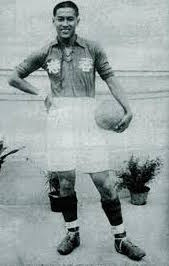
FW:  Lee Wei Tong 李惠堂
He was born in Hong Kong, but elected to play for the Republic of China.  He went to play in 1936 Olympics, where he made a strong impression.  At home, he predominantly played for South China and helped establish the club in being the most successful team in Hong Kong history. 
李惠堂是公認之中國足球球王。 出生於香港李惠堂為隊長身分帶領中華民國參加1936年柏林奧運會。 為南華效力的多年。

FW/LW: Yiu Cheuk Yin 姚卓然 
Yiu is a member of the "Four Aces of South China" of the 1950's.   He won the gold medals at both 1954 and 1958 Asian Games representing Republic of China. He also went to the Olympics in 1960 and scored two goals vs England. 
1950年代尾「南華四條煙」其中之一。曾代表中華民國參加過羅馬奧運會及兩奪亞運會足球金牌。1960年,代表中華民國參加羅馬奧運會足球賽,並於對英國隊的賽事中射入兩球。

FW: Cheung Chi Doy 張子岱
Cheung was the first Asian football player to play in Europe. In 1960, he went to play for English club Blackpool, where he was a teammate of Jimmy Armfield. He became the first ethnic Chinese player to appear in the top flight of English football.  In 1968, he joined the Vancouver Royals, playing under Bobby Robson in the NASL. He also played for Tung Wah, Kitchee and Jardine SA in the Hong Kong.
於1960至62年效力英格蘭甲組聯賽球會黑池,是歷來首位加盟歐洲頂級聯賽的華人及亞洲球員。於1968年2月波比笠臣邀請張氏兄弟張子岱及張子慧加盟北美足球聯賽球會溫哥華皇家。

ST: Wan Chi Keung 尹志強
Wan Chi Keung is a star player in the 1970's and 1980's, and was considered one of the top strikers in Asia.  He played for South China, Seiko and Lai Sun Double Flower.
1970、80年代的香港職業足球員,司職中鋒,有「亞洲第一中鋒」美譽。除南華外,還效力過精工及麗新花花等甲組球會。

ST:  Chung Cho Wai 鍾楚維
In his prime, Chung was considered the "No 1 Striker in Asia".  He played for Ranger and Happy Valley.
綽號大隻維,有亞洲第一中鋒美譽,退役香港足球員,曾多次入選香港足球代表隊,是香港1970年代華人首席足球中鋒,出身於流浪,其後轉投愉園,一直效力至1980年掛靴。

Honorable Mention 榮譽提名
Chu Kwok Kuen(朱國權)Fan Chun Yip (范俊業), Chan Wan On (陳雲岳),  Liu Chun Fai (廖俊輝),  Chu Pak Woo (朱柏和),  
Lai Sun Cheung (黎新祥 ), Tam Kong Pak (譚江柏), Cheng Yung Yu (鄭潤如), Choi York Yee (蔡育瑜), Cristiano Cordeiro (高尼路), Fok Pak Ling (霍柏寧), Cheng Yun Yu (鄭潤如), Kwok Yau (郭有), Law Pak (羅北), Hau Yung Sang (侯榕生), Ng Wai Chiu (吳偉超), 陸達熙 (Luk Tat Hay), Tsang Ting Fai (曾廷輝), Lo Kwan Yee (盧均宜), Yau Kin Wai (丘建威), Chan Wai Ho (陳偉豪), Lee Wai Man 李偉文, Gerard Ambassa Guy (卓卓), Lee Chi Ho (李志豪), Wong Man Wai (黃文偉), Yip Sheung Wah (葉尚華), Cheng Siu Chung (鄭兆聰), Tam Sui Wai (譚兆偉 ), Lo Kai Wah (羅繼華), Li Haiqiang (李海强), Cheung Sai Ho (蔣世豪), Leung Nang Yan (梁能仁), Tam Siu Wai (譚兆偉), Au Pan Nin (區彭年), Huang Yang (黄洋), Derek Currie (居里),  Lee Wai Lim (李威廉), Lee Kin Wo (李健和), Fung Chi Ming ( 馮志明), Yip Bei Wah (葉北華), Sze Kin Hei (施建熙), Mok Chun Wah (莫振華 ),  Wong Chi-keung (黃志強), Chan Fai-Hung (陳輝洪), Law Kwok-tai (羅國泰),  Ng Wai Man (吳偉文 ), Chu Wing Keung (朱永強) , Hau Ching-To (侯澄滔), Law Kwok-tai (羅國泰), Lee Yuk Tak (李育德),   Au Wai Lun (歐偉倫), Chan Siu Ki (陳肇麒),  Cheung Chi Wai (張子慧), Lau Wing Yip (劉榮業) , Godfred Karikari (高梵),  Tim Bradbury (巴貝利), Dale Tempest (譚拔士).

Squad Explanation
-- I did a review of the team in May, 2024.  I expanded this section.
-- The HKFA did not exist until 1954.  If the Hong Kong players wanted to play international football before that time, they would have to play for the Republic of China.  This trend continued even after 1954.  Before the 1970's, the nation team of Republic of China was consisted of Hong Kong players only.  The Hong Kong national team served as a feeder team to the ROC.  All HK players who represented Republic of China were considered for this all-time team.  
-- In 2000, the HKFA selected the 10 greatest Hong Kong players of the 20th Cenury.  The players were: Cheung Chi Doy (張子岱), Wong Man Wai (黃文偉), Leslie Santos (山度士), Wong Chi-keung (黃志強),  Ko Po Keung (高寶強), Yiu Cheuk Yin (姚卓然),   Mok Chun-wa (莫振華), Ho Cheung Yau (何祥友), Kwok Ka Ming (郭家明) and Wu Kwok Hung (胡國雄).  In addition, Lee Wei Tong (李惠堂) was voted as the Honorary Player of the Century.
 Lee Wei Tong 李惠堂
--In 2014, the Hong Kong Football Association (HKFA) organized a centennial celebration to commemorate their 100 years of existence. As part of the festivities, the HKFA assembled a list of their top 22 players from the past century. The players were divided into two categories: those who played before the 1970s and those who played after the 1980s. The combined list included the following players: Lee Wei Tong (李惠堂), Lam Sheung Yee (林尚義), Yiu Cheuk Yin (姚卓然), Cheung Chi Doy (張子岱), Wong Man Wai (黃文偉), Chow Chee Keong (仇志強), Chung Cho Wai (鍾楚維), Lai Sun Cheung (黎新祥), Leung Nang Yan (梁能仁), Wan Chi Keung (尹志強), Wu Kwok Hung (胡國雄), Chan Fat Chi (陳發枝), Cheung Chi-Tak (張志德), Leung Sui Wing (梁帥榮), Ku Kam Fai (顧錦輝), John Spencer (史賓沙), Lee Kin Woo (李健和), Leslie Santos (山度士), Au Wei Lun (歐偉倫), Tam Siu Wai (譚兆偉), Dale Tempest (譚拔士) and Cristiano Cordeiro (高尼路).  Chow Chee Keong and John Spencer never played for Hong Kong nor the Hong Kong-based Republic of China.  So they were ineligible for this team.
-- In 2004, the "Hong Kong Broadcasting 75th Anniversary Honorary Award" was presented to three legends of the game: Yao Cheuk-Yin, Tam Kong-Pak, and Ko Po-Keung.
-- The Republic of China, consisted entirely of players from Hong Kong, achieved remarkable success in several major tournaments. They won the gold medal at both the 1954 and 1958 Asian Games, while finishing third in the 1960 Asian Cup. Additionally, they qualified for the 1960 Olympics held in Rome. During these tournaments, the Hong Kong team also participated, albeit considered their B team. In the 1958 Asian Cup, the Hong Kong team impressively secured the second-place position.
-- In the 1938 Olympics, the Republic of China fielded a team that featured only five players who were not from Hong Kong.
Goalkeepers
-- Ho Yung Hing (何容興) stood shoulder to shoulder with the legendary Chow Chee Keong (仇志強) during his prime. Chow Chee Keong was hailed as one of Asia's all-time greatest goalkeepers, and Ho Yung Hing's exceptional skills placed him in close proximity to that level.
-- Yapp Hung Fai (葉鴻輝) was one of the key contributors to Hong Kong's victory in the football gold medal at the 2009 East Asian Games.  He is also Hong Kong most capped player.
-- Charlie Wright is one of the few Hong Kong representatives who had played in Europe.  He played for Ranger, Grimsby Town, Charlton Atletic and Bolton Wanders. He represented Hong Kong for a few matches while stationing there for the armed force.  But was he eligible to play for Hong Kong? I need more information on his international record.
-- During the peak of the Hong Kong league, Chan Wan Ngok (陳雲岳) achieved a rare distinction by being named the Hong Kong Player of the Year in 1984, despite being a goalkeeper. He played a crucial role in the famous "519" victory over China. However, Liu Chun Fai (廖俊輝)  the original starting goalkeeper for the HK team, was sidelined due to injury during that game. At the time, Liu Chun Fai was considered to be superior to Chan Wan Ngok.  Fan Chun Yip (范俊業) was also voted as the Hong Kong Footballer of the Year in the 2003–04 season.  Both Wai Fat Kin (衛佛儉) and Pau Ka-Ping 包家平 were historical goalkeepers. It was hard rated them against the modern players.  They all made honorable mentions.
--In the end, I selected Lo Tak Kuen (盧德權) achieved a remarkable feat in the 1964 AFC Asian Cup by being named the Team of the Tournament, an accolade that no other goalkeeper from Hong Kong has ever accomplished.
Lo Tak Kuen (盧德權) 
Defenders
-- Cheung Chi Tak (張志德) scored a stunning long-range goal from a spot kick that defeated China 2-1 in that "517" match.  He was immortalised by that goal.  Chan Sai Kau (陳世九) was one of the highest paid footballers during his time in the 1970's.  He also played as a central defender.  Hugh McCrory (麥哥利) only played a few times for Hong Kong.  So  he only made honorable mentions.
-- Ko Po Keung (高寶強 )was a legendary figure for South China during the 1960s. In 2003, he was honored with the "Football Hall of Fame Award" or "Football Honor Award" 「球壇榮譽大獎」
alongside anothert central defender Tam Kong Pak.  Tam Kong Pak (譚江柏), also known as "Tam Copperhead," garnered recognition for his remarkable performance in the 1936 Olympics. His son was the famous singer, Alan Tam.  Leung Sui Wing (梁帥榮) captained the "519" team that beat China in 1986.  Lam Sheung Yee (林尚義) were well-respected football commentators after their retirement. They were my four central defenders. I also have Chan Sai Kau (陳世九) who could also play in the central defensive position.
-- I only had Sammy Yu Kwok Sum 余國森 as my leftback.
-- Cristiano Cordeiro (高尼路) was a naturalised Brazilian who contributed to the Hong Kong team.  He won Hong Kong Player of the Year twice. Ng Wai Chiu (吳偉超) was one of the few Hong Kong players to establish himself in the Chinese league.  Li Tin Shing (李天生) played besides Tam Kong Pak at the 1936 Olympics.  He was a forgotten player.  Lai Sun Cheung(黎新祥 ) and Choi York Yee (蔡育瑜).  I also considered Luk Tat Hay (陸達熙). Chan Ping On (陳炳安) and 
-- I held a higher level of respect for Gerard Ambassa Guy (卓卓) than most fans did. He was named on the HK League Team of the Year seven times.
Midfielders/Wingers
-- For defensive midfielders, I first chose Ku Kam Fai (顧錦輝) who was a legend with South China.  He was also one of the heroes of "519" team.  Festus Baise (法圖斯) emerged as a prominent figure in the Chinese Super League while representing Guizhou. Throughout his tenure, the league boasted numerous renowned players, but it was Baise who ultimately assumed the prestigious role of team captain. His accomplishment remains unparalleled among Hong Kong footballers.  Wong Man Wai (黃文偉) was only 16 years old and eleven months when he played in the 1960 Olympics. The four made this All-Time team. Cheng Siu Chung (鄭兆聰) came close to that level, but he only made honorable mentions.
Festus Baise (法圖斯)
-- Wu Kwok Hung (胡國雄) won 4 consecutive time winner of Hong Kong Footballer of the Year between 1979 and 1982.  He is probably Hong Kong's greatest player.  Then, I would take Leslie Santos.  He was one of the HK players elected into "Hong Kong Players of the Century" in both 2000 and 2014.
-- For right wide players, Ho CheungYau (何祥友) was awarded the Member of the Order of the British Empire (MBE) by the Queen in 1972, becoming the first footballer in Hong Kong's history to receive this prestigious honor. The award recognized his outstanding contributions and achievements in the field of football.  Kwok Ka Ming (郭家明) was also another undisputed choice for this team.  So I left out Tso Kwai-Shing (曹桂成), Wong Chi Keung (黃志強), Ho Ying Fun (何應芬) and Lee Kin Woo (李建和).  They were all very legendary rightwingers.
-- Tso Kwai-Shing (曹桂成) played on the 1936 Olympic team.  In 1957, Wong Chi Keung (黃志強) joined South China, and the famous "South China Three Aces" became the "South China Four Aces". Mok Chun-wah (莫振華), known as "Mok Niu," played as a left-winger and often formed a formidable wing partnership with Wong Chi Keung, nicknamed "Niu Shi," who played as a right-winger. Their exceptional combination on the wings led to them being hailed as the "Double Bull Formation" (雙牛陣)。 Ho Ying Fun (何應芬) also known as the "Stanley Matthews of the East," won gold medals twice in the Asian Games. Lee Kin Woo was named on the Hong Kong League's Team of the Year, a record 11 times.  They all only made honorable mentions.
-- On his prime, Derek Currie (居里), a left-winger, was the first European professional footballer to play in an Asian professional league. He became the first Non-Chinese player to become a major star in the Hong Kong league.  However, he was only capped a few times for Hong Kong.  So I could only left him on honorable mention. Instead, I took Mok Chun-wa (莫振華).  In the 1950's, he was one of the "Four Aces of South China." As mentioned, he played on a famous line known as "Double Bull Formation" (雙牛陣). Yiu Cheuk Yin (姚卓然) could also play on the left and is considered one of Hong Kong's greatest footballers. Hence, I have sufficient left-side wide players.
Yiu Cheuk Yin 姚卓然
Forwards
-- Lee Wai Tong (李惠堂), born in Hong Kong, is often considered the greatest Chinese player. He showcased his talent at the 1938 Olympics. Some said that he was one of the best players in the world at the time. Similar to other Hong Kong players of his generation, he represented the Republic of China national team.  At the age of 17 years and 212 days, Lee achieved the remarkable feat of becoming the youngest player to score a hat-trick for a national team. Astonishingly, his record remains unbroken to this day, with Pele being the only player to come close at 17 years and 241 days. His son Lee Yuk Tak (李育德) also made honorable mention.
-- Cheung Chi Doy holds the distinction of being the first Asian football player to venture into European  club football. In 1968, he and his brother Cheung Chi Wai made their mark by joining the Vancouver Royals under the guidance of renowned coach Bobby Robson in the North American Soccer League. Their signing marked a significant milestone as they became the first-ever players to be recruited by Robson in his professional coaching career. 
-- During their prime, both Wan Chi Keung (尹志強) and Chung Cho Wai (鍾楚維) held the prestigious title of "Asian Best Striker." Lau Wing Yip (劉榮業) competed during a similar period alongside Wan Chi Keung and Chung Cho Wai, showcasing a level of skill comparable to theirs. However, due to limited spots available, I had to make the difficult decision of selecting only Wan Chi Keung and Chung Cho Wai for this all-time team, unable to include Lau Wing Yip.
Chung Cho Wai (鍾楚維)
-- The younger fans probably had forgotten about Chu Wing Keung (朱永強).  He helped Republic of China to win the 1954 Asian Games Gold medal.  Chan Siu Ki (陳肇麒) is the leading all-time goal scorer in the history of Hong Kong's team, while Au Wai Lun (歐偉倫)  holds the second position. However, the older players are held in higher regard and regarded as legends in Hong Kong's football community. Chan Fat Chi (陳發枝) , Tim Bradbury (巴貝利) and Dale Tempest (譚拔士) were top players in their time.  Godfred Karikari (高梵), did well playing club football in China. They made honorable mention.

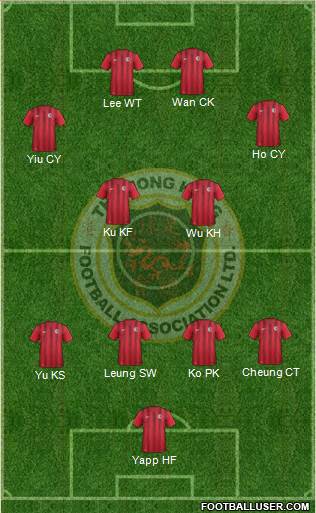
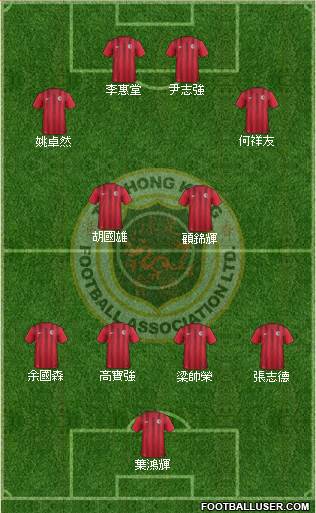
Formation


入選原因
-- 香港足球總會於1954年成立。如果在1954年之前,香港的球員想參加國際足球比賽,他們會選擇代表中華民國參賽。這個趨勢一直延續到1960年代後期。在1970年代之前,中華民國的國家隊主要由香港球員組成。香港隊在當時充當了中華民國國家隊的B隊伍。對於這個歷史隊伍,我將包括所有代表中華民國的香港球員在內。
1964 Asian Cup 亞洲盃
-- 在2000年,香港足球總會選出了20世紀最偉大的10名香港球員。這些球員包括:張子岱、黃文偉、山度士、黃志強、高寶強、姚卓然、莫振華、何祥友、郭家明和胡國雄。此外,李惠堂被選為世紀榮譽大獎。
-- 在2014年,香港足球總會舉辦了「香港世紀球星選舉」,以慶祝該足球總會成立100週年。這次慶典的一部分是組織一份過去一個世紀中的22位頂尖球員名單。這些球員被分為兩個組別:1970年以前和1980年以後的球員。綜合名單包括以下球員: 李惠堂、林尚義、姚卓然、張子岱、黃文偉、仇志強、鍾楚維、黎新祥、梁能仁、尹志強、胡國雄、陳發枝、張志德、梁帥榮、顧錦輝、史賓沙、李健和、山度士、歐偉倫、譚兆偉、譚拔士和高尼路。仇志強和史賓沙從未代表香港或香港所屬的中華民國出場,因此他們不符合這支香港歷史最佳隊伍球隊的資格。
-- 2004年頒發「香港廣播七十五周年榮譽大獎」給傳奇的三位球員: 姚卓然、譚江柏及高保強。
-- 由來自香港的球員完全組成的中華民國隊,在多個重要比賽中取得了非凡的成就。他們在1954年和1958年的亞洲運動會上連續奪得金牌,並在1960年的亞洲盃上獲得了第三名。此外,他們還成功晉級了1960年在羅馬舉行的奧運會。同時,香港隊也參與了這些比賽,儘管被視為B隊。特別值得一提的是,香港隊在1958年的亞洲盃上以卓越的表現獲得了第二名的成績。
-- 在1938年的奧運會上,中華民國組建了一支球隊,除了5名球員外,其他所有球員都來自香港。
守門員
-- 何容興在他的巔峰時期與傳奇的仇志強 并肩而立。仇志強被譽為亞洲歷史上最偉大的守門員之一,而何容興出色的技術使他非常接近這個水平。我相信何容興同時可以被視為亞洲頂尖的守門員之一。
-- 葉鴻輝 (Yapp Hung Fai) 是香港在2009年東亞運動會足球金牌中的關鍵貢獻者之一。他是香港出場次數最多的球員,他的表現對香港足球的發展起到了重要作用。
-- 查理·萊特 (Charlie Wright) 是少數在歐洲踢球的香港代表之一。他曾效力於流浪 (Rangers)、格里姆斯比鎮 (Grimsby Town)、查爾頓 (Charlton Athletic) 和保頓流浪者 (Bolton Wanderers)。他在英軍駐港部隊期間曾代表香港出場幾場比賽。然而 ,我不能確定那些比賽是否為正式的國際FIFA會比賽 。關於他是否有資格代表香港出賽的更多信息,我需要進一步的了解他的國際賽事記錄。
-- 陳雲岳在1984年被選為香港年度最佳球員,這對守門員來說非常罕見。他曾參與著名的519戰勝中國的比賽。然而,原本是香港隊的首發守門員廖俊輝因傷無法參賽,當時他的評價比陳雲岳更高。范俊業也在2003-04賽季被評選為香港年度最佳足球運動員。衛佛儉和包家平都是歷史上重要的守門員。對於與現代球員相比,很難對他們進行評價。我將他們僅列入「榮譽名單」。
-- 最終,我選擇了盧德權。他在1964年亞洲盃足球賽中取得了驚人的成就,被选入了比赛的最佳陣容(Team of the Tournament),這是香港其他守門員從未獲得過的榮譽。
 後衛 
-- 右後衛: 在「519」比賽中張志德以一記驚人的遠射罰球,以2-1擊敗中國隊。因此, 他成為不朽的傳奇。在1970年代陳世九是最高薪資的足球運動員之一,他也擔任中堅後衛。麥哥利(Hugh McCrory)只代表香港出場了幾次比賽,因此我將他放進榮譽提名。
-- 我只選擇了余國森作為我的左後衛球員。
-- 高寶強在1960年代是南華足球隊的傳奇人物。他於2003年榮獲「球壇榮譽大獎」,與另一名中後衛譚江柏一同被表揚。譚江柏,又被稱為「譚銅頭」,因其在1936年奧運會上的出色表現而獲得了認可。他的兒子是著名歌手譚詠麟。梁帥榮是1986年擊敗中國的「519」隊的隊長。林尚義退役後成為受人尊敬的足球評論員。他們是我所選擇的四名中後衛球員。我還有陳世九,他也能在中堅後衛位置上出場。
Tam Kong Pak 譚江柏
-- 高尼路(Cristiano Cordeiro)是一位巴西裔球員,入籍香港後對香港隊的貢獻不可忽視。吳偉超則是少數在中國聯賽站穩腳跟的香港球員之一。李天生曾與譚江柏一同代表香港參加1936年奧運會,他是一位被遺忘的球員。此外,還有清道夫黎新祥、蔡育瑜和陸達熙也在考慮之列。最終,我將他們列為榮譽提及者。
-- 卓卓被選為「榮譽提及者」可能對許多人來說是令人驚訝的。從實際角度來看,他曾七次入選香港年度足球明星選舉明星十一人。
中場球員/邊鋒 
-- 首先,我選擇了顧錦輝,他是南華足球隊的傳奇人物。此外,他也是「519」隊的英雄之一。法圖斯在貴州智誠隊成為中超聯賽中的重要球員。在他效力期間,中超聯賽匯聚了眾多球壇巨星。他更擔任隊長一職,成為無人能及的香港球員。他們兩位是我選擇的防守型中場球員。黃文偉在1960年代表中華民國参加了1960年羅馬奧運會,當時他年僅16歲11個月,因此被稱為"神童偉"。以上3人入選我的史上最佳隊伍。鄭兆聰幾乎達到了那個水平,但只獲得了榮譽提名。
-- 胡國雄在1979年至1982年期間連續四次獲得香港年度足球先生的稱號。他可能是香港最偉大的球員。接下來,我會挑選山度士。他分別在2000年和2014年入選了「香港世紀球星」。
-- 對於右邊鋒球員,何祥友於1972年獲得英國女王頒授大英帝國勳章(MBE),成為香港歷史上第一位獲得這一傑出榮譽的足球運動員。該獎項表彰了他在足球領域的卓越貢獻和成就。而郭家明也是這支球隊另一個毫無爭議的選擇。所以我無法將曹桂成、黃志強、何應芬和李建和納入球隊中。他們都是香港史上非常傳奇的右翼球員。
-- 李建和創下紀錄11次當選香港聯賽年度隊伍。曹桂成曾參加1936年奧運會足球隊。1957年,黃志強加盟南華,使得「南華三條煙」變為「南華四條煙」。作為司職左翼的「莫牛」莫振華經常與右翼「牛屎」黃志強攜手組成雙翼齊飛的絕佳組合,因此兩人被譽為「雙牛陣」。何應芬以「東方馬菲士」之稱聞名,曾兩次獲得亞運會金牌。
-- 居里是首位在亞洲職業聯賽中效力的歐洲職業足球運動員。他的加入為香港聯賽帶來了新的國際化元素,並為球迷們帶來了新的期待和興奮。在他的巔峰時期,左邊鋒居里是香港聯賽中首位非華裔球星 然而,他在香港隊只獲得6 caps。因此,我只能將他列為榮譽提名。在這個位置上,我選擇了莫振華。在1950年代,他是南華足球隊的「南華四條煙」之一。正如前面提到的,他是著名的「雙牛陣」的一員。此外,姚卓然也可以在左翼位置上發揮,並被譽為香港最偉大的足球運動員之一。因此,我有足夠的左側邊路球員選擇。
前鋒 
-- 李惠堂,出生於香港,常被認為是最偉大的中國球員。並在1938年奧運會展現才華, 當時他被視為世界上最佳的球員之一。與同代的其他香港球員一樣,他代表中華民國國家隊參賽。李惠堂在17歲212天時創下了令人驚人的紀錄,成為國家隊帽子戲法中最年輕的球員,令人驚訝的是,至今這項紀錄仍然保持著,只有貝利在17歲241天時接近過。他的兒子李育德也值得一提。
-- 張子岱是第一位踏足歐洲足球的亞洲球員的殊榮。在1968年,他和弟弟張子慧加入溫哥華皇家隊。他們的加盟成為波比·笠臣職業教練生涯中首批招募的球員。
Cheung Chi Doy 張子岱
-- 尹志強和鍾楚維在他們的巔峰時期都獲得了「亞洲最佳前鋒」的稱號。劉榮業和尹志強、鍾楚維在大致相同的時期比賽,他們在前鋒位置上展現出優異的表現,可以說不相上下。這彰顯了劉榮業作為一名前鋒的才華和貢獻,同時也展示了當時香港足球界的優秀水平。很遺憾,我只能選擇尹志強和鍾楚維進入這支史上最佳球隊,因為我沒有足夠的名額選擇他們三個人。
-- 年輕的球迷可能已經遺忘了朱永強。他幫助中華民國贏得了1954年亞洲運動會的金牌。侯澄滔與朱永強、何應芬並稱為「東方三劍俠」。在結束足球生涯後,侯澄滔轉向了演藝圈。陳肇麒是香港隊歷史上的領先射手,而歐偉倫則排名第二。然而,在香港足球界中,許多年長球員被更高度看重並被視為傳奇人物。巴貝利和譚拔士在他們的時代是頂級球員。高梵在中國聯賽中表現出色。可惜他們但只獲得了榮譽提名。他們只獲得了榮譽提名。

Formation


Wednesday, September 9, 2015

Basque Greatest All-time 23 member team

This blogger Artur Yanturin of Russia copied many of my blog teams.  This blog was one of them.  It was my Russia All-Time Team here.  His team was written in 2020, but mine was uploaded in 2014.   His Spartak Moscow All-Time team entry of was published in October 2020, but mine was uploaded in 2017.  His entry of the Dutch-German rivalry between Real Madrid and Barcelona was written in 2020, but mine was uploaded in 2014.  He also copied many many of my blog entries.

His Facebook and Instagram


Ignacio Kortabarria and José Ángel Iribar 1976 showing the Basque flag in 1976

Please also see my All-Time World Cup Team Index.


The Basque country is the homeland of the Basque people.  It consists areas that are parts of Spain and France.  The Basque footballers have been capped by many countries. Athletic Bilbao is the symbol of Basque nationalism.  It is one of the most successful clubs in Spain.  It has an unwritten rule that the club only fields Basque players.  

It comprises the Autonomous Communities of the Basque Country and Navarre in Spain and the Northern Basque Country in France. The region is home to the Basque people (Basque: Euskaldunak), their language (Basque: Euskara), culture and traditions. The area is neither linguistically nor culturally homogeneous, and certain areas have a majority of people who do not consider themselves Basque, such as the south of Navarre


This is my All-Time 23 member team for the Basque people.  I am including overseas Basque players who were capped by other countries.  The number 23 was chosen because it is the official squad size for the World Cup Finals and other major tournaments.


Basque National Team
Team 
GK: Andoni Zubizarreta (Spain)
Andoni Zubizarreta represented La Roja in 4 World Cup Finals. He was at one point Spain's cap record holder.  He started with Athletic Bilboa.  He also played for Barcelona and Valencia.  He won Barcelona's first ever Champions' League in 1992.  After the 1993–94 UEFA Champions League, where Barcelona lost 0–4 to A.C. Milan in the final, Zubizarreta was deemed surplus to requirements.

GK: José Ángel Iribar (Spain)
José Ángel Iribor spent his entire career with Athletic Bibao from 1962 to 1980, except a season at the club's feeder club, CD Basconia.  He played over 600 games in a 18 year career.  For the national team, he played 49 times for Spain between 1964 and 1976. He was Spain's starting keeper at the 1964 European Championship as Spain won their first ever major trophy. He was also Spain's starting keeper at the World Cup Finals in 1966.

GK: Luis Arconada (Spain)
Luis Arconada played his entire career with Real Sociedad, capturing back-to-back La liga titles from 1980 to 1982.  He was capped 68 times, helping Spain to reach the Euro 1984 Final.  His blunder, however, in the Final caused Spain to lose in that Final against France. He also went to the 1978 and 1982 World Cups as well as Euro 1980. 


RB: José Orue (Spain)
José Orue was a long-time footballer for Atletic Bilboa during the 1950's.  At the time of writing, he is their fourth most appearance record for the club. He won one league and three Copa del Rey trophies in the 50's, including the double in the 1955–56 campaign.  He earned 3 caps for Spain.

RB/CB: Jose Nasazzi (Uruguay)
He was the captain of Uruguay's legendary team that won the World Cup in 1930.   He is regarded by many as Uruguay's greatest ever football player. He was known as "El Gran Mariscal" (The Great Marshal) and had already won the gold medal at the 1924 and 1928 Olympic Games, as well as the South American Championship in 1923, 1924 and 1926, by the time of the first World Cup.

CB:  Jacinto Quincoces (Spain)
Jacinto Quincoces was one of the greatest defenders of the pre-war era. He played for Deportivo Alavés from 1920 to 1931.  From 1931 to 1942, he played for Real Madrid.  He won the first ever title for Real Madrid in 1930.  He was widely considered one of the first soccer idols in Spain.  He played 25 times for Spain between 1928 and 1936.  He made his international debut in 1928 against Mexico.   He went to the World Cup Finals in 1934.
Jacinto Quincoces 
CB:  Andoni Goikoetxea (Spain)
Nicknamed "The Butcher" for his style of play, Goikoetxea played mainly for Atletic Bilboa, but also with Atletico Madrid.  He was a part of Javier Clemente's Bilboa team that won back-to-back league title from 1982 to 1984.  However, he was best remembered for almost ending Diego Maradona's career with a tackle in 1983.  A year later, he became the focal point of the infamous brawl between Barcelona and Atletic Bilboa at the Final of Copa del Rey.  

CB:  Jesús Garay (Spain)
Rated among the best ever centre-back to be capped for Spain, Garay went to the World Cup Finals in 1962.  He spent 10 seasons with Athletic Bilboa and then, Barcelona for another 5 seasons. He won five major titles with Athletic Bilboa. He also played a single season with CD Málaga. He had 29 caps. He was part of the squad that competed at the 1962 World Cup. 

LB:  Bixente Lizarazu (France)
Bixente Lizarazu was the leftback for the all-conquering French team of 1990's and early 2000's.  He won the World Cup in 1998 and European Championship in 2000. He had 97 caps. Lizarazu began his professional career with Girondins de Bordeaux, but better known for playing with Bayern Munich for 9 seasons. He won the Champions' League in 2001. He is a Basque and he also played for Atletico Bilbao. 

Bixente Lizarazu 

LB:  Agustin Aranzabal (Spain)
From 1993 to 2004, he starred for Real Sociedad. He helped the club to finish second during the 2002–03 season. He moved to Zaragoza in 2004, but could not find any successes.   He retired in 2008, but in early 2010, he retired and joined Kitchee SC from Hong Kong, playing along side Albert Celades.  He had 28 caps and went to the World Cuo Finals in 1998.

DM: Ignacio Zoco (Spain)
Ignacio Zoco was best remembered for his 12 seasons with Real Madrid. He was a member of the Ye Ye team of Real Madrid that defined an era in Spanish football.  He won the 1966 European Cup with the club.  He played more than 20 times with Spain, winning the 1964 European Nations' Cup and also representing the nation at the 1966 World Cup.

DM:  Didier Deschamps (France)
Deschamps was only the second player in history to captain his team to lift the three big trophies: the Champions League trophy, the World Cup trophy and the European Championship trophy.  He started his career with Nantes. The prime of his career was spent with Marseille and Juventus, where he won a Champions League for both club.  He earned 103 caps and was the captain of 1998 World Cup winning team for France.

CM/DM/LM: Jose Maria Zarraga (Spain)
From 1951 to 1961, he played for Real Madrid.  He won 11 major trophies, including 5 straight European Cups– he played in all the finals, and totalled 31 appearances combined in those victorious campaigns.  The 1959-1960 team was considered one of the greatest ever club sides in history. He made 8 appearance with Spain and once as the captain.

CM: Xabi Alonso  (Spain)
Xabi Alonso started with Real Sociedad.  He joined Liverpool in 2004 winning the Champions' League trophy in his first season.  In 2009, he moved to Real Madrid, winning the Champions' League again in 2014.  In 2014, he joined Bayern Munich. He was a key member of the Spanish team that won the World Cup in 2010 and two European Championships in 2008 and 2012.  His 114 caps make him the fifth most capped player in the nation's history.
Xabi Alonso
AM/RM: Gaizka Mendieta (Spain)
Gaizka Mendieta was a big star while playing for Valencia between 1993 and 2001.  He led them to back-to-back Champions' League Final in 2000 and 2001.  He moved to Lazio in 2001, but he failed to find his form.  Then, he played one season with Barcelona, where the club only finished 6th at the league.  He would also play with Middesbrough FC. He earned 40 caps. He went to Euro 2000 and the World Cup Finals in 2002.

LW: Agustin Gainza (Spain) 
Agustín Gaínza is one of Atletico Bilboa's greatest players.  He spent his entire career with Athletic Bilbao, winning 10 major titles between 1940 and 1959.  When he retired, he was the club's appearance record holder. He won 33 caps and was the captain of Spain in the 1950 World Cup Finals in Brazil, where they finished 4th.

FW/RW: Joseba Etxeberria (Spain)
Joseba Etxeberria started his career with Real Sociedad, but after a single season, he moved to Athletic Bilbao in 1995, breaking the transfer record for an under 18 player in Spain.  The transfer also broke off formal relationship between the two clubs. He was capped 53 times, representing his country at the 1998 World Cup,  Euro 2000 and Euro 2004.

AM/ST:  Diego Forlan (Uruguay)
Diego Forlan's career in Europe started slowly, but his career finally took off after heading to Spain in 2004.  He was two-time European Golden Shoe winner in 2004-2005 and then, 2008-2009.  His best years were with Villarreal and Atletico Madrid, winning the UEFA Europa League with the latter. He had 112 caps, leading Uruguay to the 2011 Copa America title as well the semi-final of the 2010 World Cup Finals.  He won the Golden Ball at South Africa 2010.
Diego Forlan
ST: Mundo (Spain)
Edmundo Suárez Trabanco was known as Mundo.  He is the highest scorer in Valencia's history and remained one of the top scorers in La Liga's history.  He started his career with Athletic Bilbao, playing a single game before the Spanish Civil War cut short his stay.  He played for Valencia after the War between 1939 and 1950.  Capped 3 times.

ST: Rafael Moreno Aranzadi "Pichichi" (Spain)
The award for la Liga top-scorer is named after him.  He scored 240 goals in 170 matches for Athletic Bilbao. He won 4 Copa del Rey. In 1920, Pichichi was a member of the very first Spain national team that played at the Summer Olympic Games in Belgium. He earned five senior caps during one month, his debut coming on 28 August in a 1–0 win against Denmark.

ST: Gonzalo Higuain (Argentina)
Born in France of an Argentinian player Jorge Higuain, Gonzalo first starred for River Plate in Argentina.  He joined Real Madrid in 2006.  He became a fan's favourite after scoring the winning goal against Espanyol on his debut season.  He would stay with the club until 2013.  For the national team, he earned 52 caps.  He was brought into the national team after Argentina struggled to qualify for South Africa 2010.
Gonzalo Higuain
ST: Isidro Langara (Spain)
Langara was a star player with Real Oviedo before the start of the Spanish Civil War.  After the War, he became an exile playing for San Lorenzo in Argentina. He scored 110 goals in 121 games.  In 1940, he was the league's joint-top scorer. In 1943, he moved to play for Real Espana in Mexico.  He was the league's top scorer.  In 1946, he returned to Spain and played fro Real Oviedo again.

ST: Telmo Zarra (Spain)
Athletic Bilbao's greatest player.  Zarra signed for Athletic after playing one season for Erandio. He became a prolific goalscorer in his 15 seasons at the club, winning the Pichichi Trophy as the highest scorer in La Liga on six occasions. During his career, Zarra scored a total of 251 league goals, a Spanish record that lasted nearly six decades. His 81 goals in the Copa del Rey remains a record today .He was capped 20 times and scored 20 goals for Spain. He was a member of the 1950 World Cup team.
Telmo Zarra

Honorable Mention:
Ivan Campo, Aitor Karanka, Agustin Aranzabal , Jose Ramon Alexanko, Leonardo Cilaurren, Jose Mari Bakero, Estanisiao Argote, Luis Regueiro, Bata, Fernando Llorente, Dani, Urrutti, Juan Alonso, Ignacio Eizaguirre, Julen Guerrero, Jose Eulogio Garate, Julio Salinas, Cesar Azpilicueta. Asier del Horno, Javi Martínez, Kepa Arrizabalaga, Aritz Aduriz, René Petit (France), Asier Illarramendi, Ion Andoni Goikoetxea, Jose Eulogio Garate, Ander Herrera, Pablo Zanaleta (Argentina), Ezequiel Garay (Argentina), Rafael Alkorta (Spain), Francisco-Gamborena.

Squad Explanation
-- Andoni Zubizarreta, Telmo Zarra, Andoni Zubizarreta, Xabi Alonso and Jacinto Quincoces were automatic selections. I also decided to select players from Basque diaspora. Didiner Deschamps, Jose Nasazzi, Diego Forlan and Gonzalo Higuain were too good to be ignored.  They were of Basque descent.  Bixente Lizarazu actually played for Atletico Bilboa. I took different approaches toward different regional teams.
-- I should create an all-Basque team without the diaspora or another one with just the diaspora.  I am not sure if I could find goalkeepers for the diaspora team.
-- The team consisted two World Cup winning captains, Didiner Deschamps and Jose Nasazzi
-- I have yet to decide if I should follow Athletic Bilbao's policy of using non-Basque footballer born or trained in the country.  Iñaki Williams is born in the Basque Country of Ghanaian parents. He is eligible to play for  Athletic Bilbao.  He is a good player, but still a long way before I put serious thought on selecting him.  Jonás Ramalho and Yuri Berchiche are two of the more famous non-Basque ethnic footballer playing for the club.  
-- Antonine Griezmann came from the youth academy of Real Sociedad, which made him eligible for Athletic Bilboa.  So I had to think deep into the issue for his elibility. If the Basque national team is a FIFA-sanctioned national team, the Basque-born players would likely played for the Basque national team.  However, Griezmann was born in France of German and Portuguese background.  No one would ever know if he would ever be entitled to a Basque passport by just spending some time in the country. Athletic Bilboa's policy is not the citizenship law of an imaginary Basque nation.  So I assumed that he probably would be playing for France even if Basque was a FIFA-sanctioned national team,
-- Basque had strength in keepers. Juan Alonso, Urrutti and Ignacio Eizaguirre were great keepers, but could not make the cut. The three goalkeepers are probably among the greatest in Spain.  Andoni Zubizarreta and José Ángel Iribar did not need introduction.  Luis Arconada's blunder in the Final of Euro 1984 hurt his reputation, but he was one of the best goalkeepers in his time. 
-- Spain won the 2024 European Championship with a strong Basque connection. Of the 15 players who played on the Final against England. seven players who either played or had played for the two Basque team, Athletic Bilbao and Real Sociedad. Two more players were also on the team.
-- Jose Nasazzi's mother came from Basque.  I did not learn of it until November, 2019. He should be on this team.  I am sure that I left off many players with maternal side of the family being of Basque background.  I replaced Rafael Alkorta (Spain) with him.
-- Juan Usatorre was a Soviet Union central defender of Basque origin. He was born in Moscow from a family of political exiles.  In his career, he played with Torpedo Moscow, Spartak Moscow, Lokomotiv Moscow and Dinamo Minsk.  From 1962 to 1965, he starred in Minsk.  He was capped by the USSR 10 times.  His background was interesting.
-- Jose Nasazzi would probably be a centerback in the modern football, but he is often listed as a rightback. At the time of writing, José Orue is their fourth most appearance record for the club.  I rewarded him a spot.  The fact that he played for Atletic Bilboa helped his case.  Cesar Azpilicueta had done many things in his career, but Atletic Bilboa was very important for Basque nationalismPablo Zanaleta (Argentina) probably deserved a spot too.  
-- Because of Jose Nasazzi, I only took three other central defenders and a single rightback.  Jacinto Quincoces was one of the greatest defenders of the pre-war era.  Then, I selected  Jesús Garay was among the greatest ever from Spain. Andoni Goikoetxea earned his reputation through his toughness. Ivan Campo, Aitor Karanka, Rafael Alkorta, Jose Ramon Alexanko and Ezequiel Garay did not have as famous as the three other central defenders I have selected.
--  I selected Andoni Goikoetxea, not Jon Andoni Goikoetxea.  Andoni Goikoetxea was also known for his controversial rivalry with Diego Maradona.  He broke Maradona's ankle earning the nickname "Butcher of Bilboa".  Their rivalry led to a massive brawl between the two teams in the Final of the 1984 Copa Del Rey.  Jon Andoni Goikoetxea known as as Goiko could play in various position.   He was mainly an attacker. Andoni Goikoetxea was the centerback known for his rivalry with Diego Maradona. 
-- Bixente Lizarazu (France) took over the leftback position.  I left Asier del Horno off and and I selected Jose Maria Zarraga who was a key member of Real Madrid of the 1950's.  He could play as a left back. 
-- Gaizka Mendieta, Xabi Alonso and Didier Deschamps easily took three of the midfield spots.  Jose Maria Zarraga served as the captain of Alfredo Di Stefanio's Real Madrid team, and Ignacio Zoco was among the best ever midfielders in his time. 
-- Leonardo Cilaurren, Jose Mari Bakero and Javi Martinez deserved a spot, but the players ahead of them were too good.
-- Agustín Gaínza is one of Athletic Bilbao's greatest players.  He spent his entire career with Athletic Bilbao. Joseba Etxeberria was selected for his commitment to Athletic Bilbao, which is considered to be liked the real national team of Basque. 
-- Telmo Zarra is probably the best known striker from Basque.
-- The award for La Liga top-scorer was named after Rafael Moreno Aranzadi "Pichichi" (Spain).
-- Fernando Llorente deserved his chances with the team. He might be more famous than Joseba Etxeberria, but Etxeberria was chosen ahead of him because he played his entire career with the two Basque clubs.  He also played 50 times for Spain. The same reason applied to Jose Eulogio Garate.
-- Diego Forlan is listed as a Basque, but Diego's bloodline came from his mother's side. Pablo Forlan is not a Basque.
 
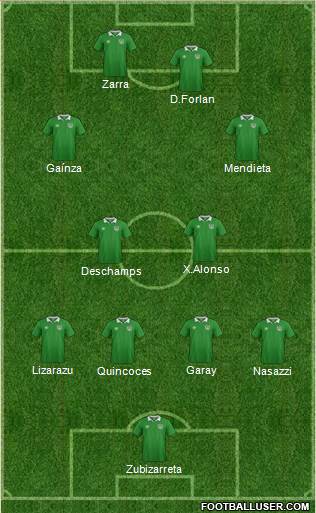
Starting lineup
Basque has a number of great strikers, but Diego Forlan proved himself at the World Cup Finals, the highest stage in football.