Sunday, January 22, 2017

Flamengo Greatest All-Time Team

This blogger Artur Yanturin of Russia copied many of my blog teams.  This blog was one of them.  It was my Russia All-Time Team here.  His team was written in 2020, but mine was uploaded in 2014.   His Spartak Moscow All-Time team entry of was published in October 2020, but mine was uploaded in 2017.  His entry of the Dutch-German rivalry between Real Madrid and Barcelona was written in 2020, but mine was uploaded in 2014.  He also copied many many of my blog entries.

His Facebook and Instagram

Copa Libertadores 1981


Please also see my All-Time World Cup Team Index.

SantosFlamengoSao PauloCorithiansBotafogo
Vasco Da GamaPalmeirasInternacional
FluminenseGremioCruzeiroAtlético MineiroBahia.

This is my selection of a 25 member all-time team for the club.  The number 25 was chosen because it is the official squad size for the Champions' League.

Flamengo is the most popular team in Brazil, with over 39.1 million supporters as of 2010,and was voted by FIFA as one of the most successful football clubs of the 20th century. It is also one of Brazil's richest football clubs in terms of revenue.  Led by Zico, they won the Copa Libertadores and the Intercontinental Cup in 1981.  The side is considered one of the greatest club sides in South American history.
2019 Copa Libertadores

Team
GK: Raul Plassman (Brazil)
Raul was the starting keeper for the great Flamengo team of the 1980's.  He played for them between 1978 and 1983, winning the Copa Libertadores and Intercontinental Cup in 1981.  His longest stint was with Cruzeiro, where he spent the prime of his career and won the Copa Libertadores in 1976.  He was capped 17 times, but never went to the WC Finals.

GK: Sinforiano García  (Paraguay)
Sinforiano García started his career in 1944, playing for Atlético Corrales,  moving in 1945 to Cerro Porteño, leaving this club in 1948. He joined Brazilian club Flamengo in 1949, after scouts observed him during the 1949 South American Championship. Sinforiano García played 276 games and and was crucial for the club's 1953, 1954 and 1955 Campeonato Carioca titles.  He was capped 20 times.

GK: Ze Carlos (Brazil)
From1983 to 2000, Ze Carlos played for many clubs in Brazil and Portugal. The best moment in his career came when he played for Flamengo, in the late eighties, when he won one Brazilian championship in 1987 and one Rio de Janeiro state championship in 1986. For the national team, he was usually the second goalkeeper after Taffarel. He went to  the 1990 World Cup Finals.

RB: Leandro (Brazil)
Leandro was one of the best rightbacks in the 1980's and one of Brazil's best ever. He earned 31 caps for BrazilHe was a part of the great 1982 World Cup team in Spain.  At the club level, he spent his entire career playing for Flamengo. Along with Zico and Junior, he helped them to win the Copa Libertadores and Intercontinental Cup in 1981. The team was considered one of the greatest Brazilian club side ever assembled.
Leandro
RB: Jorginho (Brazil)
Regarded as one of the best full-backs of his generation, Jorginho started with local side América Football Club, moving after just one season to Flamengo.  In 1989, he joined Bayer Leverkusen. He signed with Bayern Munich in 1992–93. Capped 64 times for Brazil, scoring three goals. He played at both the 1990 and the 1994 World Cups.  In the latter edition, he was named in the All-Star squad.

CB: Domingos da Guia  (Brazil)
Domingos da Guia is considered Brazil's greatest defender. He was the star defender of the 1940's who was among the first skilled defender ever to play the game. He was widely considered one of greatest ever defender to emerge from Brazil. He played for several clubs, but notably with Flamengo and Corinthians, and aboard with Boca Juniors. He had 30 caps. He was a star at the 1938 World Cup Finals in France. His son is Ademir da Guia.
Domingos da Guia 
CB: Carlos Mozer (Brazil)
Carlos Mozer started his career with Flamengo in 1980.  In Europe, he played for Benfica on two different spells and went to play with Marseille in between them.  With Marseille, he reached the 1990-1991 European Cup Final. He later played in Japan at the end of his career. At the international level, he was capped 32 times between 1983 and 1994.  He went to the 1990 World Cup Finals in Italy with Brazil.

CB:  Francisco Reyes (Paraguay)
Francisco Reyes  started his career playing for Olimpia, winning the Primera División Paraguaya in 1962 and in 1965. Reyes joined Brazilian club Flamengo in 1967, helped the club to win the Campeonato Carioca in 1972, and left at the end of 1973. He retired while defending Olimpia, winning the Paraguayan League in his last season, in 1975.  He was capped 13 times.

CB: Rondinelli (Brazil)
Rondinelli started his career playing for Flamengo, where he played 394 matches from 1974 to 1981. In 1978, he won the Placar's Campeonato Brasileiro Série A Bola de Prata award.  After Flamengo, he played several clubs in Brazil. He was capped three times, but did not play against international teams.

LB: Junior (Brazil)
Junior was one of the greatest leftback in Brazil's history.  He was the starting leftback for Brazil in 1982 World Cup Finals.  He was also a part of the great Flamengo team of the 1980's winning the 1981 Copa Libertadores and 1981 Intercontinental Cup. With 857 matches, he is the player with most appearances for Flamengo. In 1984, he joined Torino in Italy.  He played 70 times for Brazil.  He also went to the World Cup Finals in 1982 and 1986.
Junior
DM: Andrade (Brazil) 
From 1977 to 1987, Andrade played for Flamengo, taking part in the club's Golden Age and winning the 1981 Copa Libertadores and the Intercontinental Cup. With 569 matches for Flamengo, Andrade has the 5th most appearances for the club. Later, he moved to AS Roma and then Vasco da Gama. Andrade and Zinho are the only Brazilian players who have won the National League 5 times.  Capped 11 times.

CM: Adílio (Brazil)
Adilio won almost everything for Flamengo during the Golden Age of the club, whom he played between 1975 and 1987.  Adílio is the third player with most appearances for the club. He was one of the goal scorers against Liverpool during the Intercontinental Cup against Liverpool in 1981. He was capped twice between 1979 and 1982.

CM: Gerson (Brazil)
Gerson was the central midfielder for Brazil in the 1970 World Cup Finals. He is considered one of Brazil's best ever passers.  He played on the legendary Botafogo's team of in the 1960's with Garrincha.  While at the club, he played with Didi and became his understudy, in which he would also inherit the position on the Seleção.  He also played Flamengo, São Paulo and Fluminense.  For Brazil, he had over 70 caps. He also went to the World Cup in 1966.

AM: Dejan Petković (Serbia/Yugoslavia)
After leaving Red Star Belgrade in 1995, Petkovic's career in Europe did not succeed.  In 1997, he joined Vitória in Brazil.  He was one of the few Europeans to play and succeed in the Brazilian league.  He was considered one of the best players in Brazil during his days there.  Between 2000 and 2011, he played for 7 Brazilian clubs.  He was a hero for three Rio clubs.  His international career, however, was limited to 7 caps.
Dejan Petković 
CM: Dequinha (Brazil)
Dequinha played with Atlético de Mossoró, Potiguar de Mossoró, ABC-RN and América-PE.  In 1950, he signed with Flamengo. He was a key player during Flamengo's 1953-54-55 Rio State Championships campaigns. He played the 1954 World Cup and remained in the national team for another two years. In 1960 he transferred to Campo Grande-RJ where he retired two years later.

LW/AM: Zico (Brazil)
Zico was the best player in the world during the early 1980's.  He came eighth in the FIFA Player of the Century grand jury vote.  He went to three World Cup Finals, but probably best remembered for the 1982 tournament, which Brazil fielded a wonderful team.  He won the Intercontinental Cup in 1981 with Flamengo, a team that was considered among the greatest club side ever.  He later played with Udinese for 2 seasons, where he was Serie A Player of the Year n 1984.
Zico
AM: Zinho (Brazil)
Zinho played club football in Brazil with Clube de Regatas do Flamengo, Sociedade Esportiva Palmeiras, Grêmio Foot-Ball Porto Alegrense, Cruzeiro Esporte Clube and Nova Iguaçu Futebol Clube. He also had spells abroad with Yokohama Flügels and Miami FC.  He was capped 57 times.  He played in every game at 1994 World Cup Finals in USA as Brazil won their fourth World Cup.

FW/AM: Zizinho (Brazil)
Zizinho was Pele's idol.  He was considered the greatest Brazilian player before the 1960's. He was the star of the ill-fated World Cup Finals in 1950 playing alongside Jair and Ademir.  For his club career, he played for Flamengo, Bangu, São Paulo FC, Audax Italiano of Chile among others teams. With Flamengo, he won state championships in 1942, 1943 and 1944. He turned down a chance to play in the 1958 World Cup Finals.

FW: Leônidas da Silva (Brazil)
Leônidas da Silva was known as "Black Diamond" and considered the greatest Brazilian footballer before the war. He was credited to be the inventor of "Bicycle Kick".  He played in two World Cup  Finals: 1934 and 1938. He was the top scorer at the tournament in 1938.  At the club level, he played for a number of clubs in Brazil and Penarol in Uruguay. His longest spells were with Vasco Da Gama and Sao Paulo.
Leonidas and Zizinho
AM/FW: Jair (Brazil)
Jair was a member of the great offensive trio for Brazil at the World Cup in 1950. The other two were Zizinho and Ademir.  He played for Flamengo and Vasco da Gama before the World Cup in 1950.  After the World Cup Finals, he played mainly for clubs in Sao Paulo.  For the national team, he only made two cameo appearances two years after the ill-fated World Cup Finals.

FW/AM: Carlinhos (Brazil)
Known as "The Violin", Carlinhos was one of the few players to receive the Belfort Duarte Trophy ("fair play award") from the Brazilian Football Confederation. The award is given to the players who have never received a red card.  He spent his entire career with Flamengo, playing over 500 games.  After retirement, he also coached for the team, making him one of the most important personal ever for the club. 

FW: Veve (Brazil)
Veve was one of Flamengo's greatest attackers.  He played for them between 1941 and 1948,  won Campeonato Carioca de Futebol three times; 1942, 1943 and 1944. He was capped once for the Seleção in a match against Colombia in during the South American Championship in 1945. He was also on the 1946 team, but did not play.

FW: Dida (Brazil)
Dida is among the greatest players in Flamengo's history.  He was the first great scorer of Maracanã. His delightful performances at the pitch made him an idol of idols as Zico, Júnior and Carlos Alberto. He led Flamengo to consecutive Carioca championships in 1954 and 1955.  Dida is the 2nd high scorer in Flamengo's history with 244 goals.  He was capped 6 times and went to the WC Finals in 1958.
Dida
ST: Nunes (Brazil)
Nunes started his career with Flamengo, but did not play for the first team.  He became a star with Santa Cruz, Fluminense and Mexico's CF Monterrey.  In 1980, he returned to Flamengo. He was a part of Flamengo's Golden Age and became one of the most important player of that generation.  He was capped 6 times for the Seleção.  He missed the 1978 World Cup Finals due to an injury.

ST Romario (Brazil)
Romario helped the Seleção to win the 1994 World Cup, receiving the Golden Ball as the player of the tournament. He was named World Player of the Year the same year. However, he missed the 1998 World Cup Finals because of an injury and he was a bench player at the 1990 World Cup. He is one of very few strikers to surpass the mark of 1,000 goals. He was best remembered for his stint with Barcelona, playing for Johan Cruyff's Dream Team.
Romario

Honorable Mention
Jordan da Costa, Joel, Rubens, Bebeto, Doval, Renato Gaucho, Aldair, Henrique Frade, Biguá, Tita, Sylvio Pirillo, Evaristo de Macedo, Gabriel Barbosa, Carlos Volante, Cantarele.

 Squad Explanation
-- The three greatest players from Flamengo are probably Leônidas da Silva, Zizinho, Zico and Domingos da Guia.  They were the first players selected when I started my research. Then, I added Jair, Junior and Leandro onto the team withoiut much consideration.  They were also icons at the club.
-- The team that won Copa Libertadores and the Intercontinental Cup in 1981 is considered one of the greatest club side in history.  Their destruction of Liverpool in 1981 remained one of the best performance by a South American side in the tournaments.  Zico, Junior, Leandro, Raul Plassman, Nunes, Adilio, Carlos Mozer and Andrade were a part of that team. Rondinelli left the team in 1981, but I also took him.  
-- Biguá was more associated with the club than Jorginho. He had a long history with the club.  However, I took Jorginho because I did not really know Biguá.
-- European players seldom made an impact in South America.
Dejan Petković is an extreme rare case.  If he is Brazilian, I would have considered him too, but his nationality also helped his case. I did factor that into his consideration.
-- I did not see Argentine midfielder Carlos Volante's name anywhere, but the defensive midfielder position in Brazil is named "volante" after him.  He must have done well with Flamengo, his only club in Brazil.
-- I rewarded Carlinhos a spot because of his sportmenship and his contributions to the club. 
-- Bebeto is a famous player and he was homegrown. He enjoyed successful careers with the club and elsewhere, but I selected players who had done more for the club. Gerson's situation was similar with Bebeto. He was among the greatest Brazilian players.  His club career, however, was defined by his years with Botafogo.  I have question marks over his inclusion to the Final 25.  However, unlike Bebeto, Gerson was a midfielder. Bebeto has to go against other good forwards. For example, Nunes was on the great 1981 team; Veve scored many goals; Carlinhos played his entire career with Flamengo. I did not even have space for Tita.  So I have to drop Bebeto.
-- People might be surprised to see Romario on this all-time team.  He spent 5 years here.  He was actually the 5th highest scorer in Flamengo's history.  I admitted that selecting him over Bebeto is a controversial decision.
-- Zizinho does not need many introduction.  His club career was defined here.
-- Jair da Rosa Pinto only played two seasons with the club. He played with Zizinho. He had 62 goals in 87 games.  He played a memorial game against Arsenal from England. Why I took him? He certainly had not done as much as Renato Gaucho, Henrique Frade, Tita or Bebeto had done for the club. For sentimental reason, I wanted to combine Zizinho with him again(which might not be a good reason).
-- Leônidas da Silva was one of the first Black players to play for the club.  He is also among the greatest Brazilian players before the emerge of Pele.  
-- I don't have space for Renato Gaucho, Rubens, Henrique Frade, Biguá, Tita, Sylvio Pirillo and Evaristo de Macedo.
-- In 2019, Flamengo became the first club since Pele's Santos in 1962  to win their state championship (2019 Campeonato Carioca), Campeonato Brasileiro, and Copa Libertadores in the same season.  I do not know much about that team, but I added Gabriel Barbosa to honorable mention.  
Against Liverpool at the Intercontinental Cup,1981.
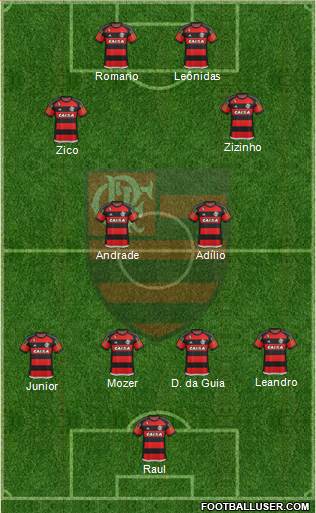
Formation

Friday, January 20, 2017

Sao Paulo FC Greatest All-Time Team

Copa Libertadores 1992

Please also see my All-Time World Cup Team Index.

50 Brazilian Greatest Players (26th-50th)
SantosFlamengoSao PauloCorithiansBotafogo
Vasco Da GamaPalmeirasInternacional
FluminenseGremioCruzeiroAtlético MineiroBahia

This is my selection of a 25 member all-time team for the club.  The number 25 was chosen because it is the official squad size for the Champions' League.

São Paulo is the third best-supported club in Brazil, with over 28 million supporters. Founded in 1930, São Paulo was an inaugural member of the Clube dos 13 group of Brazil's leading football clubs. The club's most consistent spell of success came in the 1990s, under coach Telê Santana, when it won three state titles, one national championship, two Copa Libertadores, two Recopa Sudamericanas, two Intercontinental Cups, one Supercopa Sudamericana, one Copa CONMEBOL, one Copa Masters CONMEBOL.
World Club Cup 2005
Team
GK: Rogerio Ceni (Brazil)
Roger Ceni is known as the goalkeeper who was known as a dead-ball specialist and scored a lot of goals.  He is recognized as the highest scorer in history for a goalkeeper.  He is a long-term keeper for Sao Paulo.  With them, he won two Copa Libertadores: 1993, 2005.  For Brazil, he had 16 caps between 1997 and 2006.  He played 18 times fro Brazil.  He went to two World Cup Finals in 2002 and 2006 as a backup.
Roger Ceni 
GK: Waldir Peres (Brazil)
Waldir Peres played over 600 games for Sao Paulo.  He was capped 30 times for Brazil, between October 1975 and July 1982; he was a member of the Brazilian national team during the World Cup 1974, 1978 and 1982. He was the starting goalkeeper at the 1982 World Cup in Spain, where Brazil was considered the greatest World Cup team that did not win the World Cup.

GK: Zetti (Brazil)
Zetti played with São Paulo from 1990 to 1996. Arguably one of the most successful goalkeepers in the clubs history he won 1 Brazilian championship, 2 Copas Libertadores and 2 Intercontinental Cups during this period. Other clubs played for include Guarani, Toledo, Londrina, Palmeiras, Santos, Fluminense and Sport. Capped 17 times. He was a backup keeper at 1994 World Cup Finals in the USA .

RB: Cafu (Brazil) 
Cafu is the all-time cap record holder for Brazil with 142.  He is the only man to play in three World Cup Finals, winning in 1994 and 2002.  He was the captain of the national team as they won the World Cup in 2002.  With Brazil, he also took part in four editions of the Copa América, winning the title twice, in 1997 and 1999. He played with Sao Paulo,  Real Zaragoza, Juventude, Roma, Palmeiras and AC Milan. He was South American Player of the Year in 1994.  
Cafu
RB: De Sordi (Brazil)
De Sordi earned 22 caps for the Brazil national football team. He was part of the 1958 FIFA World Cup winning squad with Pele, Garrincha and Didi.  He played in all matches except the Final against the host Sweden. During his club career he played for XV de Piracicaba-SP and São Paulo.  He played over 500 games for Sao Paulo between 1952 and 1965.

CB: Oscar (Brazil)
Oscar had 60 caps for Brazil between April 1978 and May 1986.  He was the starting centerbacks at the World Cup Finals in 1978 and 1982, and went as a reserve player in 1986.  He played for Atlética Ponte Preta, Sao Paulo and NY Cosmos. He played briefly with Nissan FC in Japan as well.  His longest career was with Sao Paulo.

CB: Darío Pereyra (Uruguay)
Darío Pereyra was one of the best center-backs ever to play in the Brazilian league.  He was best remembered for his career with Sao Paulo between 1977 and 1988, playing next to Oscar.  He was also at one point the second most expensive player in the league. Darío Pereyra started his career at the Nacional de Montevideo and debuted at the Uruguay national squad when he was only 18, becoming the captain of the national team at 19.  He had 32 caps.
Darío Pereyra 
CB: Roberto Dias (Brazil)
While playing for Sao Paulo, Roberto Dias was considered a rival respected by Pele. Pele considered him one of the best center-backs in Brazil.  He was capped 27 times between 1963 and 1968, but never went to the World Cup Finals.  He was on the 1960 Olympic football team in Rome. He played mainly for Sao Paulo FC.

CB: Mauro Ramos (Brazil)
Mauro Ramos was considered one of Brazil's greatest centerbacks.  He went to both 1954 and 1958 World Cup Finals without playing a game, but in the World Cup Finals of 1962, he lifted the World Cup trophy as Brazil's captain. He was capped 22 times.  For his club career, he played for Santos and Sao Paulo. At Santos, he was a part of Pele's great Santos team in the 1960's. 

LB: Noronha (Brazil)
Noronha played for Grêmio, Vasco da Gama, São Paulo and Portuguesa. With Sao Paulo, he formed a great team with Rui Campos and Bauer. He was a member of the 1950 World Cup, but he did not play in the match, bittely known as "Maracanazo" for Brazilians.  He was a part of Brazil 1949 South American Cup winning team.

LB: Leonardo (Brazil)
Throughout his club career, he played for Flamengo, São Paulo, Kashima Antlers, Valencia, PSG and Milan.  He won Copa Libertadores and International Cup with Sao Paulo.  At Milan, he became an international star during the 1990's.   He was capped 55 times.  He went to USA 1994, but was suspended after elbowing Tab Ramos in the quarterfinal.  He also played in France 1998.

DM: Toninho Cerezo (Brazil)
Throughout his career, Cerezo played with Atlético Mineiro, Roma, Sampdoria and São Paulo. He was a legend at Atlético Mineiro. With São Paulo FC, he was the two-times winner of the Intercontinental Cup and Copa Libertadores.  He went to Argentina 1978 and Spain 1982. During his time in Italy, Cerezo won the Coppa Italia four times; in 1991 he won the Serie A with Sampdoria. 
Toninho Cerezo
DM: Bauer (Brazil)
For Brazil national football team, Bauer played 29 matches, won Copa América 1949 and participated at two FIFA World Cup finals, in 1950 and 1954. His last match in this tournament is famous Battle of Berne in 1954. At the club level, he played mainly for Sao Paulo and Botafago.  He was known as the coach who discovered Eusebio in Mozambique. 

CM: Gerson (Brazil)
Gerson was the central midfielder for Brazil in the 1970 World Cup Finals. He is considered one of Brazil's best ever passers.  He hd 70 caps. He played on the legendary Botafogo's team of in the 1960's with Garrincha.  While at the club, he played with Didi and became his understudy, in which he would inherit the position on the Seleção. He also played for f Flamengo, São Paulo and Fluminense at the club level.

AM: Rai (Brazil)
Rai is the younger brother of Socrates.  He was a member of the 1994 WC winning team.  he was originally the captain of the squad, but a loss of form during the Finals limited him to a substitute.  He enjoyed a successful career with Paris St.Germain, where he was widely considered the best player in the French league.  He helped them to win the UEFA Cup Winners' Cup in 1996.  He was also a key player for Sao Paulo. 
Rai
LW/SS:  Pedro Rocha (Uruguay)
Pedro Rocha won 8 Uruguayan league titles and 3 Copa Libertadores with Penarol from 1959 to 1970.  He moved to São Paulo in 1970.  He spent 7 successful seasons with the club.  He was the league's top scorer in 1972.  For the national team, he is the only player to appear in four consecutive World Cups for the Uruguay national football team: 1962, 1966, 1970 and 1974. He also played in the Copa América in 1967.

LW: Canhoteiro (Brazil)
Canhoteiro's name literally mean "the left-footed".  He also earned the nickname "the Garrincha of the Left".  He was known for hos dribbling skills.  For his club career, he played with Sao Paulo and was remembered for his battles with Pele's Santos in the 1960's.  He was not selected for the World Cup Finals in 1958, despite being the original starter of the team.

AM/CM: Kaka (Brazil)
Kaka started his career with Sao Paulo in Brazil before moving to AC Milan in 2003.  He was the star player who helped Milan to win the Champions' League in 2007 and he himself won he Ballon d'or the same year.  In 2009, he left Milan for Real Madrid.  For Brazil, he was capped 92 times.  He was a young and seldom used player at the World Cup Finals in 2002.  He was a key player for Brazil after the World Cup Finals in 2002.
Kaka
AM: Zizinho (Brazil)
Zizinho was Pele's idol.  He was considered the greatest Brazilian player before the 1960's. He was the star of the ill-fated World Cup Finals in 1950 playing alongside Jair and Ademir.  He played for Flamengo, Bangu, São Paulo FC, Audax Italiano of Chile among others teams. With, Flamengo, he won state championships in 1942, 1943 and 1944. He turned a chance to play in the 1958 World Cup Finals.

FW: Leônidas da Silva (Brazil)
Leônidas da Silva was known as "Black Diamond" and considered the greatest Brazilian footballer before the war. He was credited to be the inventor of "Bicycle Kick".  He played in two World Cup  Finals: 1934 and 1938. He was the top scorer at the tournament in 1938.  He played for a number of clubs in Brazil and Penarol. His longest spells were with Flamengo and Sao Paulo.  He was known as the "Black Diamond" and the "Rubber Man" due to his agility.
Leônidas da Silva 
ST: Muller (Brazil)
Muller is one of São Paulo's all-time leading scorers with 158 goals. With the club he won the Intercontinental Cup in 1993 as he scored the third goal against AC Milan in Tokyo. He capped 56 times with Brazil. He participated in the 1986, 1990, and 1994 editions of the FIFA World Cup, and was part of the 1994 champion Brazil squad.

ST: Serginho Chulapa (Brazil)
Serginho was capped 20 times between 1979 and 1982, and participated at 1982 FIFA World Cup, where he played in all five matches and scored two goals. Sadly, he was blamed for Brazil's exit at the tournament. He played for Marília, São Paulo Futebol Clube, Santos, Corinthians, Marítimo (Portugal), Atlético Sorocaba, Portuguesa Santista, Malatyaspor and São Caetano. 

ST: Luis Fabiano (Brazil)
Luís Fabiano is a prolific goalscorer and was ranked the second-highest-scoring Brazilian of the 21st century.  At the club level, he played for many clubs around the world.  He won two back-to-back UEFA Cups in 2006 and 2007 while playing for Sevilla.  He was capped 45 times for Brazil.  He was the starting striker at the 2010 World Cup Finals.

ST: Careca (Brazil)
Careca had 64 caps for Brazil.  He supposed to be the starting striker of the star-studded 1982 World Cup team, but he missed the Finals with an injury.  Instead, he starred at the 1986 WC Finals in Mexico.  He finished second in scoring with 5 goals.  He also played in the 1990 World Cup Finals in Italy.  For club career, he was remembered for playing with Napoli as a teammate of Diego Maradona. 

ST: Arthur Friedenreich (Brazil) 
The "Tiger" was the first Afro-Brazilian professional players in Brazil.  He was also one of the first star players from Brazil. He played 22 times for Brazil, including wins in the 1919 and 1922 editions of the Copa América, scoring ten goals. He did not attend the first World Cup Finals in 1930 because only players from Rio traveled to Uruguay. He was a son of a German immigrant father and an African Brazilian mother. 
Arthur Friedenreich

Honorable Mention
King(Nivacir Innocencio Fernandes), Jose Poy, Serginho dos Santos, Nelsinho, Ricardo Rocha, Bellini, Diego Lugano, Ruy Campos, Cicinho, Pablo Forlan, Alfredo Ramos, Chicão, Dino Sani, Mineiro, Hernanes, Pita, Gerson, Bene, Antonio Sastre, Zizinho, Teixeirinha, França, Luizinho, Maurinho, Zé Sérgio, Gino.

Squad Explanation
-- Normally, I selected a lot of players from a Copa Libertadores winning team for most of my all-time teams in South America.  Sao Paulo won back-to-back cups in 1992 and 1993.  They also won the back-to-back Intercontinental Cup after the Copas Libertadores.  In 1992, they beat Johan Cruyff's "Dream Team", and followed by a victory over  Fabio Capello's Milan in 1993. However, those teams are under represented on this all-time team.  Toninho Czerezo, Rai, Cafu, Muller and Zetti were the only players selected.  
-- Toninho Czerezo's career here was short, but he won two Intercontinental Cup and a single Copa Libertadores.  He was the MVP of the 1993 Intercontinental Cup Final.
-- Sao Paulo won their third Copa Libertadores in 2005. From the 2005 team, Roger Ceni is the only player chosen.  Diego Lugano deserved a place, but I already had Oscar, Mauro Ramos, Darío Pereyra and Roberto Dias who were legends of the club.  They also had better reputation outside Sao Paulo.  Roger Ceni's jersey was retired by Sao Paulo and the only number retired by the club.
-- I selected Oscar and Dario Pereyra as a unit.  They were also the best ever defensive duo for the club and perhaps, in the history of the Brazilian league.
-- Bellini was left out because I have too many centerbacks. He was the captain of Brazil's 1962 World Cup winning team.  
-- Jose Poy appeared in many lists for Sao Paulo's greatest keepers, but I went with Roger Ceni, Waldir Peres and Zetti. I also have King (Nivacir Innocencio Fernandes).
-- While Zizinho was not in his prime when he played for Sao Paulo, he was a key player with Bela Guttmann's Sao Paulo.  Guttmann was credited with revolutionising the 4-2-4 formation in Brazil with Zizinho as his focal player.  The formation became the basis of Brazilian football throughout the 1950's.  Brazil won three World Cup, playing in a similar formation and formula. Historians said that he was not the first coach to use it in Brazil, but he was often given credit for being the pioneer.  Sao Paulo FC with Zizinho won the Campeonato Paulista in 1957.  That team changed Brazilian football and Zizinho should be honored here. Canhoteiro also played with Zizinho during that time.
-- Kaka left the team when he was still young. He returned at the end of his career. In the modern world, it is hard for a Brazilian club to keep a young players of his talents for long.  I sometimes overlooked the length of career for some homegrown players. Furthermore, he was among the best in his generation.
-- Arthur Friedenreich was an icon in Brazilian football.  
-- In Brazil,  Canhoteiro was considered one of the greatest left wing.
-- Muller, Serginho Chulapa and Luis Fabiano scored many goals for the club. Careca was Bola de Ouro winner while playing for the club.  Serginho Chulapa was their all-time leading scorer. So I left out Zé Sérgio and Gino Orlando.  They almost made the squad.

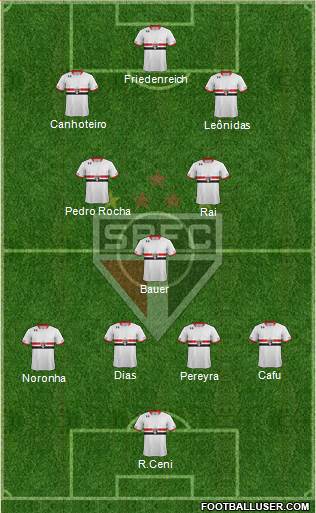
Formation


Wednesday, January 18, 2017

Santos Greatest All-Time Team

This blogger Artur Yanturin of Russia copied many of my blog teams.  This blog was one of them.  It was my Russia All-Time Team here.  His team was written in 2020, but mine was uploaded in 2014.   This entry of his was written in October 21, 2020, but mine was uploaded in a few weeks before his 2020.   Another entry of his was written in October 2020, but mine was uploaded in 2017.  His entry of the Dutch-German rivalry between Real Madrid and Barcelona was written in 2020, but mine was uploaded in 2014.  He also copied many many of my blog entries.


Santos 1962

Please also see my All-Time World Cup Team Index.

SantosFlamengoSao PauloCorithiansBotafogo
Vasco Da GamaPalmeirasInternacional
FluminenseGremioCruzeiroAtlético MineiroBahia.

This is my selection of a 25 member all-time team for the club.  The number 25 was chosen because it is the official squad size for the Champions' League.

Santos' is forever associated with Pele. It is the most successful club in the Brasileirão, becoming national champions on eight occasions, a record they share with Palmeiras. It has also won 21 Paulistãos, three Copa Libertadores, two European/South American Cups, one Supercopa de Campeones Intercontinentales, one Copa CONMEBOL (the precursor of current Copa Sudamericana), one Copa do Brasil and one Recopa Sudamericana. In 1962, Santos became the first club in the world to win four out of four competitions in a single year, thus completing the quadruple, comprising the aforementioned treble and the European/South American Cup.  On January 20, 1998, Santos became the first team, in any category in the world, to reach the milestone of 10,000 goals in the entire history of footballSantos
2011 Copa Libertadores
Team
GK: Gilmar
Gilmar was the goalkeeper for WC 1958, 1962 and 1966 winning two titles. He had 104 caps. Also a member of Pele's Santos team of the 1960's. With Gilmar between the posts, Santos conquered almost every championship they competed in: they won five São Paulo State Championships (1962, 1964, 1965, 1967, 1968), five National Championships (1961, 1962, 1963, 1964, 1965), two Libertadores Cups (1962 and 1963) and two Intercontinental Cups. 

GK: Rodolfo Rodríguez (Uruguay)
Rodolfo Rodríguez is the second most capped player in the history of the Uruguay with 78. He won the 1980 Mundialito. and the Copa América in 1983. He went to the World Cup in 1978 and 1986.  With Nacional, Rodríguez won the Copa Libertadores and the Copa Intercontinental also in 1980. He also played for Santos, Sporting Clube de Portugal, Portuguesa and Bahia.

GK: Agustin Cejas (Argentina)
Cejas made his first team debut with Racing Club in 1962 at the age of 17. In 1967, Racing won the Copa Libertadores in1967, and then, the following Intercontinental Cup to become the first Argentine club champions of the world. In 1970, Cejas joined Santos in Brazil where he played with Pelé. In 1973, Cejas helped Santos to win the Campeonato Paulista and received the prestigious Bola de Ouro as the best player in Brazil. 

RB: Carlos Alberto (Brazil)
Carlos Albero was one of the greatest fullback ever played the game. He was the captain of the 1970 team in Mexico.  His goal in the Final was considered one of the greatest goals in the history of the tournament. He missed the World Cup in 1974 through an injury.  He played with Pele both at Santos and NY Cosmos. He had 53 caps for Brazil.

CB: Alex  (Brazil)
Alex was a star with Santos at home.  He joined Chelsea in 2007, but after a loan deal to PSV.  With Chelsea, he won the FA Cup in 2009 and a league and FA Cup "double" in 2010, as well as reaching the 2008 Champions League Final. He also played for Paris Saint-Germain and Milan. Alex earned 17 caps for Brazil between 2003 and 2008, winning the 2007 Copa América and finishing as runner-up at the 2003 CONCACAF Gold Cup.
Alex
CB: Raul Donazar Calvet (Brazil)
Raul Donazar Calvet started with Guarany FC. was a member of Pele's Santos team in the early 1960's.  He played for them between 1960 and 1964.  He was a part of the team that won back-to-back Copa Libertadores and two Intercontinental Cups in 1961 and 1963. He also played for Gremio. He was capped twice between 1960 and 1962.

CB: José Ramos Delgado (Argentina) 
Born in Argentina of the Cape Verdean ancestry, he started his playing career in 1956 with Lanús. He soon earned a move to River Plate where he played seven seasons with the club. After a short spell with Banfield, he moved to Santos, where he played alongside Pelé in the club's golden years.  He was capped 25 times.  He went to the 1958 and 1962 WC Finals.

CB: Mauro Ramos (Brazil)
Mauro Ramos was considered one of Brazil's greatest centerbacks.  He went to both 1954 and 1958 World Cup Finals without playing a game, but in the World Cup Finals of 1962, he lifted the World Cup trophy as Brazil's captain. He was capped 22 times between 1948 and 1965.  For his club career, he played for Santos and Sao Paulo. At Santos, he was a part of Pele's great Santos team in the 1960's, winning two Copa Libertadores and Intercontinental Cups.
Mauro Ramos 
CB: Rildo (Brazil)
In 1961, Rildo began his senior career with Botafogo. In 1967, he transferred to Santos FC.  Rildo was a member of Pele's Santos team in the late 1960's.  He would also also join him at New York Cosmos in 1977.  From 1963 to 1969, Rildo played 38 times for Brazil. He went to the World Cup Finals in 1966, where he scored his only international goal against Portugal.

LB: Leo  (Brazil)
Leonardo Lourenço Bastos was better known as Leo. Until he joined Santos in 2000, Leo's career did not go well.  In 2002, playing alongside the likes of Diego, Elano, Renato and Robinho, he won his first Série A championship, losing the following year's Copa Libertadores.  In 2005, he joined Benfica in Portugal and returned to Santos in 2009.  He was a key player as Santos won Copa Libertadores in 2011. He was only capped 7 times.
Leo
DM: Zito (Brazil)
With Brazil, Zito earned 52 caps and won the World Cup in 1958, and 1962.  He played his entire career with Santos.  He was the captain of the "Os Santásticos" team of the late 1950s and 1960s, playing alongside Pelé, Pepe and other Brazilian stars. He was known as a leader that a young Pele respected throughout his career. He was his mentor.

DM: Clodoaldo (Brazil)
Clodoaldo was a member of Pele's Santos in the 1960's.  He is best remembered for being the defensive midfielder of the 1970 World Cup Team in Mexico,.  At the Final of the World Cup, he contributed to Carlos Alberto's famous goal against Italy by dribbing past 4 Italian players. He was capped 38 times. At the club level, he also played for Tampa Bay Rowdies (1980), New York United (1980) and Nacional-AM (1981).
Clodoaldo 
CM:  Mengálvio (Brazil)
During his club career Mengálvio played for Aimoré-RS (1957–59), Santos (1960–67; 1969), Grêmio (1968) and Millonarios of Colombia (1969). Whilst at Santos he won the 1962 Copa Libertadores, playing in all three matches of the final against Penarol.  He earned 13 caps for Brazil. He was unused sub at the 1962 World Cup Finals.

CM: Araken Patusca (Brazil)
From 1923–1937, Araken Patusca played for Santos FC, Club Athletico Paulistano, Clube de Regatas do Flamengo, São Paulo. With Siriri, Feitiço, Evengelista and Camarão, he formed one of the most important attacking lines of the 1920s with Santos. In 1927, he was the top goalscorer of the Campeonato Paulista. With Brazil, he went to the World Cup in 1930.

CM/RW: Elano (Brazil)
Elano started his career at Santos, and spent six years in Europe with Shakhtar Donetsk, Manchester City and Galatasaray. He returned to Santos in 2011, and later joined Grêmio and Flamengo. With 50 caps  and 9 goals between 2004 and 2011, he won the 2007 Copa América and the 2009 Confederations Cup, and also played at the 2010 World Cup and the 2011 Copa América.

LW/FW: Pepe (Brazil)
Pepe was considered the second best striker ever played for Santos after Pele.  His nickname was "Canhão da Vila" (The Vila Cannon), because of his potent kick with his left leg and the fact that Santos plays in the Estádio Urbano Caldera, nicknamed Vila Belmiro. He was a one club man with Santos. He went to both World Cup Finals in 1958 and 1962, but did not play a single game. 

AM/FW: Robinho (Brazil)
In 1999, at only 15 years of age, Robinho was personally picked by Pelé as his heir apparent and went on to lead Santos FC to their first Campeonato Brasileiro title since Pelé himself played for the club.  In 2005, he made a dream move to Real Madrid. He would also play for Manchester City, AC Milan, Guangzhou Evergrande and Atlético Mineiro. He earned 99 caps.  He won the Golden Boot Award for the Copa America in 2007, where Brazil also won.  He went to the WC Finals in 2006 and 2010.
Robinho
AM: Giovanni (Brazil)
Giovanni played for Barcelona, Olympiacos and Santos. In his prime, he was one of Barcelona's most valuable players. At Olympiacos, Giovanni had the most successful days of his career, and is still remembered as a club legend by supporters. For Brazil, he gained 20 caps and scoring 6 goals. He was part of the 1998 Brazilian team that reached the World Cup Final.

AM: Diego (Brazil)
Diego started his career with Santos and moved to Porto in 2004.  In 2006, he moved to Werder Bremen where he was one of the best players in the Bundesliga.  In 2009, he moved to Juventus, but could not find his form.  He went on to play for various clubs.  In 2012, he was a part of Atletico Madrid that won the 2012 Europa League. At the international level, he earned 33 caps between 2004 and 2011.

AM/FW: Neymar (Brazil
Neymar was known as the greatest player ever produced by Santos since Robinho.  He moved to Barcelona FC in 2013, where Barcelona FC and his family were founded to have involved under the table money.  In 2017, he again moved to PSG after the French club paid for his release clause and became the most expensive transfer ever.  For Brazil, he played at the World Cup Finals in 2014, but missed the 7-1 defeat in the semi-final.
Neymar
AM/FW: Jair de Rosa Pinto  (Brazil)
Jair was a member of the great offensive trio for Brazil at the ill-fated World Cup  Finals in 1950, hosted by Brazil. The other two were Zizinho and Ademir.  He played for Flamengo and Vasco da Gama before the World Cup in 1950.  After the World Cup Finals, he played mainly for clubs in Sao Paulo.  For the national team, he only made two cameo appearances two years after the ill-fated World Cup Finals.

FW: Edu
From 1966 to 1985, Edu played for Santos, Corinthians, Internacional, Tigres UANL, São Cristovão and Nacional Fast Clube. He won five Campeonato Paulista titles. He won the 1971 Brazilian Silver Ball Award. Capped 42 times. He won the World Cup in 1970 and went to the ones in 1966 and the 1974. He was 16 years and 339 days of age in 1966 tournament, making the youngest player to ever in World Cup history.
 
FW: Pele
Pele is considered the greatest player ever in the history of the game.  He won his first World Cup in 1958 as a 17 years old.  He would win his second one in 1962, but he was injured throughout the tournament. In 1970, he won his third and final World Cup, with a team that was considered the greatest ever.  He played almost his entire career with Santos, one of the best club side in history.  He unretired to join New York Cosmos in 1976. 
Pele
ST: Dorval Rodrigues (Brazil)
In the 1960s Dorval Rodrigues became the idol of Santos, forming an attack with Coutinho, Pele and Pepe.  It was one of the best attacks in the history of the team and world football. He also played for many clubs, including Gremio, Racing Club, Atlético-PR, etc. He was capped 7 times between 1959 and 1963. He went to 1959 South American Championship.

ST: Coutinho (Brazil)
Coutinho played for Santos from 1958 to 1968 and in 1970, periods during which Santos won five Taça Brasil and seven Campeonato Paulista titles, two Copa Libertadores, and two Intercontinental Cups. Coutinho has been named the greatest Santos' player after Pelé, with whom he formed a mythical attacking duo with 1461 goals scored (370 by Coutinho). He was capped 15 times.  He went to the World Cup in 1962, but was injured.
Coutinho and Pele

Honorable Mention
Aguinaldo, Claudio, Pita, Pagão, Ricardo Oliveira, Deivid, Ganso, Renato, Chico Formiga, Antoninho, Joel Camargo, Dalmo, Joel, Lima, Orlando.

Squad Explanation
-- Pele's Santos was one of the greatest club side in South American history.  The team was better known as "Os Santásticos". The club won eight titles: six Brazilian Championships (five Taça Brasil and one Torneio Roberto Gomes Pedrosa), two Copas Libertadores, two Intercontinental Cups, three Rio-São Paulo, a South American Recopa and numerous international tournaments. I selected the following 14 players who played with him at Santos to my all-time team: Agustin Cejas, Gilmar, Carlos Alberto,  Raul Donazar Calvet. José Ramos Delgado, Mauro Ramos, Rildo, Zito, Clodoaldo, Mengálvio, Pepe, Dorval Rodrigues, Coutinho and Edu.  Of course, Pele is also on the team.  Jair da Rosa Pinto also played for Santos at that time.
-- Carlos Alberto edged out Lima for the rightback position.  Lima played nearly 700 matches for Santos, but he was relatively a forgotten player.
-- I o not really know Dalmo so I took Leo, a modern leftback who contributed to the  2010 Copa Libertadores victory.
-- Zito was known to be Pele's mentor.  Pele listened to him when he was a young player.
-- In 1970, Brazil won the World Cup with 5 players from Santos.  They are Pele, Carlos Alberto, Joel, Edu and Clodoaldo.
-- Santos had a great rivalry with Botafago in the late 1959's and the early 1960's.  When I started my research, I noticed the lack of English information on Botafago between 1955 and 1964.  So wrote a blog about them.  
-- Santos was in decline after the 1960's.  It explained why 15 out of 25 players selected played in the 1960's.  Between 1970's and 2000's, Edu was the only player selected, but he actually played with Pele. So he belonged to Pele's generation.
-- On July, 1984, Rodolfo Rodríguez made 5 saves in row for Santos against América SP in a Paulistão match.  His saves became a legendary in Santos' history.
-- Diego and Robinho were two of the best young players when they played for Santos. They led the resurgence of the club in the early 2000s. Alex, Leo and Elano also played during that era alongside Deivid. Deivid made my honourable mention.
-- The 2010 Copa Libertadores was Santos' greatest achievement after the 1960's generation.  Leo, Neymar and Elano are from that team.  Ganso received a honourable mention.
-- I did not have a space for Renato.  He had a better career in Europe than Elano, but Elano captained the 2010 Copa Libertadores winning team.
-- At the time of writing, Neymar's transfer saga has not resolved. Barcelona, Neymar and his father cheated Santos in his transfer.  In my opinion, he betrayed the club that helped to create him.  However, that did not affect his selection to my all-time team.  He is the second best player after Pele ever to have played for Santos.
-- Giovanni was amazing while at Santos even through he did not stay long enough. 
-- Ricardo Oliveira did not do much in his first spell with the club.  He returned to play for them after his career in Europe.  He won the Campeonato Paulista Best Player award in 2015.  However, Santos had Dorval Rodrigues, Coutinho, Edu, Jair, Pele and Pepe ahead of him.  He made my honourable mention.
-- In 1935, Santos won their first major trophy, Campeonato Paulista.  I honored that by selecting Araken Patusca.

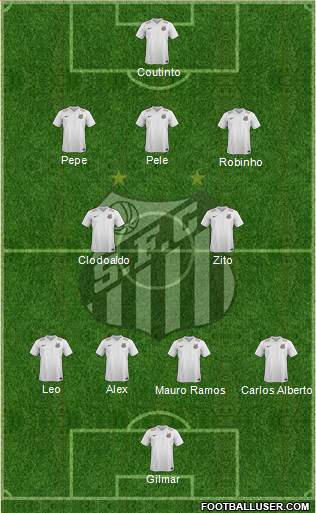
Formation