 |
| Campeonato Baiano 2015 |

Some of the unpublished posts from this blog have been turned into a two-volume book: The Multiverse of the Beautiful Game: National Teams of Pure Fantasy.
Volume 1 Picture football's wildest dreams actually coming true. Could Brazil's already-beautiful 1982 side, with Careca leading the line, have cruised to the title? Could Sweden with "Gre-No-Li" have somehow stopped the Maracanazo in 1950? Imagine Pelé, Garrincha, Didi, Zizinho and Julinho all starring for Brazil at once in 1958. And what about the United Kingdom sending its team to the 1970 World Cup? I believe they would have been the strongest side on earth — Gordon Banks, Bobby Moore, Jack Charlton, George Best, Denis Law, Jinky Johnstone and Billy Bremner could have beaten Brazil. What if Argentina had fielded both Omar Sivori and Alfredo Di Stéfano together in 1958? What if Johan Cruyff had lined up alongside Marco van Basten, Ruud Gullit, and Frank Rijkaard? Then there is Eusébio playing for Brazil — he and Pelé on the same team. And that's only scratching the surface — Volume 1 is packed with legendary "what ifs" that will keep you turning pages.
Volume 2 brings the fantasy closer to home. What if England had Michael Olise, Erling Haaland, Antoine Semenyo and Jamal Musiala in 2026 — could they go all the way with Harry Kane and Jude Bellingham? What if Yugoslavia had gone to the World Cup in 2018? Could Spain have won the 2010 World Cup without Catalan players? Could Catalonia do it alone? And could they have won Euro 2024 with only Basque players What if the United States could select more players in 2010? It would be the greatest American side ever. And what if Cristiano Ronaldo and Lionel Messi had actually played for the same national team in 2006? It could have happened — if the soccer gods had smiled on us.
Please also see my All-Time World Cup Team Index.
Santos, Flamengo, Sao Paulo, Corithians, Botafogo
Vasco Da Gama,
Palmeiras, Internacional, Fluminense, Gremio, Cruzeiro, Atlético Mineiro, Bahia
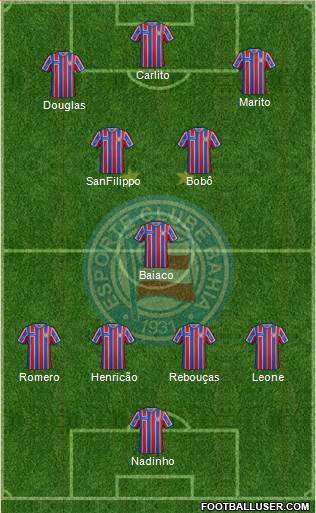
This is my selection of a 25 member all-time team for the club. The number 25 was chosen because it is the official squad size for the Champions' League.
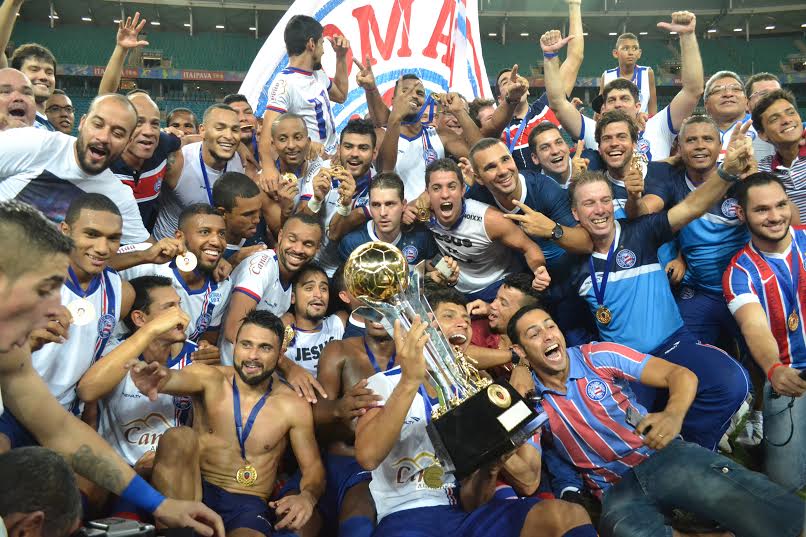
Bahia has won the Brasileirão title twice: in the 1959 season, defeating Santos' Santásticos which contained figures such as Gilmar, Mauro, Mengálvio, Coutinho, Pepe and Pelé, in the finals and in the 1988 season Bahia edged Internacional. Bahia has only appeared in the Copa Libertadores three times, reaching the quarterfinals in 1989, Bahia's best-ever performance. The club has also won their state title a record 46 times.
Team
GK: Nadinho (Brazil)
Nadinho is widely considered the greatest goalkeeper in the history of Bahia, Nicknamed “O Macho”, he played for the club from 1958 to 1968. He won several state championships (1958, 1959, 1960, 1961 and 1962). and he started for Bahia on the 1959 Brazilian championship winning team. Nadinho was part of a player pool for the 1962 World Cup.
GK: Ronaldo Vieira Passocs (Brazil)
Ronaldo Vieira Passocs helped Esparto Clube Bahia to win the 1988 Brazilian Championship, where he was the team's starting goalkeeper. He started as a reserve, but became a starter after Sidmar left the club. In 1991, he moved to to rival Vitoria. With them, he won Campeonato Baiano: 1992, 1995, 1996.
GK: Emerson Ferretti (Brazil)
Emerson Ferretti started his career with Grêmio in 1991. He also played for Flamengo, Juventude and Bahia. With Bahia, he was an idol for club. He played six years there between 2000 and 2005. He is their appearance record holder. He transferred to Vitória in 2006, where he ended his career as a player after a single season.
RB: Leone (Brazil)
Leone was the captain of Bahia that won the Taça Brasil of 1959, currently considered by the CBF as the first Brazilian Championship in history. It is considered by many historians as the most important football tournament in Brazil at the time. Before this, he won three Rio state champion with in 1953, 1954 and 1955.
RB: Perivaldo (Brazil)
Perivaldo played with Esporte Clube Bahia, Botafogo de Futebol e Regatas, São Paulo FC, Palmeiras and Bangu Atlético Clube. In the late 80s, he relocated to Portugal in hopes of finding a new club, but ended up with him as an homeless person having to resort to street vending in Lisbon. Perivaldo returned to his homeland on 11 December 2013 at the age of 60, with the help of the Portuguese Professional Footballers Union. Perivaldo gained two caps for Brazil. He was on the players' pool for the WC Finals in 1982.
CB: Henricão (Brazil)
Henricão played with Associação Atlética Portuguesa. In 1957, he joined Esporte Clube Bahia with teammate Joe. He was a big centerback of Bahia that won the Taça Brasil of 1959, currently considered by the CBF as the first Brazilian Championship in history. It is considered by many historians as the most important football tournament in Brazil at the time. In 1961 and 192, Esporte Clube Bahia finished second behind Pele's Santos.
CB: Vicente Arenari (Brazil)
Vicente Arenari was born in 1935. He began in Flamengo's youth teams, where he start his professional career in 1954, but did not feature much. He became a star with Bahia, where he played between 1956 and 1962, winning the 1959 Brazilian Football Championship. He would also play with Palmeiras and Nacional-SP, where he finished his career in 1967.
CB: Juvenal Amarijo (Brazil)
Juvenal Amarijo started his career with Cruzeiro-RS, joining Flamengo in 1949, then Palmeiras in 1951. He moved to Bahia in 1954. At the international level, he played for the Brazil in the 1950 FIFA World Cup. Juvenal lost his money after retiring from playing and was living in poverty. He died on October 30, 2009, at to age 85, in the city of Salvador, in Bahia, Brazil, due to respiratory failure.
CB: Roberto Rebouças (Brazil)
Roberto Rebouças was a legend with Bahia. He joined the club in 1963 from Victoria. He earned nicknamed the "Baiana Wall". He was known to clash with the club President Osorio Vilas Boas. In 1972, he was suspended by club, in which he missed the Final of Campeonato Baiano. His absence gave Vitória the title. Roberto also played with Botafogo of Ribeirão Preto before returning to Bahia, where he won the regional titles of 1970 and 1971, and from 1973 to 1977.
LB: Romero (Brazil)
Jorge Romero Filho, better known as Romero, was a left-back soccer player who played for Esporte Clube Bahia from 1973 until 77 , conquering five state titles. He also played for Palmeiras in 1977/78 and Atlético Mineiro. Then, he would return to Esporte Clube Bahia. He ended his career after he discovered that he had diabetes.
DM: Baiaco (Brazil)
Baiaco was the star of the Seleção de Francisco do Conde. He joined Bahia because the club also took his friend Caetano. In 1969, Pele was seeking his 1000th goal when Baiaco famously marked Pele out for the historical goal. He scored a goal in that match. He played with them until the year 1980 when he left the club at the age of 34 and a year later he finished his career defending the Leonico. He was capped in 1974 by Brazil.
DM: Paulo Rodrigues (Brazil)
Until he turned 28 years old, Paulo Rodrigues spent his career playing with Uberaba National in Minas Gerais and Botafogo in Ribeirão Preto, São Paulo. He joined Esporte Clube Bahai in 1986 at the age of 28, where he finally found stardom. He was a key player as his club won the 1988 nation title, forming a midfield with Gil, Bobô and Zé Carlos. The title was the club's second one in history.
CM: Elizeu (Brazil)
Elizeu started in 1962 with Santo FC. At that time, he played in the same position as Pele. He would play for São Cristóvão do Rio, Fluminense, Olaria, New York General, Anderlecht, Belenenses, of Portugal and Vitória de Salvador. He had three stints with Bahia - the first one in 1967, the second in 1969 and the third in 1971/1972. He represented Brazil at the 1964 Olympics.
RW: Marito (Brazil)
Known as the "Blond Devil", Marito was a part of Bahai's team that won the that won the Taça Brasil in 1959. He was was selected as one of the best players in the history of Bahia by the newspaper Correio in 2010. He also earned the nickname “Garrincha do Bahia” (Bahia’s Garrincha) because he was playing on the same position as Garrincha.. He started his career with São Cristovão-BA. He later played for Ypiranga-BA.
RW: Ze Carlos (Brazil)
Ze Carlos was the top scorer for Bahia as the club won the Campeonato Brasileiro de Futebol in 1988. He started his career in 1986 with Esporte Clube Bahai. He also played for Internacional, Athletic Mineiro and America. From 1991 to 1995, he played for Atlético Mineiro. He also played in Saudi Arabia with Al-Hilal. He was capped 4 times in 1989, making his international debut in a friendly against Peru.
LW: Biriba (Brazil)
Biriba was known for his partnership with Marito while playing for Bahia in 1950's. He began his successful career in the club in 1957, the famous team known as ""Juventude Transviada". He was a part of Bahia that won the Taça Brasil of 1959, currently considered by the CBF as the first Brazilian Championship in history. He spent 14 years with the club.
LW: Jesum (Brazil)
Jésum Gabriel was a left-wing. At the domestic club level, he played for São Paulo, Cruzeiro, Bahia and Vitória-BA. Born on December 25, 1953, Jésum became more famous during his times with Bahia. He was known for a successful partnership with teammate Beijoca. For the São Paulo, he played 42 matches between 1972 and 1975.
AM: José SanFilippo (Argentina)
During his club career he played for San Lorenzo, Boca Juniors and Banfield in Argentina, Nacional in Uruguay, and Bangu and SC Bahia in Brazil. He is the 5th highest scoring player in Argentine football. At the international level, Sanfilippo played for the Argentina in the 1958 and 1962 World Cup Finals. He was also part of the Argentina squads that won the 1955 Pan American Games and the 1957 South American Championship.
In 1982, Bobô started his professional career with Catuense. In 1985, he joined Bahia, where he won the 1988 Campeonato Brasileiro Série A. In 1989, he was signed by São Paulo, winning the 1989 Bola de Prata, and that year's Campeonato Paulista. He also played for Flamengo, Fluminense, Corinthians and Internacional. He was capped 3 times for Brazil in 1989. He played against Paraguay and Peru twice between April and May of 1989.
AM: Douglas (Brazil)
Douglas da Silva Franklin started with Santos in 1967, but he made his name with Bahia. He was voted as one of the greatest players in the history of Esporte Clube Bahia by the fans of the club. He is the second highest scorer in the history of Bahia with 211 goals. Douglas also played a short passage (three months) with Bahia's greatest rival: Vitória.
ST: Alencar (Brazil)
Alencar began his career playing in the amateur categories of Ceará Sporting Club in the first half of the fifties. He briefly played playing for America Football Club of Ceará, then returning to Ceará in the middle of the year 1957. Alencar joined Bahai in early 1959. With Bahia, he won essential the 1959 Brazilian Championship, earning the nickname “Bahia’s Pele”. He was known as Alencarzinho at the beginning of his career.
ST: Beijoca (Brazil)
Born in 1954, Beijoca played for many clubs in Brazil: São Domingos, Fortaleza, Sport, Flamengo, Catuense, Vitória, Londrina, Leônico, Sergipe, Mogi-Mirim and Guará, but better known for his playing career with Bahia. He spent seven years with Bahia, but on separated stints (69, 70, 75, 76, 77, 78 and 84). He won six Bahian titles (70, 75, 76, 77, 78 and 79). In 1979, he played 9 matches with Flamengo.
ST: Carlito (Brazil)
Carlito was one club man for Esporte Clube Bahia. He is the all-time leading scorer for Bahai with 253 goals. He was known for scoring against Vitoria, Bahai's main rival. He won the Campeonato Baiano: 1947; 1948; 1949; 1950; 1952; 1954; 1956; 1958; 1959. Flamingo tried to sign him, but his wife preferred to stay in Bahai.
ST: Uéslei (Brazil)
Uéslei won many trophies in Bahia, where he played for the two big clubs in the state, Bahia and Vitória. In the five seasons with Bahia, he won five Bahian championships (in 1991, 1993, 1994, 1998 and 1999). He won another title in 1997 with Vitória. He also played for five seasons at Nagoya Grampus in Japan and finished his career in 2009 at Oita Trinita.
ST: Charles Fabian (Brazil)
Charles fist made his name as a 20 years old striker with Bahia, winning the 1988 Campeonato Baiano de Futebol. In 1991, he joined Cruzeiro where he won two Supercopa Libertadores. In 1992, he moved to Boca Juniors, but never settled down. With Flamengo, Charles was known "Charles Baiano" because the club already had Charles Guerreiro on the team. He managed to score incredible 18 goals in just 29 matches, but only played one season. In 1994, he returned to Bahia, where he once again starred. Capped 9 times.
Honorable Mention
Rodolfo Rodriguez, Marcelo Lomba, Beto, Edinho, Sapatão, Romeo, Dani Alves, Dada Maravilha, Nonato, Lima, Beberto Campos, Léo Briglia.
Squad Explanation
-- Esporte Clube Bahai is the most difficult club to research. Most of the players are unknown outside Brazil. The information on the players are very limited. I have to use google-translate for most of the players.
-- In Brazilian football, the term Big Twelve (Portuguese: Doze Grandes) refers to a group of twelve clubs: Atlético Mineiro, Botafogo, Corinthians, Cruzeiro, Flamengo, Fluminense, Grêmio, Internacional, Palmeiras, Santos, São Paulo and Vasco da Gama. They are the most successful clubs in Brazil. Bahia is not one of them.
-- I decided to do an All-Time team for this club because they won 2 Brasileiro Série A titles. They actually did better than Atlético Mineiro.
-- José SanFilippo is the only player who had a successful career outside of Bahai. He is one of the few famous player who played for this team.
-- Eporte Clube Bahia won Taça Brasil of 1959, which was then the most important trophy in Brazil. It was the 1st ever edition of the Campeonato Brasileiro Série A. I selected 8 players from that team. They are Nadinho, Carlito, Alencar, Henricão, Biriba, Marito, Leone and Vicente Arenari. In the Final, Bahai beat Santos' Santásticos which included players such as Gilmar, Mauro, Mengálvio, Coutinho, Pepe and Pelé.
-- Juvenal Amarijo left the club the season before Taça Brasil of 1959.
-- The 1980s were the best in Bahia's history. Esporte Clube Bahai won another Campeonato Brasileiro Série A in 1988. Bobo, Charles Fabian, Ze Carlos and Paulo Rodrigues played on the 1988 team.
-- Rodolfo Rodriguez was the most established keepers ever played for the club, but he only spent two seasons there. I selected three keepers who have contributed more. Emerson Ferretti is the club's all-time appearance leader. Nadinho won the 1959 Taça Brasil.
-- Goalkeeper Ronaldo Vieira Passocs was born in 1959. He played here between 1979 and 1990. He was known as Ronaldo. Another goalkeeper Ronaldo Giovanelli was born in 1967. He was known as Ronaldo. He never played for Bahia.
-- The peak of Perivaldo's career was actually with Botafogo. I admitted that I selected him because of the human interest stories of his life after football. He ended up as a homeless living in Portugal. I took him over Dani Alves, who also only played in the beginning of his career.
-- Bebeto Campos is not the same Bebeto who won the World Cup in 1994. Bebeto Campos was born in 1975. He made honourable mention for this team.
Formation

Santos, Flamengo, Sao Paulo, Corithians, Botafogo
Vasco Da Gama,
Palmeiras, Internacional, Fluminense, Gremio, Cruzeiro, Atlético Mineiro, Bahia
This is my selection of a 25 member all-time team for the club. The number 25 was chosen because it is the official squad size for the Champions' League.
Bahia has won the Brasileirão title twice: in the 1959 season, defeating Santos' Santásticos which contained figures such as Gilmar, Mauro, Mengálvio, Coutinho, Pepe and Pelé, in the finals and in the 1988 season Bahia edged Internacional. Bahia has only appeared in the Copa Libertadores three times, reaching the quarterfinals in 1989, Bahia's best-ever performance. The club has also won their state title a record 46 times.
 |
| Taça Brasil of 1959 |
GK: Nadinho (Brazil)
Nadinho is widely considered the greatest goalkeeper in the history of Bahia, Nicknamed “O Macho”, he played for the club from 1958 to 1968. He won several state championships (1958, 1959, 1960, 1961 and 1962). and he started for Bahia on the 1959 Brazilian championship winning team. Nadinho was part of a player pool for the 1962 World Cup.
GK: Ronaldo Vieira Passocs (Brazil)
Ronaldo Vieira Passocs helped Esparto Clube Bahia to win the 1988 Brazilian Championship, where he was the team's starting goalkeeper. He started as a reserve, but became a starter after Sidmar left the club. In 1991, he moved to to rival Vitoria. With them, he won Campeonato Baiano: 1992, 1995, 1996.
GK: Emerson Ferretti (Brazil)
Emerson Ferretti started his career with Grêmio in 1991. He also played for Flamengo, Juventude and Bahia. With Bahia, he was an idol for club. He played six years there between 2000 and 2005. He is their appearance record holder. He transferred to Vitória in 2006, where he ended his career as a player after a single season.
RB: Leone (Brazil)
Leone was the captain of Bahia that won the Taça Brasil of 1959, currently considered by the CBF as the first Brazilian Championship in history. It is considered by many historians as the most important football tournament in Brazil at the time. Before this, he won three Rio state champion with in 1953, 1954 and 1955.
RB: Perivaldo (Brazil)
Perivaldo played with Esporte Clube Bahia, Botafogo de Futebol e Regatas, São Paulo FC, Palmeiras and Bangu Atlético Clube. In the late 80s, he relocated to Portugal in hopes of finding a new club, but ended up with him as an homeless person having to resort to street vending in Lisbon. Perivaldo returned to his homeland on 11 December 2013 at the age of 60, with the help of the Portuguese Professional Footballers Union. Perivaldo gained two caps for Brazil. He was on the players' pool for the WC Finals in 1982.
 |
| Perivaldo |
Henricão played with Associação Atlética Portuguesa. In 1957, he joined Esporte Clube Bahia with teammate Joe. He was a big centerback of Bahia that won the Taça Brasil of 1959, currently considered by the CBF as the first Brazilian Championship in history. It is considered by many historians as the most important football tournament in Brazil at the time. In 1961 and 192, Esporte Clube Bahia finished second behind Pele's Santos.
CB: Vicente Arenari (Brazil)
Vicente Arenari was born in 1935. He began in Flamengo's youth teams, where he start his professional career in 1954, but did not feature much. He became a star with Bahia, where he played between 1956 and 1962, winning the 1959 Brazilian Football Championship. He would also play with Palmeiras and Nacional-SP, where he finished his career in 1967.
CB: Juvenal Amarijo (Brazil)
Juvenal Amarijo started his career with Cruzeiro-RS, joining Flamengo in 1949, then Palmeiras in 1951. He moved to Bahia in 1954. At the international level, he played for the Brazil in the 1950 FIFA World Cup. Juvenal lost his money after retiring from playing and was living in poverty. He died on October 30, 2009, at to age 85, in the city of Salvador, in Bahia, Brazil, due to respiratory failure.
CB: Roberto Rebouças (Brazil)
Roberto Rebouças was a legend with Bahia. He joined the club in 1963 from Victoria. He earned nicknamed the "Baiana Wall". He was known to clash with the club President Osorio Vilas Boas. In 1972, he was suspended by club, in which he missed the Final of Campeonato Baiano. His absence gave Vitória the title. Roberto also played with Botafogo of Ribeirão Preto before returning to Bahia, where he won the regional titles of 1970 and 1971, and from 1973 to 1977.
 |
| Roberto Rebouças |
Jorge Romero Filho, better known as Romero, was a left-back soccer player who played for Esporte Clube Bahia from 1973 until 77 , conquering five state titles. He also played for Palmeiras in 1977/78 and Atlético Mineiro. Then, he would return to Esporte Clube Bahia. He ended his career after he discovered that he had diabetes.
DM: Baiaco (Brazil)
Baiaco was the star of the Seleção de Francisco do Conde. He joined Bahia because the club also took his friend Caetano. In 1969, Pele was seeking his 1000th goal when Baiaco famously marked Pele out for the historical goal. He scored a goal in that match. He played with them until the year 1980 when he left the club at the age of 34 and a year later he finished his career defending the Leonico. He was capped in 1974 by Brazil.
DM: Paulo Rodrigues (Brazil)
Until he turned 28 years old, Paulo Rodrigues spent his career playing with Uberaba National in Minas Gerais and Botafogo in Ribeirão Preto, São Paulo. He joined Esporte Clube Bahai in 1986 at the age of 28, where he finally found stardom. He was a key player as his club won the 1988 nation title, forming a midfield with Gil, Bobô and Zé Carlos. The title was the club's second one in history.
 |
| Paulo Rodrigues |
Elizeu started in 1962 with Santo FC. At that time, he played in the same position as Pele. He would play for São Cristóvão do Rio, Fluminense, Olaria, New York General, Anderlecht, Belenenses, of Portugal and Vitória de Salvador. He had three stints with Bahia - the first one in 1967, the second in 1969 and the third in 1971/1972. He represented Brazil at the 1964 Olympics.
RW: Marito (Brazil)
Known as the "Blond Devil", Marito was a part of Bahai's team that won the that won the Taça Brasil in 1959. He was was selected as one of the best players in the history of Bahia by the newspaper Correio in 2010. He also earned the nickname “Garrincha do Bahia” (Bahia’s Garrincha) because he was playing on the same position as Garrincha.. He started his career with São Cristovão-BA. He later played for Ypiranga-BA.
 |
| Marito |
Ze Carlos was the top scorer for Bahia as the club won the Campeonato Brasileiro de Futebol in 1988. He started his career in 1986 with Esporte Clube Bahai. He also played for Internacional, Athletic Mineiro and America. From 1991 to 1995, he played for Atlético Mineiro. He also played in Saudi Arabia with Al-Hilal. He was capped 4 times in 1989, making his international debut in a friendly against Peru.
 |
| Ze Carlos |
Biriba was known for his partnership with Marito while playing for Bahia in 1950's. He began his successful career in the club in 1957, the famous team known as ""Juventude Transviada". He was a part of Bahia that won the Taça Brasil of 1959, currently considered by the CBF as the first Brazilian Championship in history. He spent 14 years with the club.
LW: Jesum (Brazil)
Jésum Gabriel was a left-wing. At the domestic club level, he played for São Paulo, Cruzeiro, Bahia and Vitória-BA. Born on December 25, 1953, Jésum became more famous during his times with Bahia. He was known for a successful partnership with teammate Beijoca. For the São Paulo, he played 42 matches between 1972 and 1975.
AM: José SanFilippo (Argentina)
During his club career he played for San Lorenzo, Boca Juniors and Banfield in Argentina, Nacional in Uruguay, and Bangu and SC Bahia in Brazil. He is the 5th highest scoring player in Argentine football. At the international level, Sanfilippo played for the Argentina in the 1958 and 1962 World Cup Finals. He was also part of the Argentina squads that won the 1955 Pan American Games and the 1957 South American Championship.
In 1982, Bobô started his professional career with Catuense. In 1985, he joined Bahia, where he won the 1988 Campeonato Brasileiro Série A. In 1989, he was signed by São Paulo, winning the 1989 Bola de Prata, and that year's Campeonato Paulista. He also played for Flamengo, Fluminense, Corinthians and Internacional. He was capped 3 times for Brazil in 1989. He played against Paraguay and Peru twice between April and May of 1989.
 |
| Bobô |
Douglas da Silva Franklin started with Santos in 1967, but he made his name with Bahia. He was voted as one of the greatest players in the history of Esporte Clube Bahia by the fans of the club. He is the second highest scorer in the history of Bahia with 211 goals. Douglas also played a short passage (three months) with Bahia's greatest rival: Vitória.
ST: Alencar (Brazil)
Alencar began his career playing in the amateur categories of Ceará Sporting Club in the first half of the fifties. He briefly played playing for America Football Club of Ceará, then returning to Ceará in the middle of the year 1957. Alencar joined Bahai in early 1959. With Bahia, he won essential the 1959 Brazilian Championship, earning the nickname “Bahia’s Pele”. He was known as Alencarzinho at the beginning of his career.
ST: Beijoca (Brazil)
Born in 1954, Beijoca played for many clubs in Brazil: São Domingos, Fortaleza, Sport, Flamengo, Catuense, Vitória, Londrina, Leônico, Sergipe, Mogi-Mirim and Guará, but better known for his playing career with Bahia. He spent seven years with Bahia, but on separated stints (69, 70, 75, 76, 77, 78 and 84). He won six Bahian titles (70, 75, 76, 77, 78 and 79). In 1979, he played 9 matches with Flamengo.
ST: Carlito (Brazil)
Carlito was one club man for Esporte Clube Bahia. He is the all-time leading scorer for Bahai with 253 goals. He was known for scoring against Vitoria, Bahai's main rival. He won the Campeonato Baiano: 1947; 1948; 1949; 1950; 1952; 1954; 1956; 1958; 1959. Flamingo tried to sign him, but his wife preferred to stay in Bahai.
ST: Uéslei (Brazil)
Uéslei won many trophies in Bahia, where he played for the two big clubs in the state, Bahia and Vitória. In the five seasons with Bahia, he won five Bahian championships (in 1991, 1993, 1994, 1998 and 1999). He won another title in 1997 with Vitória. He also played for five seasons at Nagoya Grampus in Japan and finished his career in 2009 at Oita Trinita.
ST: Charles Fabian (Brazil)
Charles fist made his name as a 20 years old striker with Bahia, winning the 1988 Campeonato Baiano de Futebol. In 1991, he joined Cruzeiro where he won two Supercopa Libertadores. In 1992, he moved to Boca Juniors, but never settled down. With Flamengo, Charles was known "Charles Baiano" because the club already had Charles Guerreiro on the team. He managed to score incredible 18 goals in just 29 matches, but only played one season. In 1994, he returned to Bahia, where he once again starred. Capped 9 times.
 |
| Charles |
Honorable Mention
Rodolfo Rodriguez, Marcelo Lomba, Beto, Edinho, Sapatão, Romeo, Dani Alves, Dada Maravilha, Nonato, Lima, Beberto Campos, Léo Briglia.
Squad Explanation
-- Esporte Clube Bahai is the most difficult club to research. Most of the players are unknown outside Brazil. The information on the players are very limited. I have to use google-translate for most of the players.
-- In Brazilian football, the term Big Twelve (Portuguese: Doze Grandes) refers to a group of twelve clubs: Atlético Mineiro, Botafogo, Corinthians, Cruzeiro, Flamengo, Fluminense, Grêmio, Internacional, Palmeiras, Santos, São Paulo and Vasco da Gama. They are the most successful clubs in Brazil. Bahia is not one of them.
-- I decided to do an All-Time team for this club because they won 2 Brasileiro Série A titles. They actually did better than Atlético Mineiro.
-- José SanFilippo is the only player who had a successful career outside of Bahai. He is one of the few famous player who played for this team.
-- Eporte Clube Bahia won Taça Brasil of 1959, which was then the most important trophy in Brazil. It was the 1st ever edition of the Campeonato Brasileiro Série A. I selected 8 players from that team. They are Nadinho, Carlito, Alencar, Henricão, Biriba, Marito, Leone and Vicente Arenari. In the Final, Bahai beat Santos' Santásticos which included players such as Gilmar, Mauro, Mengálvio, Coutinho, Pepe and Pelé.
-- Juvenal Amarijo left the club the season before Taça Brasil of 1959.
-- The 1980s were the best in Bahia's history. Esporte Clube Bahai won another Campeonato Brasileiro Série A in 1988. Bobo, Charles Fabian, Ze Carlos and Paulo Rodrigues played on the 1988 team.
-- Rodolfo Rodriguez was the most established keepers ever played for the club, but he only spent two seasons there. I selected three keepers who have contributed more. Emerson Ferretti is the club's all-time appearance leader. Nadinho won the 1959 Taça Brasil.
-- Goalkeeper Ronaldo Vieira Passocs was born in 1959. He played here between 1979 and 1990. He was known as Ronaldo. Another goalkeeper Ronaldo Giovanelli was born in 1967. He was known as Ronaldo. He never played for Bahia.
-- The peak of Perivaldo's career was actually with Botafogo. I admitted that I selected him because of the human interest stories of his life after football. He ended up as a homeless living in Portugal. I took him over Dani Alves, who also only played in the beginning of his career.
-- Bebeto Campos is not the same Bebeto who won the World Cup in 1994. Bebeto Campos was born in 1975. He made honourable mention for this team.
Formation