This blogger Artur Yanturin of Russia copied many of my blog teams. This blog was one of them. It was my Russia All-Time Team here. His team was written in 2020, but mine was uploaded in 2014. His Spartak Moscow All-Time team entry of was published in October 2020, but mine was uploaded in 2017. His entry of the Dutch-German rivalry between Real Madrid and Barcelona was written in 2020, but mine was uploaded in 2014. He also copied many many of my blog entries.


Some of the best posts from this blog have been turned into a two-volume book: The Multiverse of the Beautiful Game: National Teams of Pure Fantasy.
Volume 1 Picture football's wildest dreams actually coming true. Could Brazil's already-beautiful 1982 side, with Careca leading the line, have cruised to the title? And what about the United Kingdom sending its team to the 1970 World Cup? I believe they would have been the strongest side on earth — Gordon Banks, Bobby Moore, Jack Charlton, George Best, Denis Law, Jinky Johnstone and Billy Bremner could have beaten Brazil. How about 1982? The United Kingdom could feature Peter Shilton, Kevin Keegan, Graeme Souness, Kenny Dalglish, Ian Rush, Glen Hoddle, Trevor Brooking, Bryan Robson, Alan Hansen and Pat Jennings. Then, in 1994, Ian Rush, John Barnes, Peter Beardsley, Alan Shearer, Ryan Giggs, Paul Ince and Neville Southall. Consider Argentina fielding Omar Sivori, Alfredo Di Stéfano, Amadeo Carrizo, Nestor Rossi and Ángel Labruna in 1958 — and in that same World Cup, Alfredo Di Stéfano playing with László Kubala, Francisco Gento, Estanislau Basora, Luis Suárez Miramontes and Antoni Ramallets. Could Yugoslavia win the World Cup in 1994 with Predrag Mijatović, Davor Šuker, Dejan Savićević, Dragan Stojković, Robert Prosinečki, Zvonimir Boban, Robert Jarni and Siniša Mihajlović? Imagine Johan Cruyff lining up alongside Marco van Basten, Ruud Gullit, Frank Rijkaard, Willy van de Kerkhof and Ronald Koeman. They could win the 1984 European Championship. And had France beaten Bulgaria and qualified for the 1994 World Cup Finals, they could have sent a team with Eric Cantona, Jean-Pierre Papin, Zinedine Zidane, Youri Djorkaeff, Marcel Desailly, Lilian Thuram, Fabien Barthez and Didier Deschamps.
Volume 2 What if England had Michael Olise, Erling Haaland, Antoine Semenyo and Jamal Musiala in 2026 — could they go all the way with Harry Kane and Jude Bellingham? Then imagine Germany winning the World Cup in 2002 had they selected Yıldıray Baştürk, Stefan Effenberg, Sebastian Deisler and Mehmet Scholl. Could Spain have won the 2010 World Cup without Catalan players? Could Catalonia do it alone? And could they have won Euro 2024 with only Basque players? What if Yugoslavia had gone to the World Cup in 2018 with Luka Modrić, Edin Džeko, Miralem Pjanić, Jan Oblak, Ivan Perišić, Nemanja Matić, Mario Mandžukić and Aleksandar Kolarov ? And imagine Cristiano Ronaldo and Lionel Messi actually playing for the same national team in 2006 — it could have happened, if the soccer gods had smiled on us.
Please also see my All-Time World Cup Team Index.
Norway
Sweden
Denmark
Iceland is one of the smallest countries in UEFA, but they managed to earn a spot at the 2014 UEFA World Cup Qualifying playoff before losing to Croatia. In 2016, Iceland qualified for the Finals at the Euro 2016. They made a strong run, beating England in the second round before losing to the host France in the quarter-final. They went onward to qualify and play in the 2018 World Cup Finals in Russia. They became the lowest-populated country to reach the final tournament. In the World Cup Finals, they managed to draw Lionel Messi's Argentina in their debut.
* I started a blog team as Scandinavia all-time team without Sweden and Denmark. Later, I changed it to just Finland and Iceland. In 2020, I decided to create an individual all-time team both Finland and Iceland, but I am still keeping the combined Finland/Iceland blog team.
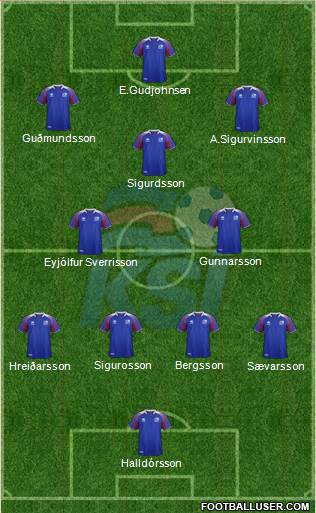
This is the All-Time team for Iceland. The number 23 was chosen because it is the official squad size for the World Cup Finals.
Team
GK: Hannes Þór Halldórsson
Hannes Þór Halldórsson played club football in Iceland for Leiknir, Afturelding, Stjarnan, Fram and KR. He joined Norwegian club SK Brann and Sandnes Ulf, Dutch Eredivisie club NEC and Danish club Randers FC. He is the starting keeper for Iceland during its great run at Euro 2016. In the 2018 World Cup Finals, he saved a penalty by Lionel Messi.
GK: Árni Gautur Arason
Arason played for Rosenborg between 1998 and 2003, also making several UEFA Champions League appearances for the club. Then, he had a brief spell at Manchester City. He was the hero of Manchester City's famous comeback win against Tottenham Hotspurs. He also played for Vålerenga and Thanda Royal Zulu(South Africa). From 1998 to 2010, he earned over 70 caps for Iceland.
GK: Birkir Kristinsson
Birkir Kristinsson started his career with ÍBV Einherji in 1983. Then, he played for Vopnafjordur, KA ÍA and Fram in the Icelandic league before moving to Norway's SK Brann in 1996. He also played for Birmingham City, IFK Norrköping, Bolton Wanderers, Lustenau and Stoke City. From 1999 to 2005, he played IBV Vestmannaeyja. He earned 72 caps for the Iceland, over a period of sixteen years.
RB/LB: Birkir Sævarsson
Birkir Sævarsson started his career with local side Valur before joining Brann and Hammarby in Norway. At Euro 2016, Birkir played all minutes for Iceland during the tournament, where his side ultimately got knocked out in the quarter final following a 2–5 loss against France. He also went to the World Cup Finals in 2018.
RB: Grétar Steinsson
Steinsson started his career with KS before joining ÍA Akranes in 2000. He moved abroad to joined Swiss club BSC Young Boys in 2004 and AZ Alkmaar a year later. From 2008 to 2012, he played for Bolton Wanderers. he then had a brief career with Kayserispor. From 2002 to 2012, he had 46 caps for Iceland.
CB: Guðni Bergsson
Guðni Bergsson played football with his local club Valur with a brief loan spell with TSV 1806 Munich between 1983 and 1988. From 1988 to 1994, he played for Tottenham Hotspurs. He then played for Bolton Wanderers between 1995 to 2003. From 1984 to 2003, he had over 80 caps for Iceland. He served as their captain. On 11 February 2017, Guðni was elected chairman of the Icelandic Football Association.
CB: Lárus Sigurðsson
Sigurðsson played with Þór Akureyri along with his father Sigurdur Larusson who later became the manager. He played for Stoke between 1994 and 1999, but in the lower division. Then, he played for West Bromwich between 1999 and 2004, playing a single season in the Premiership. In 2006, he was appointed player-manager at Þór, a position he held until 31 May 2010. He won 42 caps, scoring two goals for Iceland.
CB: Jóhannes Eðvaldsson
Jóhannes started his career with Valur before short spells with Metz and Holbe. He moved to Scotland in 1975, joining Celtic. He played in almost every outfield position while at Celtic but was most suited to central defence. He was nicknamed "Shuggy" by the fans. He moved to the US in February 1980, joining NASL side Tulsa Roughnecks. He then played for Hannover 96 and Motherwell. He gained 34 caps for Iceland.
CB: Ragnar Sigurosson
Ragnar Sigurosson is best known for his "Man of the Match" award during Iceland's upset of England at the Euro 2016. He scored a goal while being rock solid at the back. He played club football in Sweden, Denmark and Russia before European Championship in 2016. He earned a move to Fulham after the tournament, but moved back to play for Rubin Kazan and Rostov. He played 80 times for Iceland between 2007 and 2018.
CB/LB: Hermann Hreiðarsson
Hermann spent 15 seasons playing in England. He played for: Crystal Palace (1997–98 season), Wimbledon (1999–2000), Ipswich Town (2001–02), Charlton Athletic (2006–07), and Portsmouth (2009–10). Unfortunately, he was relegated with every Premier League club he has played for. From 1989 to 2011, he played 89 times for Iceland.
RB/CM: Aron Gunnarsson
Aron Gunnarsson began his career at Þór Akureyri, and played one match for Dutch club AZ before joining Coventry City in 2008. After 133 matches and 7 goals in three seasons for them, he transferred to Cardiff City, where he was a runner-up in the 2012 Football League Cup Final and played in the 2013–14 Premier League. He has earned over 70 caps for Iceland. He was Iceland's captain at their first major tournament, Euro 2016 and Russia 2018.
DM: Brynjar Gunnarsson
Brynjar played three seasons with KR in Iceland. Then, he played with Vålerenga, Moss FK and Örgryte. In 1999, Stoke City paid a club-record fee of £600,000 for Brynjar. He played briefly for Nottingham Forest and Watford. Then, he played for Reading for 8 seasons, in which he spent three seasons in the Premiership. From 1997 to 2009, he earned over 70 caps.
RW/CM: Asgeir Sigurvinsson
LW: Rúnar Kristinsson
Rúnar Kristinsson started practicing with KR Reykjavík. He was moved Örgryte IS in Sweden. In 1997. he joined Lillestrøm SK of Norway. In 2000, he moved to K.S.C. Lokeren in Belgium where he played until 2007. In May 2007, he returned to his former club KR Reykjavík in Iceland to finish his career. Rúnar has been capped a record 104 times for Iceland, scoring 3 goals in the process.
AM: Gylfi Sigurdsson
Gylfi began his professional career with Reading in the Championship, and in 2010 was sold to Hoffenheim which was Reading's biggest sale. He was voted Player of the Season for two consecutive seasons – for Reading in 2009–10 and for Hoffenheim in 2010–11. After a season loan back in English football with Swansea City he joined Tottenham Hotspur for £8.8 million, and in 2014 moved back to Swansea. At the time of writing, he played for Everton. He is probably Iceland's best player at the moment.
FW: Albert Guðmundsson
Albert played with local club Valur. In 1944. he joined Rangers while studying in Scotland at Skerry's College, Glasgow. In the same year, he joined Arsenal in England. He was only Arsenal's second foreign player. Later in his career, he played FC Nancy, A.C. Milan, RC Paris and Nice. He also played for the national team of Iceland. His grandson represenerd Iceland at the 2018 World Cup in Russia.
ST/CM/CB: Atli Eðvaldsson
Atli started at Valur and later became very successful with Fortuna Düsseldorf and Bayer Uerdingen. In1983, he became the first foreign player to score a five goals in one game in the Bundesliga, when he scored five goals for Fortuna Düsseldorf. After the game, he took a flight to Iceland where he scored the winning goal in Iceland's 1-0 victory against Malta the following day. He had 70 caps for Iceland.
He made his senior debut for Breiðablik in 2008. Later, he played for Lokeren and Helsingborgs IF. With Heerenveen, he was the Dutch Eredivisie's top scorer in the 2013–14 season with 29 goals, a tally topped only by Luis Suárez, Cristiano Ronaldo and Jonathan Soriano in Europe's top leagues that season. Then, he moved to Real Sociedad. At the time of writing, he is with FC Augsburg. He is a member of both Iceland's Euro 2016 and Russia 2018 team.
FW/AM: Eidur Gudjohnsen
Eidur Gudjohnsen is probably the best known footballer from Iceland. He made his national debut as a 17 years old when he came in as a substitute for his father against Estonia in 1996. The pair is the only father and son to have played in the same international match. He was probably known for his career with Chelsea and Barcelona. He won a Champions League title with Barcelona. He played 88 times for Iceland. He played for Iceland at Euro 2016 as a veteran player.
Norway
Sweden
Denmark
Iceland is one of the smallest countries in UEFA, but they managed to earn a spot at the 2014 UEFA World Cup Qualifying playoff before losing to Croatia. In 2016, Iceland qualified for the Finals at the Euro 2016. They made a strong run, beating England in the second round before losing to the host France in the quarter-final. They went onward to qualify and play in the 2018 World Cup Finals in Russia. They became the lowest-populated country to reach the final tournament. In the World Cup Finals, they managed to draw Lionel Messi's Argentina in their debut.
* I started a blog team as Scandinavia all-time team without Sweden and Denmark. Later, I changed it to just Finland and Iceland. In 2020, I decided to create an individual all-time team both Finland and Iceland, but I am still keeping the combined Finland/Iceland blog team.
 |
| Iceland's celebration at Euro 2016 |
GK: Hannes Þór Halldórsson
Hannes Þór Halldórsson played club football in Iceland for Leiknir, Afturelding, Stjarnan, Fram and KR. He joined Norwegian club SK Brann and Sandnes Ulf, Dutch Eredivisie club NEC and Danish club Randers FC. He is the starting keeper for Iceland during its great run at Euro 2016. In the 2018 World Cup Finals, he saved a penalty by Lionel Messi.
GK: Árni Gautur Arason
Arason played for Rosenborg between 1998 and 2003, also making several UEFA Champions League appearances for the club. Then, he had a brief spell at Manchester City. He was the hero of Manchester City's famous comeback win against Tottenham Hotspurs. He also played for Vålerenga and Thanda Royal Zulu(South Africa). From 1998 to 2010, he earned over 70 caps for Iceland.
GK: Birkir Kristinsson
Birkir Kristinsson started his career with ÍBV Einherji in 1983. Then, he played for Vopnafjordur, KA ÍA and Fram in the Icelandic league before moving to Norway's SK Brann in 1996. He also played for Birmingham City, IFK Norrköping, Bolton Wanderers, Lustenau and Stoke City. From 1999 to 2005, he played IBV Vestmannaeyja. He earned 72 caps for the Iceland, over a period of sixteen years.
 |
| Birkir Kristinsson |
Birkir Sævarsson started his career with local side Valur before joining Brann and Hammarby in Norway. At Euro 2016, Birkir played all minutes for Iceland during the tournament, where his side ultimately got knocked out in the quarter final following a 2–5 loss against France. He also went to the World Cup Finals in 2018.
RB: Grétar Steinsson
Steinsson started his career with KS before joining ÍA Akranes in 2000. He moved abroad to joined Swiss club BSC Young Boys in 2004 and AZ Alkmaar a year later. From 2008 to 2012, he played for Bolton Wanderers. he then had a brief career with Kayserispor. From 2002 to 2012, he had 46 caps for Iceland.
CB: Guðni Bergsson
Guðni Bergsson played football with his local club Valur with a brief loan spell with TSV 1806 Munich between 1983 and 1988. From 1988 to 1994, he played for Tottenham Hotspurs. He then played for Bolton Wanderers between 1995 to 2003. From 1984 to 2003, he had over 80 caps for Iceland. He served as their captain. On 11 February 2017, Guðni was elected chairman of the Icelandic Football Association.
 |
| Guðni Bergsson |
Sigurðsson played with Þór Akureyri along with his father Sigurdur Larusson who later became the manager. He played for Stoke between 1994 and 1999, but in the lower division. Then, he played for West Bromwich between 1999 and 2004, playing a single season in the Premiership. In 2006, he was appointed player-manager at Þór, a position he held until 31 May 2010. He won 42 caps, scoring two goals for Iceland.
Jóhannes started his career with Valur before short spells with Metz and Holbe. He moved to Scotland in 1975, joining Celtic. He played in almost every outfield position while at Celtic but was most suited to central defence. He was nicknamed "Shuggy" by the fans. He moved to the US in February 1980, joining NASL side Tulsa Roughnecks. He then played for Hannover 96 and Motherwell. He gained 34 caps for Iceland.
CB: Ragnar Sigurosson
Ragnar Sigurosson is best known for his "Man of the Match" award during Iceland's upset of England at the Euro 2016. He scored a goal while being rock solid at the back. He played club football in Sweden, Denmark and Russia before European Championship in 2016. He earned a move to Fulham after the tournament, but moved back to play for Rubin Kazan and Rostov. He played 80 times for Iceland between 2007 and 2018.
 |
| Sigursson vs England |
Hermann spent 15 seasons playing in England. He played for: Crystal Palace (1997–98 season), Wimbledon (1999–2000), Ipswich Town (2001–02), Charlton Athletic (2006–07), and Portsmouth (2009–10). Unfortunately, he was relegated with every Premier League club he has played for. From 1989 to 2011, he played 89 times for Iceland.
RB/CM: Aron Gunnarsson
Aron Gunnarsson began his career at Þór Akureyri, and played one match for Dutch club AZ before joining Coventry City in 2008. After 133 matches and 7 goals in three seasons for them, he transferred to Cardiff City, where he was a runner-up in the 2012 Football League Cup Final and played in the 2013–14 Premier League. He has earned over 70 caps for Iceland. He was Iceland's captain at their first major tournament, Euro 2016 and Russia 2018.
DM: Brynjar Gunnarsson
Brynjar played three seasons with KR in Iceland. Then, he played with Vålerenga, Moss FK and Örgryte. In 1999, Stoke City paid a club-record fee of £600,000 for Brynjar. He played briefly for Nottingham Forest and Watford. Then, he played for Reading for 8 seasons, in which he spent three seasons in the Premiership. From 1997 to 2009, he earned over 70 caps.
RW/CM: Asgeir Sigurvinsson
Asgeir Sigurvinsson is conisdered to be Iceland's greatest players. He spent his foreign career with Standard Liege, Bayern Munich and VfB Stuttgart. He spent 8 seasons with Standard Liege before spending an unsuccessful season with Bayern Munich. He played for Stuttgart between 1982 and 1992. He won the Bundelsliga in 1983-1984 with them. He made his national team debut at the age 17. He had 46 caps.
DM/ST: Eyjólfur Sverrisson
Eyjólfur started his career as a striker at UMF Tindastóll. From 1989 to 1994 he played for VfB Stuttgart, where he became German champion in 1992. He then played for Beşiktaş and became Turkish champion with the team in 1995. He also played Hertha BSC. He was capped 66 time for Iceland between 1990 and 2001. His son Hólmar Örn went to the 2018 World Cup.
RW: Jóhann Berg Guðmundsson
Born in Iceland, Jóhann Berg Guðmundsson moved to London with his parents when he was young. He played for the youth squad with Fulham and Chelsea. However, his professional career started with Breiðablik back home. He later played AZ, Charltoin Athletic and Burnley. With Iceland, he was a key player during the Euro 2016. He also went to Russia 2018. |
| Asgeir Sigurvinsson |
Eyjólfur started his career as a striker at UMF Tindastóll. From 1989 to 1994 he played for VfB Stuttgart, where he became German champion in 1992. He then played for Beşiktaş and became Turkish champion with the team in 1995. He also played Hertha BSC. He was capped 66 time for Iceland between 1990 and 2001. His son Hólmar Örn went to the 2018 World Cup.
RW: Jóhann Berg Guðmundsson
LW: Rúnar Kristinsson
Rúnar Kristinsson started practicing with KR Reykjavík. He was moved Örgryte IS in Sweden. In 1997. he joined Lillestrøm SK of Norway. In 2000, he moved to K.S.C. Lokeren in Belgium where he played until 2007. In May 2007, he returned to his former club KR Reykjavík in Iceland to finish his career. Rúnar has been capped a record 104 times for Iceland, scoring 3 goals in the process.
AM: Gylfi Sigurdsson
Gylfi began his professional career with Reading in the Championship, and in 2010 was sold to Hoffenheim which was Reading's biggest sale. He was voted Player of the Season for two consecutive seasons – for Reading in 2009–10 and for Hoffenheim in 2010–11. After a season loan back in English football with Swansea City he joined Tottenham Hotspur for £8.8 million, and in 2014 moved back to Swansea. At the time of writing, he played for Everton. He is probably Iceland's best player at the moment.
 |
| Gylfi Sigurdsson |
Albert played with local club Valur. In 1944. he joined Rangers while studying in Scotland at Skerry's College, Glasgow. In the same year, he joined Arsenal in England. He was only Arsenal's second foreign player. Later in his career, he played FC Nancy, A.C. Milan, RC Paris and Nice. He also played for the national team of Iceland. His grandson represenerd Iceland at the 2018 World Cup in Russia.
ST/CM/CB: Atli Eðvaldsson
Atli started at Valur and later became very successful with Fortuna Düsseldorf and Bayer Uerdingen. In1983, he became the first foreign player to score a five goals in one game in the Bundesliga, when he scored five goals for Fortuna Düsseldorf. After the game, he took a flight to Iceland where he scored the winning goal in Iceland's 1-0 victory against Malta the following day. He had 70 caps for Iceland.
ST: Kolbeinn Sigborsson
Kolbeinn Sigborsson started his career in Iceland before making a name in Holland. After a successful run with AZ, he joined Ajax in 2011 and later, moved to Nantes in France. For the national team, his scoring rate at the time of writing 1 goal for every 2 games. He was a hero at Euro 2016, where he scored the winner against England.
ST: Arnór Guðjohnsen
Arnór Guðjohnsen was one of the few professional players from Iceland during his era. He played with Anderlecht for 6 seasons and Bordeaux for another two seasons. He also played in Sweden. He is also Eidur's father. Arnór and Eiður are the only father and son to play for a national football team during the same game. Arnór was 34 and Eiður was just 17 when it happened. Eiður came on as a second-half substitute for his father, so they never actually played together. He
ST: Alfreð Finnbogason  |
| Arnór Guðjohnsen |
He made his senior debut for Breiðablik in 2008. Later, he played for Lokeren and Helsingborgs IF. With Heerenveen, he was the Dutch Eredivisie's top scorer in the 2013–14 season with 29 goals, a tally topped only by Luis Suárez, Cristiano Ronaldo and Jonathan Soriano in Europe's top leagues that season. Then, he moved to Real Sociedad. At the time of writing, he is with FC Augsburg. He is a member of both Iceland's Euro 2016 and Russia 2018 team.
FW/AM: Eidur Gudjohnsen
Eidur Gudjohnsen is probably the best known footballer from Iceland. He made his national debut as a 17 years old when he came in as a substitute for his father against Estonia in 1996. The pair is the only father and son to have played in the same international match. He was probably known for his career with Chelsea and Barcelona. He won a Champions League title with Barcelona. He played 88 times for Iceland. He played for Iceland at Euro 2016 as a veteran player.
 |
| Eidur Gudjohnsen |
Honorable Mention
Bjarni Sigurðsson, Heidar Helguson, Guðni Kjartansson, Pétur Pétursson, Ólafur Þórðarson, Arnar Grétarsson, Sigurður Jónsson
Squad Explanation
-- I started Scandinavia all-time team without Sweden and Denmark in 2014. Later, I edited the blog and the team became Finland and Iceland. In 2020, I decided to create an individual all-time team for both Finland and Iceland, but I am still keeping the combined Finland/Iceland team.
-- Icelanders are famous for their immense success in strength sports. Strength athletics and powerlifting have been Iceland's greatest success in sports on an international level. Iceland has the second most World's Strongest Man championships of any country with nine.
-- Iceland qualified for the Finals of the 2016 European Championship and the 2018 World Cup Finals. They have done better than some of the all-time teams that I have created.
-- Ásgeir Sigurvinsson is considered Iceland's greatest player. Arnór and Eiður Gudjohnsen are probably the most famous footballers due to their club careers outside Iceland. Alongside with Ásgeir Sigurvinsson, they are "must-in" for this all-time team.
-- Arnór and Eiður Gudjohnsen became the first father and son to play in the same international match in 1996. The 17 year old Eiður Gudjohnsen came on a as sub for his father who was 34 years old at the time. However, both of them were upset that they were not played together on the same field. They were to be played together in another home match, but Eiður Gudjohnsen got injured before the match.
-- Hannes Þór Halldórsson, Aron Gunnarsson, Birkir Sævarsson, Ragnar Sigurosson, Jóhann Berg Guðmundsson, Gylfi Sigurdsson, Kolbeinn Sigborsson, Alfreð Finnbogason and Alfreð Finnbogason were added to the team because of Euro 2016. Those players have achieved things more than that were done by other players from previous generations. Eidur Gudjohnsen also went to the tournament, but as a veteran player. Some of them also went to the 2018 World Cup Finals.
-- Stoke City was owned by Icelandic businessmen between 1997 and 2008. Thirteen Icelandic players had played for them during that period. The club was at one point managed by Icelander Gudjon Thordarson.
-- Three players selected here also played for Bolton Wanderers.
-- For goalkeepers, I took Hannes Þór Halldórsson for his heroic performance at the Euro 2016 as well as the 2018 World Cup Finals. Árni Gautur Arason had a respectable career outside of Iceland. And then, I took Birkir Kristinsson who earned over 70 caps for Iceland. I left Bjarni Sigurðsson off the team.
-- I don't know where Gunnar Gíslason and Sævar Jónsson played on the defence.
-- I took Jóhannes Eðvaldsson because of his career in the 1970's with Celtic. Then, I have to decide between Indridi Sigurdsson, Kristján Sigurdsson and Lárus Sigurðsson. I took Lárus Sigurðsson because of his career outside of Iceland. He had a long career in England. The other two players in question did not play that long.
-- Rúnar Kristinsson is the all-time cap record holder with 104. Ragnar Sigurðsson is now second.
-- Asgeir Sigurvinsson and Eyjólfur Sverrisson won the 1992 Bundesliga with Stuttgart.
-- Gylfi Sigurðsson is Iceland Player of the Year 7 times. He also enjoyed a good career in England.
-- I also selected Atli Eðvaldsson who can play in multi-positions. His best position is probably striker.
-- Pétur Pétursson who scored over 40 goals with 69 appearance with PSV should be on the team. But I rewaded spots to two heros of Euro 2016, namely Kolbeinn Sigborsson and Alfreð Finnbogason. Atli Eðvaldsson could also play there. Then, I also selected Arnór and Eiður Gudjohnsen. Of course, I have Albert Guðmundsson. So I have no space for Pétur Pétursson.
-- Albert Guðmundsson was the first player of note to emerge from Iceland. He played in Scotland, England, Italy and France.
Formation